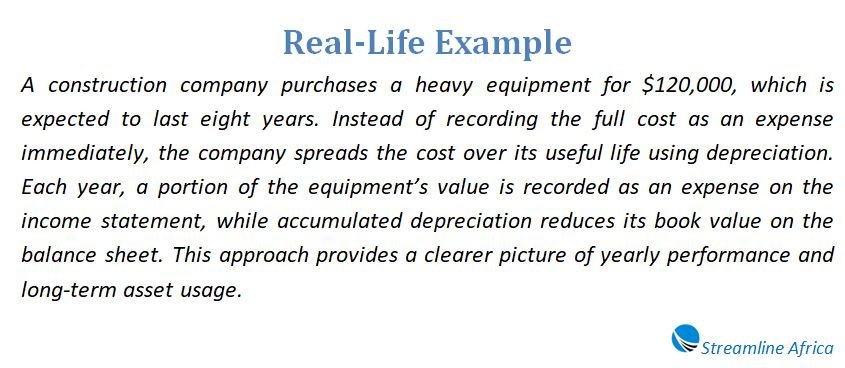
Depreciation is one of the most significant concepts in accounting and finance, playing a central role in how businesses allocate the cost of long-term assets over time. Rather than treating the purchase of an asset as a one-time expense, depreciation recognizes that assets lose value gradually as they are used in the course of operations. This approach ensures that financial statements more accurately represent economic reality and support decision-making by investors, regulators, and managers.
An in-depth understanding of depreciation is essential because it affects reported profits, tax obligations, investment decisions, and financial ratios. This article provides a comprehensive analysis of depreciation: its definition, purpose, historical background, calculation methods, examples, implications for financial reporting, and common limitations.
Defining Depreciation
Depreciation can be defined as the systematic allocation of the cost of a tangible fixed asset over its useful life. The useful life represents the period during which the asset is expected to provide economic benefits to the entity. Importantly, depreciation is not a process of asset valuation but rather a means of allocating an already incurred cost across accounting periods.
For example, when a company purchases machinery for €50,000 with an expected useful life of 10 years and no residual value, the cost cannot be expensed entirely in the year of purchase. Instead, through depreciation, the company allocates €5,000 per year as an expense, thereby matching costs with revenues generated during the period.

Historical Background of Depreciation
The concept of depreciation has evolved over centuries as businesses and economies became more complex. In early accounting systems of the 15th and 16th centuries, particularly in Italian double-entry bookkeeping, assets were often recorded without systematic recognition of their decline in value. It was only during the Industrial Revolution of the 18th and 19th centuries, with the increasing use of machinery and long-lived assets, that the need to allocate costs over time became evident.
By the late 19th century, depreciation practices were being formalized, particularly in railway and manufacturing industries, where equipment had long lifespans and substantial costs. Early depreciation methods were influenced by both managerial necessity and tax policy, as governments sought reliable ways to calculate taxable profits.
The 20th century brought harmonization through national and international accounting standards. Bodies such as the International Accounting Standards Board (IASB) and the Financial Accounting Standards Board (FASB) established clear guidelines for recognizing and disclosing depreciation, ensuring consistency across industries and countries. Today, depreciation remains a cornerstone of financial reporting, balancing historical cost principles with fair representation.
Objectives and Purpose of Depreciation
Depreciation serves multiple purposes within financial reporting and decision-making processes:
- Matching principle: It aligns the expense of using an asset with the revenues it generates, thereby ensuring accurate profit measurement.
- Asset management: It highlights the consumption of assets, assisting managers in planning for replacements or upgrades.
- Fair presentation: It prevents financial statements from overstating asset values, ensuring transparency for investors and creditors.
- Tax implications: In many jurisdictions, depreciation reduces taxable income, providing a timing benefit to businesses.
- Capital budgeting: It provides a structured estimate of future costs, aiding in long-term financial planning and investment analysis.
Without depreciation, businesses might present inflated profits in the early years of an asset’s use and fail to recognize the ongoing cost of operations, leading to distorted performance assessments.
Methods of Depreciation
There are several methods available to calculate depreciation, each suited to different asset types and business circumstances. The choice of method can significantly affect reported income and asset values.
Straight-Line Method
The straight-line method spreads the cost of an asset evenly across its useful life. It is the simplest and most widely used approach, favored for its consistency.
Example: A vehicle purchased for €24,000 with an estimated useful life of 6 years and no salvage value will incur €4,000 depreciation expense annually.
Declining Balance Method
This method accelerates depreciation by applying a fixed percentage to the asset’s book value each year. It recognizes that many assets lose more value in the earlier years of use.
Example: A machine costing €20,000 depreciated at 20% annually will record €4,000 in the first year, €3,200 in the second year, and so on.
Units of Production Method
This method ties depreciation to actual usage, such as units produced or hours operated, making it suitable for manufacturing equipment.
Example: If a factory machine costing €50,000 is expected to produce 100,000 units, each unit carries a depreciation cost of €0.50. Producing 15,000 units in a year results in €7,500 depreciation expense.
Sum-of-the-Years’ Digits (SYD) Method
The SYD method accelerates depreciation in a way similar to the declining balance method but is based on a fraction derived from the sum of years of useful life. It is slightly less aggressive than the declining balance approach.
Comparison of Depreciation Methods
| Method | Key Feature | Example Use Case | Impact on Profits |
|---|---|---|---|
| Straight-Line | Equal allocation over time | Office furniture, buildings | Stable, predictable |
| Declining Balance | Higher expense in early years | Computers, vehicles | Lower early profits |
| Units of Production | Based on usage or output | Factory machinery, vehicles | Fluctuates with activity |
| Sum-of-the-Years’ Digits | Accelerated, less aggressive than DB | Specialized equipment | Early expense recognition |
Depreciation in Practice: Examples
Consider a business that purchases new manufacturing equipment for €60,000, with a residual value of €5,000 and a useful life of 5 years.
- Straight-line method: (€60,000 – €5,000) ÷ 5 = €11,000 annual depreciation.
- Declining balance at 30%: First-year depreciation = €18,000; second year = €12,600, and so forth.
- Units of production method: If total expected production is 200,000 units and the machine produces 40,000 units in the first year, depreciation = (€60,000 – €5,000) ÷ 200,000 × 40,000 = €11,000.
Each method yields a different expense pattern, underscoring how managerial choice affects reported profits.

Depreciation and Financial Statements
Depreciation affects both the balance sheet and the income statement. On the balance sheet, it reduces the book value of assets through accumulated depreciation. On the income statement, it appears as an expense, lowering net income. The cash flow statement adjusts for depreciation because it is a non-cash expense: while it reduces accounting profits, it does not directly reduce cash balances.
Investors and analysts often add back depreciation when assessing cash flow, focusing on earnings before interest, taxes, depreciation, and amortization (EBITDA). This approach provides a clearer picture of operating performance by excluding non-cash charges.
Limitations of Depreciation
While indispensable, depreciation has limitations that affect its reliability:
- Estimation uncertainty: Useful life and residual value are subjective estimates that may differ from reality.
- Method selection: Different methods yield different results, reducing comparability across firms.
- Exclusion of external factors: Market value declines due to technological obsolescence or economic conditions may not be reflected in systematic depreciation.
- Intangible assets: Depreciation applies only to tangible assets; intangible assets such as patents are amortized under separate rules.
These limitations underscore the need for professional judgment and transparent disclosure in financial statements.
Depreciation in International Standards
Under International Financial Reporting Standards (IFRS), depreciation must reflect the pattern in which the asset’s future economic benefits are consumed. IAS 16 requires entities to review useful lives, residual values, and methods annually. Similarly, under U.S. GAAP, the principles are broadly consistent but may differ in detailed rules, such as treatment of component depreciation.
Both IFRS and GAAP prohibit classifying depreciation as an extraordinary item. Instead, it must be reported as part of operating expenses or cost of sales, depending on the asset’s role in operations.
Broader Economic and Tax Implications
Depreciation also influences tax policy and investment strategies. Accelerated depreciation methods, often allowed for tax purposes, enable businesses to reduce taxable income in the early years of asset use, improving cash flow and incentivizing investment. Governments may adjust depreciation allowances to stimulate capital spending or support specific industries.
For example, temporary tax policies may allow immediate expensing of capital equipment, a measure frequently employed to boost economic activity during recessions.
Conclusion
Depreciation is far more than an accounting formality; it is a critical mechanism for aligning expenses with revenues, maintaining accurate financial reporting, and supporting strategic decision-making. While various methods exist, each with distinct implications, the underlying goal remains consistent: to allocate the cost of assets fairly and systematically across their useful lives.
Despite its limitations—such as reliance on estimates and method choices—depreciation continues to be a cornerstone of modern accounting and financial analysis. Its influence extends beyond individual companies, shaping tax policy, economic planning, and investor decisions. A strong grasp of depreciation principles is therefore indispensable for accountants, managers, and financial analysts.
Frequently Asked Questions
What is the main purpose of depreciation?
The main purpose of depreciation is to allocate the cost of tangible assets over their useful lives, ensuring expenses are matched with the revenues they generate.
Does depreciation reduce cash flow?
No. Depreciation reduces accounting profits but is a non-cash expense. It does not affect cash directly, though it influences taxable income.
How do companies choose a depreciation method?
Companies select methods based on the nature of the asset, usage patterns, industry practices, and regulatory requirements. The method must reflect the actual consumption of economic benefits.
Are depreciation rules the same worldwide?
No. While IFRS and U.S. GAAP share broad similarities, differences exist in detailed rules. Each jurisdiction may also have tax-specific depreciation allowances.
Can depreciation be reversed?
If an asset’s estimated useful life or residual value changes, depreciation calculations may be adjusted prospectively. However, accumulated depreciation is not reversed.
Myths about Depreciation
Depreciation Means Cash Leaving the Business
Many believe depreciation reduces actual cash, but it is only an accounting entry, not an outflow of money.
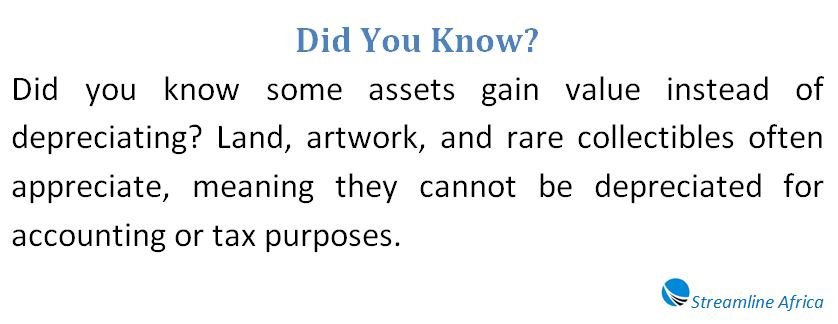
Land Can Be Depreciated Like Buildings
Land does not wear out or lose usefulness in the same way as buildings, so it is never subject to depreciation.
Using Accelerated Depreciation Is Always Better
Accelerated methods may reduce taxable income faster, but they are not always the most beneficial for long-term financial planning.
Depreciation Always Reflects Market Value
Depreciation tracks the allocation of cost, not real-world resale value, which can be higher or lower than the book value.