
When we think about our financial lives, two questions often come up: how long will something we own remain valuable, and how long will it take to repay the money we’ve borrowed? Both of these concerns are linked by a single concept—amortization. Though the term might sound technical, it actually plays a major role in both personal budgeting and business accounting. Amortization describes how costs are spread out over time. For assets, it represents the gradual reduction of value as they age or become less useful. For debts, it shows how repayment schedules slowly chip away at what is owed. By looking at amortization, individuals and businesses alike gain clarity about the real value of their possessions and the real progress of their repayments.

The Dual Meaning of Amortization
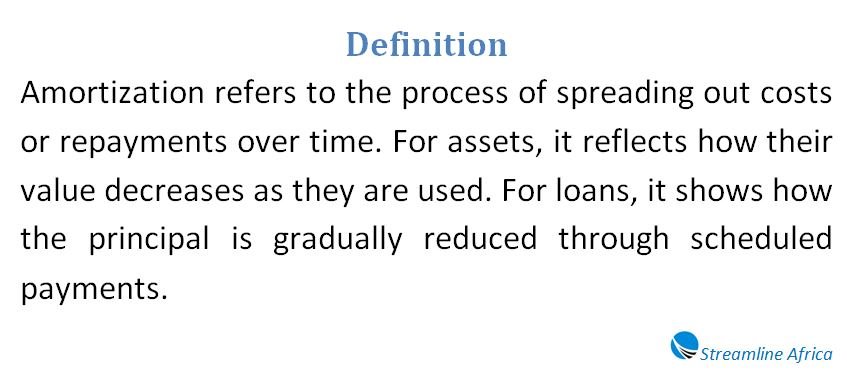
The word “amortization” can create confusion because it applies in more than one context. If someone says a car has “fully amortized,” they may be referring to its useful life ending. But if they talk about a “five-year loan amortization schedule,” they’re pointing to the structured repayment of debt. Both ideas revolve around the notion of gradual change. Assets like equipment, technology, or vehicles lose value as they are used, while debts diminish as repayments are made. Knowing which sense of the word is being used is essential for interpreting financial information correctly.
Amortization of Assets: Decline in Value
Assets are resources we buy with the expectation of future benefit. They can be physical objects such as televisions, laptops, or running shoes, or intangible resources like software and patents. None of them, however, lasts forever. Over time, their usefulness decreases, and this reduction in value is measured through amortization. Take the example of a television that costs 1,000 euros and is expected to last 10 years. Using a straight-line approach, we would assign 100 euros of amortization per year. After the first year, its book value would be 900 euros; after five years, 500 euros; and after ten years, the asset would be considered fully amortized. If it still functions beyond its expected life, its worth becomes residual rather than planned. This approach gives owners a more accurate sense of an asset’s economic contribution. Instead of recognizing the full cost upfront, amortization spreads the expense across the years the asset generates value. This helps individuals plan replacements and allows businesses to report performance more realistically.
Intangible Assets and Amortization
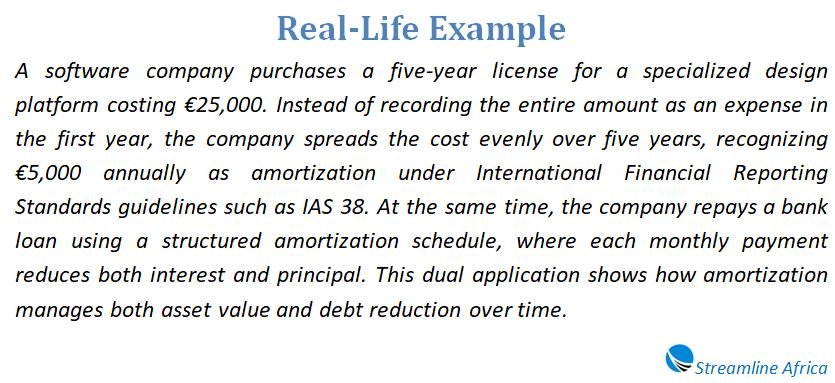
While tangible goods like vehicles and electronics lose value visibly, intangible assets require a more abstract treatment. These include things like copyrights, patents, trademarks, or software licenses. Companies invest heavily in such assets, but they too have limited useful lives. In accounting, amortization of intangibles is calculated in a structured way similar to depreciation of physical assets. The cost is allocated evenly across the period the asset is expected to generate benefits. For example, a patent purchased for 50,000 euros with a 10-year life would result in 5,000 euros of annual amortization. Some intangibles, however, are treated differently. Goodwill—a premium paid when one company acquires another—does not follow a fixed amortization pattern. Instead, it is tested annually for impairment to determine if its recorded value should be reduced. This ensures companies do not carry inflated figures on their balance sheets.
Amortization of Loans: Paying Down Debt
Amortization also describes how loans are repaid over time. Every repayment schedule breaks down into two parts: principal (the original borrowed amount) and interest (the cost of borrowing). By mapping these payments out, lenders and borrowers can see how the outstanding balance decreases until the debt is eliminated. Different repayment structures affect how quickly the loan balance falls: Fixed installment method (French system): Payments remain the same throughout the loan term. At the start, a larger portion goes to interest, but over time, more is applied to the principal. Graduated payment system: Monthly payments begin small and gradually rise. This is often chosen by borrowers expecting higher income in the future. Declining balance method: Borrowers pay more at the beginning, quickly reducing principal and lowering future interest costs. For mortgages, these schedules are particularly important. Homebuyers commit to long repayment terms, sometimes spanning decades. Understanding how payments are structured helps them anticipate long-term costs, explore early repayment strategies, or refinance if better terms become available.
Amortization in Accounting Standards
Accounting frameworks set specific rules on how amortization must be recorded. Under International Financial Reporting Standards (IFRS), the guidance is found in IAS 38, which covers intangible assets. In the United States, Generally Accepted Accounting Principles (GAAP) follow rules outlined in FAS 142. In practice, companies use amortization to match expenses with the revenue those assets generate. On the balance sheet, amortization reduces the carrying value of the asset. On the income statement, it appears as an expense, lowering reported profit. This treatment ensures a fair representation of financial performance rather than showing lopsided results from large, one-time expenditures. Interestingly, some firms may capitalize costs that could otherwise be treated as immediate expenses. By spreading them out through amortization, they smooth earnings and avoid sharp drops in profitability for a given quarter or year.
Everyday Applications of Amortization
Although accounting rules may seem far removed from daily life, the logic behind amortization is practical for households too. It shows up in simple ways: Selling secondhand goods: Knowing how much value a phone or laptop has lost helps sellers price items fairly and buyers judge whether they’re getting a good deal. Budgeting for replacements: By anticipating how long appliances or cars will last, families can set aside savings each year, avoiding sudden financial strain when replacements become necessary. Loan decisions: Understanding amortization schedules prevents mismatches, like taking a long-term loan for a product that will be obsolete long before the loan ends. In short, amortization helps everyday people make smarter choices about spending, saving, and borrowing.
Business Advantages of Tracking Amortization
For businesses, amortization is not optional—it is essential. Companies often hold significant amounts of both tangible and intangible assets. By recording amortization, they spread costs across the periods when assets generate income, resulting in financial statements that better reflect reality. Additionally, businesses can use amortization to plan investment cycles. A manufacturing firm, for example, may schedule equipment replacements as current machinery nears the end of its useful life. Tech companies may monitor software licenses to know when to renew or upgrade. On the financing side, loan amortization schedules help businesses forecast cash flow. By knowing how much principal and interest will be paid each month or quarter, managers can ensure liquidity is available when needed. This foresight can even guide strategic decisions such as refinancing or negotiating better terms.
Amortization, Depreciation, and Their Differences
Although closely related, amortization and depreciation are not identical. Depreciation generally refers to the allocation of cost for physical, tangible assets like vehicles, machines, or office furniture. Amortization, by contrast, often applies to intangible assets or to the structured repayment of loans. Both concepts reflect the same principle: the spreading of costs across useful life or repayment periods. Recognizing the difference ensures clarity, especially in professional or accounting contexts where precision matters.
Why Understanding Amortization Strengthens Financial Health
At its core, amortization gives us perspective. It reveals that neither assets nor debts remain static. Everything changes over time, whether it’s the usefulness of a laptop or the balance on a mortgage. For individuals, this perspective encourages healthier financial habits: planning for future expenses, avoiding overborrowing, and being realistic about asset values. For businesses, it provides accurate financial reporting, improves decision-making, and builds investor confidence. By embracing the idea of amortization, we shift from short-term thinking to long-term strategy. We recognize that financial well-being is not about single transactions but about managing value and obligations over years.
Conclusion: A Practical Guide to Value Over Time
Amortization may sound like an accountant’s term, but in reality, it is a guide for everyone. It tells us when our gadgets will need replacing, how long our loans will take to repay, and what our financial statements really mean. It is a reminder that time affects both what we own and what we owe. Whether you are a student budgeting for a new laptop, a family paying off a mortgage, or a company managing patents and machinery, amortization is the silent tool keeping financial plans realistic. By understanding it, we gain control over our resources and build a more stable financial future.
FAQs about Amortization
How does amortization apply to physical assets?
When you buy something like a car, computer, or appliance, it won’t hold the same value forever. Amortization helps measure that decline by dividing its cost across its useful life, giving you a clearer picture of its actual worth each year.
Can intangible assets also be amortized?
Yes, intangible assets like patents, copyrights, and software licenses are amortized in accounting. Their cost is allocated across the period they are expected to generate value, helping companies better match expenses with revenue.
How is amortization different from depreciation?
Depreciation is used for tangible assets such as machines, furniture, and vehicles, while amortization usually applies to intangible assets or loan repayments. Both concepts follow the same principle of allocating costs across time.
What does loan amortization involve?
Loan amortization is about gradually paying back borrowed money. Each payment reduces the outstanding balance, with some going toward interest and some toward the principal until the debt is fully repaid.
What are common loan amortization methods?
The most common approaches include fixed installments where payments remain the same, graduated schedules where payments increase over time, and declining balance methods where larger payments are made early to cut down future interest.
Why is amortization important for everyday life?
It helps individuals budget more effectively by showing the real value of assets over time and providing a clear repayment plan for loans. This way, you can plan for replacements, avoid overborrowing, and make smarter financial choices.
How does amortization appear in accounting statements?
In financial reports, amortization lowers the carrying value of an intangible asset on the balance sheet. At the same time, it shows up as an expense on the income statement, reducing reported profit for that period.
Does every asset get amortized?
Not necessarily. Some intangible assets like goodwill do not follow a set amortization schedule. Instead, they are tested regularly for impairment to check if their recorded value needs adjustment.
How does understanding amortization improve financial health?
By knowing how value and debt change over time, people and businesses can make long-term plans. It encourages better budgeting, accurate financial reporting, and healthier borrowing decisions, ultimately strengthening financial stability.