
What an Amortization Schedule Represents
An amortization schedule is essentially a timeline that illustrates how a loan or an intangible asset is gradually reduced over a specific period. In the case of loans, it breaks down every payment to show exactly how much goes toward reducing the amount borrowed (the principal) and how much is applied to interest charges. For intangible assets, such as patents or copyrights, the schedule tracks how the initial cost is allocated as an expense over its useful life. This structured approach gives individuals and businesses clarity on repayment progress or asset value reduction.
Why Amortization Schedules Matter
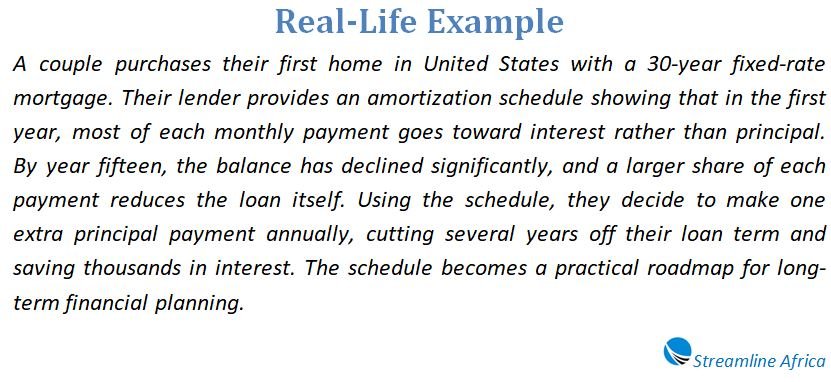
The value of an amortization schedule lies in the clarity it provides. When looking at a loan, the schedule shows that in the early months, most of the payment goes to interest because the outstanding balance is still high. As time passes, the proportion shifts, and more money is applied to principal. This predictable structure not only helps borrowers understand how their loan shrinks but also empowers businesses to account for intangible assets in a systematic way, ensuring compliance with accounting rules.

Breaking Down Loan Amortization
Most often, when people talk about amortization schedules, they are referring to loans. A loan amortization schedule lists every required payment, showing how much goes to interest and how much reduces the principal. Interest represents the cost of borrowing, while principal reflects the original loan balance yet to be paid off. The total number of payments, the loan amount, the interest rate, and the repayment term all shape how this schedule unfolds.
At the start of the repayment period, interest charges are higher because they are calculated on a larger balance. Over time, as the balance shrinks, interest costs decrease. Consequently, a growing share of each installment goes directly toward principal repayment. This gradual shift is the very essence of amortization.
The Formula Behind Loan Amortization
While lenders often provide borrowers with their monthly payment details, it’s valuable to understand how these figures are calculated. The portion of each payment applied to principal can be calculated with the following formula:
Principal payment = Total monthly payment – (Outstanding loan balance × Interest rate ÷ 12)
The total monthly payment itself is determined by another formula:
Total monthly payment = Loan amount × [i × (1 + i)^n ÷ ((1 + i)^n – 1)]
Here, i represents the monthly interest rate (annual rate divided by 12), and n is the total number of payments across the loan term. For example, if you borrow $25,000 at a 5% annual interest rate for six years, you would convert that rate to a 0.416% monthly rate (0.05 ÷ 12) and calculate 72 total payments (6 × 12). This method ensures consistency in monthly installments while adjusting the split between interest and principal over time.
Loan Amortization Schedules and Loan Terms
It’s important to note that a loan’s amortization schedule is not the same as its loan term. The schedule determines the structure of payments, while the loan term refers to the period before the balance is due in full. For example, a mortgage could be amortized over 25 years but structured as a 7-year loan term. At the end of that term, a borrower may need to refinance or pay off the remaining balance in a lump sum, commonly known as a balloon payment. Understanding this distinction prevents confusion when comparing different financing options.
Benefits of Having an Amortization Schedule
Amortization schedules are more than just accounting tools—they offer practical advantages to both individuals and organizations. First, they aid in budgeting by clearly outlining fixed monthly payments. Second, they provide transparency by showing how much of the total repayment goes to interest versus principal, allowing borrowers to evaluate the true cost of financing. Third, they assist in tax planning, since certain forms of interest, like mortgage interest, may be deductible. Finally, they encourage strategic repayment. By reviewing a schedule, borrowers can see the long-term impact of making extra payments early, which often reduces overall interest and shortens the repayment period.
Amortization in Business Accounting
Outside of personal finance, amortization also plays a significant role in business. Companies frequently acquire intangible assets such as patents, trademarks, or software licenses. Because these assets do not have a physical presence yet contribute value over time, accountants use amortization schedules to allocate their cost evenly across their useful lifespan. This practice helps businesses better understand profitability while ensuring they adhere to accounting principles like Generally Accepted Accounting Principles (GAAP).
Unlike loan amortization, where payments consist of principal and interest, intangible asset amortization typically follows a straight-line method. For example, if a business acquires a trademark for $18,000 with a 9-year useful life, the expense recorded each year would be $2,000 until the cost is fully allocated. This systematic approach provides financial clarity and ensures assets are not overstated on the balance sheet.
Example of Intangible Asset Amortization
Consider a company that acquires a $12,000 copyright with a lifespan of eight years. Using the straight-line method, the amortization expense each year would be $1,500. After the first year, the copyright’s book value drops to $10,500. By year four, the value would be $6,000, and by year eight, it would reach zero. This scheduled decline ensures the company records expenses accurately while showing stakeholders how asset values change over time.
Practical Example of Loan Amortization
To illustrate how loan amortization works in practice, let’s take a $40,000 car loan with an annual interest rate of 4% over five years. Using the formula, the monthly payment comes out to $736.66. In the very first month, approximately $133.33 of that payment covers interest, while $603.33 reduces the principal. Each subsequent month sees the interest portion decrease slightly, while the principal portion grows. By the time the borrower reaches the last payment, only about $2.44 goes to interest, with the rest going to pay off the remaining balance. The schedule demonstrates how consistent payments gradually eliminate debt, even though the composition of those payments changes over time.
Why Borrowers Should Review Amortization Schedules
Borrowers benefit immensely from reviewing their amortization schedules. These charts show the long-term cost of borrowing and reveal opportunities to save money through early payments. They also provide a sense of control, helping borrowers anticipate how their debt will evolve month by month. Without such a schedule, it would be far more difficult to track progress or understand how different repayment strategies impact the overall cost.

IRS and Tax Implications
From a tax perspective, amortization plays a critical role. The Internal Revenue Service (IRS) has clear guidelines dictating the number of years over which both tangible and intangible assets must be expensed. For individuals, mortgage interest can be deductible, making it essential to know how much of each payment goes toward interest versus principal. For businesses, proper amortization of intangible assets ensures compliance and can influence taxable income. In both cases, the amortization schedule provides the necessary details to calculate deductions accurately.
Comparing Loans with Amortization Schedules
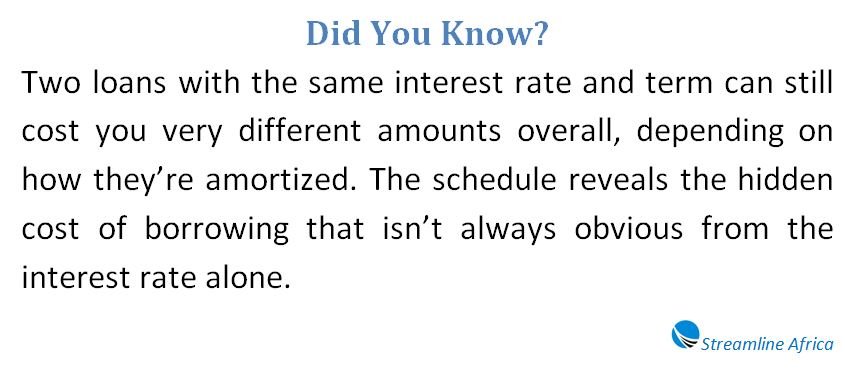
When shopping for financing, having an amortization schedule is invaluable. It allows potential borrowers to compare different loans not just on monthly payments but also on the total interest paid over time. For instance, two loans may offer similar monthly payments, but one could carry higher interest charges, costing thousands more over its lifespan. By analyzing schedules side by side, borrowers can make smarter decisions that align with their financial goals.
Early Repayment and Prepayment Considerations
Amortization schedules also highlight the impact of paying off debt early. Extra payments made toward principal directly reduce the outstanding balance, lowering future interest charges and potentially shortening the loan term. However, borrowers must be mindful of prepayment penalties, which some lenders impose to compensate for lost interest income. Reviewing the schedule allows individuals to model different repayment scenarios and decide whether early payments are worth pursuing.
The Human Side of Amortization
While the numbers and formulas may seem abstract, amortization is ultimately about achieving financial stability. For a family, it might mean knowing exactly when their mortgage will be paid off. For a business, it could mean confidently planning for the future while accurately reporting financial results. In both cases, amortization provides structure, predictability, and peace of mind.
The Bottom Line
Amortization schedules transform complex financial obligations into clear, manageable roadmaps. They reveal the hidden details of loan payments, shed light on the cost of borrowing, and provide businesses with a reliable way to track intangible assets. Whether you’re financing a car, buying a home, or managing intellectual property, understanding how amortization works can help you plan better, save money, and make informed financial choices.
Popular Questions and Answers about Amortization Schedule
Why do early loan payments mostly go toward interest?
At the start of a loan, the balance is at its highest. Since interest is calculated on the outstanding balance, a larger portion of early payments goes to interest. As the balance drops, interest costs shrink, and more of your payment reduces principal.
How can knowing my amortization schedule help me budget?
Because payments stay consistent, you’ll know exactly how much to set aside each month. It also shows how your loan balance changes over time, making long-term planning easier.
What’s the difference between loan amortization and loan term?
The amortization schedule is the repayment plan that spreads out payments. The loan term is the actual length of time before the balance must be paid in full. Sometimes loans are amortized over a longer period than the actual term, leading to balloon payments at the end.
How do I calculate my monthly loan payment?
You can use a formula that considers your loan amount, interest rate, and number of payments. Most lenders provide this, but knowing the formula helps you compare different loan offers with confidence.
Can amortization schedules help me save money?
Yes. By reviewing the schedule, you can see how extra payments reduce interest costs and shorten your loan. It also highlights whether refinancing or paying ahead makes financial sense.
How does amortization apply to businesses?
Companies use it to expense intangible assets like patents or trademarks over their useful life. This ensures financial statements reflect the true cost of owning those assets and remain compliant with accounting standards.
What’s an example of amortizing an intangible asset?
If a company buys a copyright for $12,000 and it lasts eight years, they would expense $1,500 each year until its value is fully written down to zero.
Why is transparency an important benefit of an amortization schedule?
It reveals the true cost of borrowing by showing exactly how much you’ll pay in interest over time. This allows you to compare different loans more fairly and avoid surprises.
Are there tax benefits tied to amortization?
Yes. For individuals, mortgage interest can often be deducted. For businesses, amortizing intangible assets reduces taxable income while keeping financial reporting accurate.
What happens if I want to pay off my loan early?
Making extra payments toward principal reduces the balance faster, which lowers future interest charges. But it’s important to check whether your lender charges prepayment penalties.
Why should I care about amortization if I’m not taking a loan?
Even without a loan, amortization matters in business and investing. It helps companies track the value of their assets and gives individuals insight into how financial systems measure expenses over time.