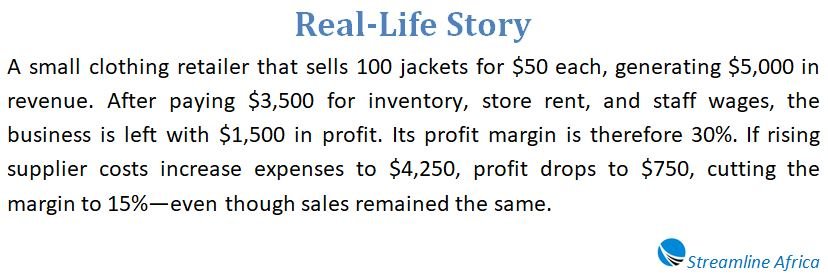
Profit margin is one of the most widely used measures of business performance, giving both managers and investors a clear view of how efficiently a company converts revenue into profit. Expressed as a percentage, profit margin indicates how much profit remains after covering costs for every dollar of revenue generated. For instance, a company with a 30% profit margin keeps $0.30 as profit from every $1 in sales. This measure goes beyond revenue figures alone, as two businesses with the same sales numbers can have very different profit margins depending on how well they manage costs.
The importance of profit margin extends to evaluating a company’s operational efficiency, financial health, and competitiveness in its industry. Strong profit margins often point to effective pricing strategies, cost management, and financial stability. By contrast, slim or negative margins may indicate challenges with pricing, inefficiency in operations, or high levels of debt eating into earnings. Because of this, profit margin is not just a figure for accounting—it becomes a signal for growth potential, investment viability, and even creditworthiness when seeking loans.

The Profit Margin Formula
At its core, profit margin is calculated by dividing profit by revenue and multiplying by 100 to convert it into a percentage. The formula is:
Profit Margin = (Profit ÷ Revenue) × 100
Since profit equals sales minus total expenses, the formula can also be written as:
Profit Margin = [(Sales – Total Expenses) ÷ Revenue] × 100
This calculation provides a standardized way to assess profitability regardless of the size of a business. Unlike raw profit, which is expressed in monetary terms, profit margin gives a percentage-based perspective, allowing for comparison across companies, industries, and time periods.
Example of Profit Margin Calculation
Imagine a company generating $450,000 in revenue during a quarter while incurring $315,000 in combined expenses such as production costs, salaries, and marketing. Its net profit would be $135,000. Using the formula, the profit margin equals (135,000 ÷ 450,000) × 100 = 30%. This means the business retains 30 cents of profit for every dollar earned.
In another case, suppose a business makes $720,000 in sales but has $648,000 in expenses, leaving only $72,000 in profit. The profit margin here is (72,000 ÷ 720,000) × 100 = 10%. Although the company generated more revenue than the previous example, its efficiency in converting sales into profits is far lower, signaling potential cost-control issues.
These examples highlight why investors and managers often focus on margins rather than total sales. Revenue alone does not guarantee financial success if costs rise at the same pace or faster.
Profit Margin vs. Profit Percentage
While profit margin and profit percentage sound similar, they are not identical. Profit margin calculates profit as a percentage of sales revenue, whereas profit percentage (sometimes called markup) is calculated based on cost. The distinction lies in the base figure used.
Profit Percentage = (Net Profit ÷ Cost) × 100
For example, imagine a business buys goods for $80 and sells them for $200. The profit is $120. The profit percentage is (120 ÷ 80) × 100 = 150%. On the other hand, the profit margin is (120 ÷ 200) × 100 = 60%. Both measures describe profitability but from different perspectives—profit percentage shows the return on cost, while profit margin highlights how much of the selling price becomes profit.
Return on Investment Multiple
Closely related to profit percentage is the concept of return on investment (ROI) multiple. It measures how many times the profit covers the initial cost. In the previous example, the ROI multiple is 120 ÷ 80 = 1.5, meaning the company earned 1.5 times its investment. This metric provides a more intuitive sense of gains, particularly for entrepreneurs and investors evaluating potential ventures.
Types of Profit Margin
Profit margin is not a single number but a set of ratios that provide insights at different stages of profitability. Businesses typically assess three main types: gross profit margin, operating profit margin, and net profit margin.
Gross Profit Margin
Gross profit margin shows how much revenue remains after deducting direct costs of production, commonly referred to as cost of goods sold (COGS). It focuses on the profitability of core operations before considering overhead, taxes, or financing.
Formula: Gross Profit Margin = (Gross Profit ÷ Net Sales) × 100
Example: Suppose a company earns $1,200,000 in sales and incurs $720,000 in COGS. Gross profit is $480,000. The gross profit margin is (480,000 ÷ 1,200,000) × 100 = 40%. This figure indicates how efficiently the company manages production and pricing relative to direct costs.
Operating Profit Margin
Operating profit margin goes deeper by considering not just COGS but also operating expenses such as salaries, rent, and utilities. It represents earnings before interest and taxes (EBIT).
Formula: Operating Profit Margin = (Operating Income ÷ Revenue) × 100
Example: If the same company has $1,200,000 in revenue, $720,000 in COGS, and $300,000 in operating expenses, the operating income would be $180,000. The operating profit margin equals (180,000 ÷ 1,200,000) × 100 = 15%. This percentage reflects profitability after covering the costs required to run the business on a daily basis.
Read More: Operating Margin Explained: Definition, Formula, Examples, and Why It Matters for Business Success
Net Profit Margin
Net profit margin is the broadest measure, accounting for all expenses including taxes and interest. It provides the clearest picture of how much profit truly remains from revenue after every cost is deducted.
Formula: Net Profit Margin = (Net Profit ÷ Revenue) × 100
Example: Suppose the same company also pays $40,000 in taxes. Net profit becomes $140,000. The net profit margin is (140,000 ÷ 1,200,000) × 100 = 11.7%. This figure is especially important for investors, as it shows the bottom line profitability of a business.
Importance of Profit Margin
Profit margins are essential indicators for businesses and stakeholders alike. They serve as benchmarks for operational efficiency, pricing strategy, and financial resilience. A healthy margin not only reflects effective cost control but also enhances a company’s ability to withstand downturns, secure loans, and attract investors.
For businesses, profit margins reveal whether their pricing strategy aligns with market conditions. If margins are shrinking despite steady sales, it may indicate rising costs or overly aggressive discounting. Conversely, expanding margins often signal stronger market positioning or improved operational efficiency.
Investors also rely heavily on margins when comparing companies in the same industry. While revenue growth is appealing, it is sustainable profit margins that ensure long-term returns. A company with high sales but razor-thin margins may struggle to deliver consistent shareholder value.

Uses of Profit Margin in Business
Profit margin is not just a static figure; it is a versatile tool used in multiple ways across business decision-making:
- Evaluating performance over time: By tracking changes in profit margin across quarters or years, businesses can identify trends in efficiency and profitability.
- Comparing industry peers: Profit margins allow investors to compare companies of different sizes within the same industry. This makes it easier to spot strong performers or struggling competitors.
- Pricing strategy analysis: Businesses use profit margin data to assess whether products or services are priced appropriately. Low margins may call for price adjustments or cost reduction strategies.
- Operational efficiency review: Examining margins across product lines can reveal which areas are more profitable and which are dragging down performance.
- Investor confidence and financing: Higher margins often attract investors and can serve as collateral when negotiating credit. Lenders and venture capitalists use margin figures to gauge the risk and stability of a business.
Industry Variations in Profit Margins
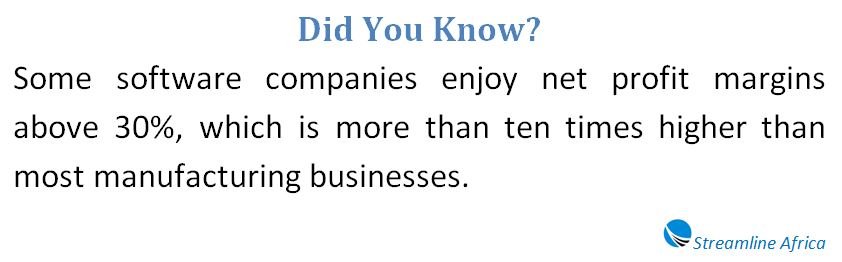
Profit margins vary significantly by sector due to differences in business models, cost structures, and competitive dynamics. For instance, software companies often enjoy margins above 20% thanks to low marginal costs of digital products. By contrast, industries like grocery retail operate on margins as low as 2%, relying on high sales volume to stay profitable.
Recent data from U.S. markets illustrates this diversity. Tobacco companies report average margins above 35%, while integrated oil and gas firms achieve margins exceeding 30%. At the other extreme, regional banks and life insurance companies hover near 0%, reflecting regulatory pressures and high operating costs. Green and renewable energy sectors, real estate investment trusts, and system software companies have also recorded impressive margins above 20%, highlighting the profitability of industries driven by innovation and high demand.
Understanding these differences is crucial for investors. Comparing margins only makes sense within the same sector; cross-industry comparisons can be misleading due to structural variations.
Challenges and Limitations of Profit Margin Analysis
Although profit margins are powerful indicators, they are not perfect. Different accounting practices, tax treatments, and financing arrangements can distort comparisons between businesses. A company with significant debt may show lower net margins due to interest costs even if its operations are efficient. Seasonal businesses may report fluctuating margins that do not accurately reflect long-term performance.
Moreover, a high margin is not always a sign of success. For example, excessively high margins might indicate that a company is charging prices above competitive levels, potentially risking customer attrition. Similarly, businesses with low margins may still thrive if they operate in high-volume industries where efficiency compensates for thin profitability.
Practical Examples of Margin Interpretation
Consider two companies, both with $2 million in revenue. Company A has expenses totaling $1.4 million, yielding a profit margin of 30%. Company B records expenses of $1.9 million, leaving a profit margin of only 5%. Despite similar revenue, Company A is clearly more efficient, making it a stronger candidate for investment or credit approval.
In another scenario, a retail chain with a 4% net margin may seem less profitable compared to a technology company with a 25% margin. However, within retail, 4% can be considered sustainable and competitive, while 25% is standard for tech firms. This demonstrates why industry context is essential when interpreting margins.
Key Takeaways
- Profit margin measures how much profit remains after covering costs, expressed as a percentage of revenue.
- There are three main types: gross, operating, and net profit margin, each offering insights at different levels of cost consideration.
- Profit margin differs from profit percentage, which is based on cost rather than revenue.
- Strong margins signal efficiency, financial resilience, and investment attractiveness, while weak margins may highlight inefficiencies or pricing challenges.
- Industry context is critical; what counts as a healthy margin varies widely across sectors.