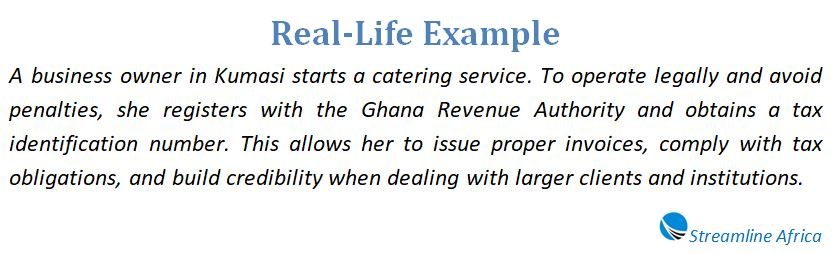
Over the years of advising individuals and organizations on taxation in Ghana, one thing I have consistently emphasized is the importance of starting right. Registering with the Ghana Revenue Authority (GRA) is not just about meeting a legal requirement—it is the first step toward building credibility and avoiding problems later on. Whether you are a young professional earning income, a growing business, or a non-profit organization engaged in economic activities, tax registration is a foundation you cannot afford to ignore.
Why I Encourage Early Registration
I often meet clients who delay registration until they are forced to do so, usually when they need a tax clearance certificate or are confronted with penalties. My advice is always the same: register early. By doing so, you are placing yourself within the legal tax framework, which protects you from unnecessary fines and allows you to operate without fear of compliance issues.
But beyond compliance, registering also means contributing to the country’s development. Taxes are what fund roads, hospitals, schools, and countless public services. When you register, you play your part in ensuring these services continue to exist. And from a practical standpoint, you gain access to important GRA services such as clearance certificates, VAT registration, and taxpayer education programs.

Who Should Register
As a consultant, I am often asked whether tax registration applies to “small” income earners. The answer is yes. If you are employed and receive a salary, self-employed as a professional or artisan, or even working freelance, you are required to register.
Businesses of all forms—sole proprietorships, partnerships, or limited liability companies—must also comply. Even non-governmental organizations, though not run for profit, are required to register if they engage in any activity that generates income. In short, if you earn taxable income in Ghana, you are expected to register.
Registration Options Available
The GRA has made strides in simplifying the process, and from my experience, most individuals find the online system convenient. Using the taxpayer portal, you can register with your Ghana Card PIN, which doubles as your Taxpayer Identification Number (TIN). Once registered, you can also file returns and make payments through the same portal.
For businesses or individuals who prefer a personal touch, the Taxpayer Service Centres provide excellent in-person assistance. I often advise clients with complex structures—such as companies with multiple directors—to visit these centres so that trained staff can walk them through the documentation. This reduces errors and avoids back-and-forth delays.
Individuals and Their Tax Identification
For individuals, the process is relatively straightforward. Your Ghana Card PIN already serves as your TIN. This is a welcome change because it means you do not have to manage separate identifiers. With your TIN, you can quickly register, submit returns, and fulfill your obligations.
Documentation for Businesses
For businesses, the requirements are more extensive, and this is where many of my clients rely on professional help. Typically, you will need:
- A certificate of incorporation or registration
- The Ghana Card details of owners or directors
- Information about the business location
- Financial statements or records, depending on the size of your operations
The exact documents can vary, and I always advise business owners to check carefully with the GRA before submission. Missing documents can slow down the process significantly.
Practical Advantages of Registration
One of the things I emphasize to entrepreneurs is that tax registration adds credibility. Banks, investors, and even customers feel more comfortable working with a business that is compliant. In addition, registered businesses qualify for government contracts and can obtain important certificates for expansion.
Another overlooked benefit is access to education and guidance from the GRA. As a taxpayer, you are entitled to information sessions and updates that help you stay on top of changes in policy or law. Over the years, I have seen how these programs save businesses from costly mistakes simply by keeping them informed.
Avoiding Penalties and Legal Issues
A common pitfall I see is clients postponing registration until they are caught in the net of penalties. Once fines start accumulating, the situation can become financially painful. In extreme cases, persistent non-compliance can lead to legal action. By registering at the outset, you avoid these risks entirely. It is far less costly to comply than to correct years of neglect.
Final Thoughts from a Consultant
From my perspective as a tax consultant, tax registration is not an optional step—it is the bedrock of financial and legal accountability in Ghana. It not only protects you from penalties but also equips you with the tools and services needed to grow.
My advice to anyone—whether an individual just starting a career, a small business owner, or the head of a large company—is simple: do not delay. Register with the GRA as early as possible, keep your documents in order, and seek professional guidance if you are unsure. Tax registration is the gateway to compliance, credibility, and long-term stability.
Consultant’s Tips for Smooth Registration
- Keep your Ghana Card updated—it is central to the process.
- Gather all required documents before starting registration to avoid delays.
- Use the online portal if your tax situation is simple; visit a service centre if it is complex.
- File your returns on time—registration is just the beginning of compliance.
- Consider professional advice if your business has multiple partners or complex finances.
Frequently Asked Questions
Do I need to register if my income is very small?
Yes. Even if your income is modest, you are still required to register. The GRA sets thresholds for tax liability, but registration ensures you are accounted for and compliant.
Can I use my Ghana Card instead of a separate tax number?
Absolutely. Your Ghana Card PIN doubles as your Taxpayer Identification Number (TIN). This integration makes the process much easier for individuals.
How long does registration usually take?
If your documents are in order, online registration can be completed within a day. For businesses registering in person, it may take a few days depending on the complexity of the application.
What happens if I don’t register?
Failure to register can lead to penalties, interest charges, and in some cases legal action. Non-compliance can also block access to government services and contracts.
Do NGOs really need to register?
Yes. If an NGO is engaged in income-generating activities, it must register with the GRA, even if profits are not the main purpose of the organization.
Can I get help if I don’t understand the forms?
Yes. The GRA has staff at Taxpayer Service Centres trained to assist applicants. You can also consult a professional advisor to ensure everything is done correctly.