What Defeasance Really Means
Defeasance is a financial maneuver that allows borrowers to effectively cancel a loan without formally repaying it in cash to the lender. Instead, the borrower sets aside enough money or high-quality securities, such as government bonds, to generate the payments that would have gone to the lender. Once these funds are placed in a dedicated account, the original debt is considered extinguished, and it is removed from the borrower’s balance sheet.
This strategy is especially relevant in commercial real estate, where early loan repayment can trigger hefty penalties. By using defeasance, businesses sidestep those penalties while still ensuring that investors or bondholders receive the income they were promised.
Why Defeasance Matters
For companies, especially those with large and complex financing arrangements, defeasance provides flexibility. It allows them to restructure debt, refinance at more favorable rates, or sell properties without being locked into long-term obligations. From an accounting perspective, the removal of debt from the balance sheet also makes financial statements cleaner, which can be useful when attracting new investors or negotiating fresh credit lines.
The process is not just about numbers—it also preserves relationships. Bondholders and other investors continue to receive their expected cash flow, while borrowers gain the freedom to move forward with their plans.

How the Process Works
At its core, defeasance is about substitution. Rather than paying off a loan in one lump sum, the borrower replaces the obligation with a portfolio of securities designed to generate the same cash flow as the loan would have. Typically, these portfolios consist of U.S. Treasury bonds or other safe, fixed-income investments.
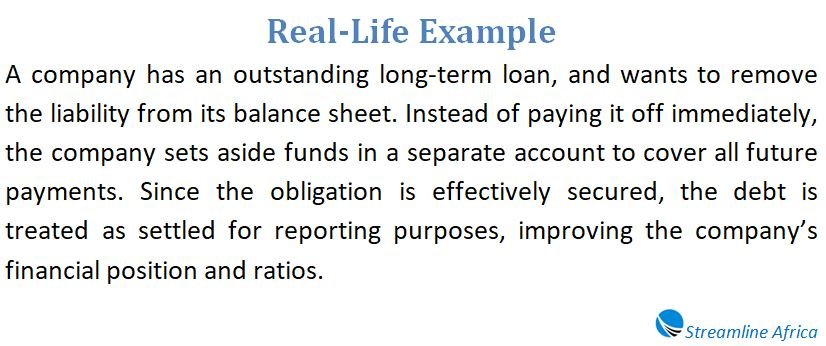
The borrower creates what is often referred to as a defeasance account. The cash or bonds in that account are locked in and dedicated to covering the remaining payments on the original loan. Because the lender’s expected payments are fully secured, the loan can be treated as settled. On the borrower’s books, the liability is erased, improving leverage ratios and reducing reported debt.
Defeasance in Commercial Real Estate
The clearest example of defeasance in practice can be seen in commercial property deals. These loans are often bundled into commercial mortgage-backed securities (CMBS), which are sold to investors. Those investors expect a steady stream of interest payments over many years. If the borrower pays off the loan early, it disrupts that cash flow, so lenders include prepayment penalties to compensate investors.
Defeasance offers a workaround. Instead of paying the loan off in cash, the borrower sets up a portfolio of bonds that produces the same payment schedule as the loan. The investors keep receiving their income, and the borrower is free to refinance, sell, or restructure without penalty. In this way, everyone’s expectations are met without conflict.
The Complexity Behind the Scenes
Although the concept sounds straightforward, executing a defeasance transaction is anything but simple. It requires financial modeling to ensure the chosen securities will perfectly match the loan’s payment schedule. Even small mismatches could cause problems. Because of this, borrowers typically hire financial advisors, lawyers, and accountants to guide the process.
This is similar to a technique used by pension funds called liability matching, where future cash inflows from investments are carefully aligned with future obligations to retirees. In both cases, precision is essential to avoid gaps that could leave obligations uncovered.
Defeasance Clauses in Mortgages
Many mortgage contracts, particularly in commercial property financing, contain a defeasance clause. This clause states that once the borrower has satisfied the debt—either through repayment or by substituting securities—the lender must release the title to the property. Until that point, the lender retains control over the deed as collateral.
Such clauses are not unique to real estate. Vehicle loans and other asset-backed financing often work in a similar way. Once the loan is fully repaid, the financing company relinquishes its claim, and the asset becomes the borrower’s unencumbered property.
Benefits of Using Defeasance
For borrowers, defeasance can be a powerful tool. It allows them to:
- Eliminate debt from the balance sheet without disrupting investor payments.
- Avoid costly prepayment penalties that can come with early loan repayment.
- Retain control of strategic decisions, such as selling a property or refinancing.
From a lender or investor perspective, defeasance ensures that expected income streams remain intact. It’s a win-win arrangement, provided it is executed properly.
Challenges and Drawbacks
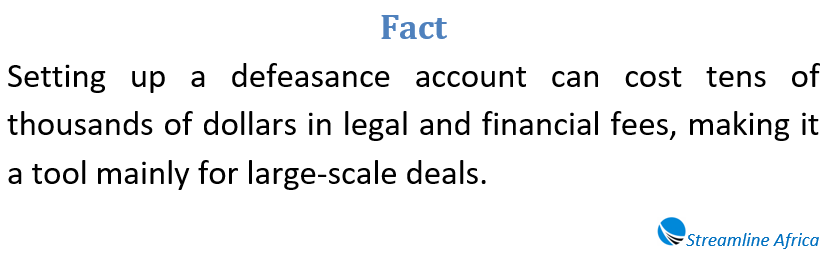
Despite its advantages, defeasance has drawbacks. The setup is costly, often requiring specialized legal and financial expertise. In addition, the securities purchased to fund the defeasance account must be carefully selected, which can involve significant upfront expenses.
For smaller borrowers or those without access to expert advisors, the process may be overly complex. The cost-benefit analysis is critical—defeasance only makes sense if the long-term savings outweigh the transaction expenses.
Putting It All Together
Defeasance is ultimately about balance—balancing the interests of borrowers seeking flexibility with the needs of investors who rely on consistent income. By substituting securities for debt, companies gain freedom without breaking promises. While it can be expensive and complex, it remains an important financial tool, particularly in commercial real estate and other large-scale financing arrangements.
Understanding defeasance gives both borrowers and investors a clearer picture of how debt can be managed creatively and responsibly. For businesses, it represents not just a way to tidy up balance sheets but also a path to greater financial agility.
Frequently Asked Questions about Defeasance
Why is defeasance common in commercial real estate?
Because early repayment of commercial loans often triggers steep penalties, defeasance lets borrowers exit without disrupting investor cash flow.
How does defeasance benefit borrowers?
It helps them avoid prepayment penalties, refinance more easily, sell properties without restrictions, and improve the appearance of financial statements.
What role do investors play in defeasance?
Investors keep receiving the same payments from the securities portfolio, so their income remains stable even if the original loan is replaced.
Why is the process considered complex?
Defeasance requires careful matching of securities to loan payments, often involving lawyers, financial advisors, and accountants to get it right.
Are there downsides to defeasance?
Yes. It can be expensive to set up, requires expert guidance, and may not be worthwhile unless the long-term benefits outweigh the upfront costs.