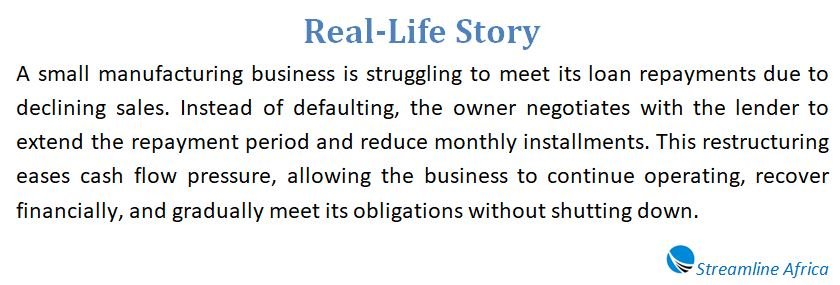
Debt restructuring is a process where a borrower—whether an individual, a company, or even a government—renegotiates the terms of their existing debt with creditors. The goal is to make repayment more manageable and avoid default. This usually involves lowering interest rates, extending repayment timelines, or in some cases reducing the total owed.
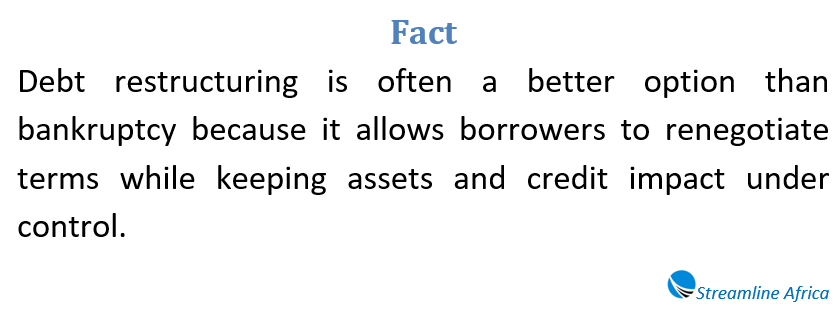
Instead of resorting to bankruptcy, which is costly and damaging for everyone involved, restructuring provides a practical alternative. Borrowers gain breathing room to stabilize their finances, and lenders are more likely to recover a greater portion of what they are owed than they would through liquidation or court proceedings.
Why Debt Restructuring Matters
Debt problems can happen to anyone. A company may face declining sales, a country might struggle with falling revenues, or a household could be hit with job loss or unexpected medical bills. In each case, failing to manage debt responsibly creates ripple effects. Businesses risk shutting down, governments face economic instability, and individuals could lose their homes or assets.
Restructuring is about finding common ground. Creditors prefer it because a reduced or rescheduled repayment plan is often better than recovering only a fraction of the debt in bankruptcy. Borrowers prefer it because it gives them a chance to regain stability without losing everything. In essence, it’s a compromise where both sides sacrifice a little but gain more in return.

How the Restructuring Process Works
The mechanics of debt restructuring vary depending on who the borrower is, but the principles remain similar. The borrower approaches lenders and requests changes to loan terms. These changes may include:
- Reducing the interest rate to make repayments less burdensome.
- Extending the loan maturity date so that payments are spread over a longer period.
- Converting part of the debt into equity (in corporate cases).
- Writing off a portion of what is owed, often called taking a “haircut.”
Lenders usually agree to these terms if the borrower presents a credible plan to stay solvent and continue making payments. For companies, this might involve revising operations to improve profitability. For individuals, it could mean showing steady employment or assets. For governments, restructuring often comes with fiscal reforms to reassure creditors of long-term repayment ability.
Corporate Debt Restructuring Strategies
Businesses, especially those burdened by large loans or bond issues, use a variety of strategies to restructure debt:
Haircuts on Bonds or Loans
In this arrangement, creditors agree to cancel part of the company’s debt in exchange for ownership shares. This makes sense when the company has potential but cannot meet immediate obligations. Creditors become part-owners, giving them a chance to benefit from the company’s recovery instead of losing everything in bankruptcy.
Haircuts on Bonds or Loans
Sometimes lenders agree to reduce the principal or interest payments the company owes. This may mean writing off a percentage of the debt entirely. Although creditors lose part of their money, they still recover more than they would if the company collapsed.
Callable Bonds and Refinancing
Companies often issue bonds with callable features. This means the company can repay those bonds early and replace them with new ones at lower interest rates if market conditions allow. This reduces future interest costs and lightens the overall debt burden.
Income Bonds
In rare cases, struggling companies issue income bonds, which require repayment of the principal but not regular interest payments. These are attractive when immediate cash flow is tight but the company believes it can repay the original loan balance over time.
Sovereign Debt Restructuring Approaches
Nations also run into debt crises. When a government cannot meet its obligations, the consequences can be severe—rising inflation, collapsing currencies, or even political unrest. Restructuring becomes a vital tool to prevent economic collapse.
One common approach is extending bond maturities. By giving the government more years to repay, the immediate financial burden is reduced. Another option is a partial reduction of debt, where creditors agree to accept less than the full value of what is owed. For instance, bondholders might agree to take only 70 cents on the dollar.
Sometimes, private debt is shifted to public institutions such as the International Monetary Fund (IMF) or World Bank, which can manage repayment risks better. While these measures can stabilize an economy, they often come with conditions requiring governments to adopt fiscal reforms, reduce spending, or raise taxes.
Unlike corporate or personal debt, sovereign debt restructuring lacks a unified international framework. Each case depends heavily on negotiation and the willingness of creditors to compromise.
Personal Debt Restructuring Options
Individuals, like companies and governments, can find themselves overwhelmed by debt. Mortgage payments, credit card bills, and student loans can spiral out of control. Restructuring gives individuals a chance to recover without declaring bankruptcy.
One approach is to negotiate directly with creditors. For example, a homeowner who cannot afford a $250,000 mortgage might negotiate to reduce the balance to $190,000. In exchange, the lender might claim a portion of the future sale proceeds of the home.
Another path is working with a debt relief company, which negotiates on behalf of the individual. However, this is an area full of scams, so borrowers must ensure they choose reputable firms. The best debt relief companies are transparent about fees and have proven track records.
Tax authorities may also agree to payment plans for overdue taxes, giving individuals more time to settle without facing severe penalties.
Benefits of Debt Restructuring
The biggest benefit of restructuring is that it creates a path forward. Borrowers gain more time, lower costs, and the chance to stabilize. Businesses avoid liquidation, countries prevent default, and households keep their homes or assets.
Creditors also benefit because they preserve the possibility of repayment rather than losing most of their investment in bankruptcy or default. In many cases, restructuring leads to a more sustainable financial arrangement for everyone involved.
Drawbacks and Risks
While restructuring can be a lifeline, it is not without risks. For borrowers, the process can damage credit ratings, making future borrowing more difficult. Companies may have to give up ownership stakes through equity swaps, reducing control for existing shareholders.
For creditors, restructuring means accepting less than what was originally promised. In some cases, it may encourage risky borrowing behavior if debtors assume they can always renegotiate later.
On a national scale, restructuring can come with political and social consequences, particularly if reforms tied to new repayment plans are unpopular with citizens.
Real-World Applications
History is full of restructuring examples. Large corporations like General Motors and countless airlines have restructured debt to survive downturns. Countries such as Argentina and Greece have restructured sovereign debt multiple times to avoid outright default.
Individuals too, often restructure mortgages after housing market crashes or renegotiate credit card debt through settlement programs. These examples show that restructuring, though complex, is a common financial tool used worldwide to navigate crises.
The Final Take
Debt restructuring is not about avoiding responsibility—it’s about creating sustainable ways to meet obligations when financial challenges make original terms impossible. By reducing interest rates, extending repayment schedules, or converting debt into equity, borrowers gain breathing room, and lenders recover more than they would through bankruptcy or default.
Whether it’s a corporation seeking to swap debt for equity, a country negotiating with bondholders to avoid collapse, or a family trying to hold onto their home, restructuring provides a practical middle ground. The key is transparency, good-faith negotiation, and ensuring that all parties walk away with a better outcome than they would have otherwise faced.
Debt Restructuring vs Bankruptcy vs Refinancing
Many people confuse these three terms. While all are related to debt management, they differ significantly in purpose and outcome.
| Feature | Debt Restructuring | Bankruptcy | Refinancing |
|---|---|---|---|
| Definition | Negotiating new terms with lenders to make repayment easier | Legal process where debts are discharged or reorganized by court | Taking out a new loan to replace an old one, often at a better rate |
| Impact on Borrower | Keeps operations/assets intact, reduces financial strain | Severe credit impact, possible asset liquidation | Usually improves cash flow, can extend repayment |
| Impact on Creditors | Receive partial payments or revised terms but more than in bankruptcy | Risk of recovering less or nothing | Continue earning interest under new loan terms |
| When Used | To avoid default and bankruptcy | When debts are unpayable and no deal is possible | When interest rates drop or better loan terms become available |
Frequently Asked Questions About Debt Restructuring
What is the main purpose of debt restructuring?
The primary goal is to make debt repayment more manageable without going through bankruptcy. It creates breathing space for borrowers while ensuring lenders recover more than they would in a liquidation.
How does debt restructuring affect credit scores?
For individuals, it can lower credit scores in the short term because terms are changed. However, it is usually less damaging than bankruptcy, and rebuilding credit is easier afterward.
Is debt restructuring the same as refinancing?
No. Restructuring involves renegotiating existing terms with creditors, while refinancing means replacing old debt with new loans, often at lower rates.
Can small businesses restructure debt?
Yes. Small and medium enterprises often negotiate extended timelines or reduced interest rates with lenders to maintain operations without filing for bankruptcy.

What types of debt restructuring exist for companies?
Businesses may use debt-for-equity swaps, callable bonds, income bonds, or negotiate “haircuts” on existing debt obligations.
Do countries restructure their debts too?
Yes. Sovereign debt restructuring happens when nations face repayment crises. Creditors may accept reduced payments or extended timelines, sometimes with support from the IMF or World Bank.
What are the risks of debt restructuring?
Borrowers may face short-term credit damage or lose partial ownership in debt-for-equity swaps. Creditors may receive less than the full amount owed. For countries, restructuring can trigger political and social backlash.
When should an individual consider debt restructuring?
When loan payments are overwhelming but income or assets suggest repayment is still possible with adjusted terms. It is often considered before declaring bankruptcy.