Every organization needs a structured way to track its finances. Without a clear framework, businesses would struggle to make sense of their income, expenses, and overall performance. This is where accounting periods come in. They provide the time frames against which financial activities are measured, organized, and presented. Whether a company chooses to report monthly, quarterly, or annually, these periods act as checkpoints that give structure to bookkeeping and financial reporting.
Investors, lenders, and managers rely on these time frames to evaluate how a business is doing, compare performance across companies, and make informed decisions. While the concept may sound simple, there are different types of accounting periods and principles that determine how information is recorded and interpreted.
What an Accounting Period Represents
At its most basic level, an accounting period is a block of time during which a company records its financial activity. This might be as short as a week or as long as a year. The idea is to have consistency so that businesses can present comparable reports over time.
For example, when you look at a company’s income statement, it may state “for the year ending December 31, 2027.” That phrase signals the accounting period. On the other hand, a balance sheet might reflect the company’s financial position “as of September 30, 2027.”
Without such boundaries, measuring growth, tracking performance, or complying with tax and regulatory requirements would be chaotic.

Why Accounting Periods Matter
Accounting periods create a rhythm for business reporting. They allow companies to slice their activities into digestible intervals that can be reviewed and analyzed. This helps:
- Management assess whether strategies are working.
- Investors judge whether a company is worth funding.
- Governments calculate taxes based on consistent time frames.
By standardizing how information is grouped, businesses ensure that comparisons are meaningful both internally and across industries.
Common Types of Accounting Periods
There are several ways to structure an accounting period, depending on the needs of the organization and the regulations it must follow.
Calendar Year
The simplest option is the calendar year. This means financial records start on January 1 and close on December 31. Many companies and individuals use this format because it aligns with the standard year, making tax filing and financial planning straightforward.
Fiscal Year
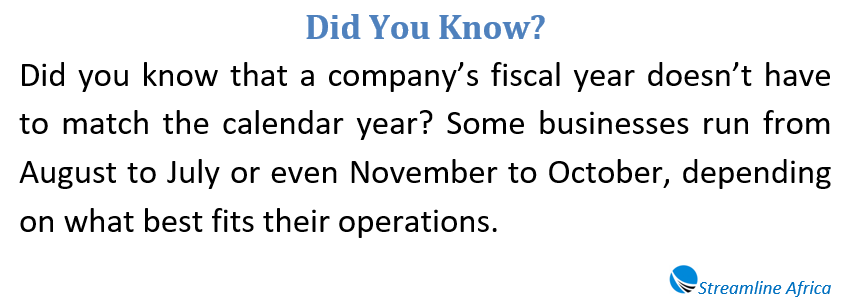
Some businesses prefer a fiscal year, which doesn’t have to match the calendar year. A fiscal year might run from August 1 to July 31, or from November 1 to October 31. Governments, universities, and nonprofits often choose this structure because it fits better with their funding cycles and operational realities.
Quarterly Reporting
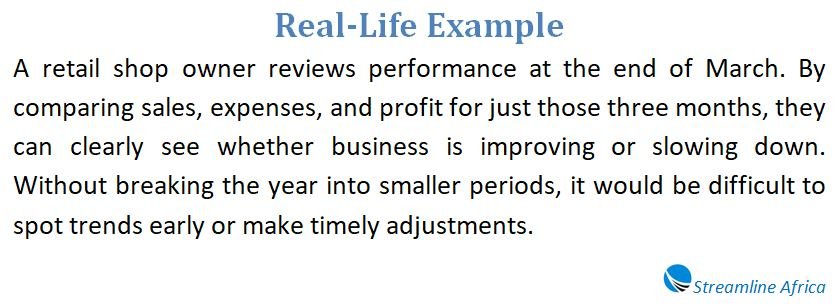
Public companies are required to share their financial performance with investors every quarter. Each quarter covers three months of activity, creating four accounting periods within a single year. For example, the first quarter could span January through March, the second April through June, and so on.
Monthly or Weekly Periods
For internal management, companies may also track finances monthly or even weekly. A supermarket chain, for instance, may monitor sales every week to identify how promotions in March or June affected revenue.
The Mechanics of Multiple Periods
It’s common for several accounting periods to overlap. Imagine a company closing its September financials while also preparing quarterly statements for July through September. At the same time, half-year figures for January through June may still be under review.
This layering gives managers, accountants, and analysts different levels of detail depending on what decisions need to be made. Investors may be most interested in annual results, while managers may want monthly updates to adjust operations in real time.
Principles That Govern Accounting Periods
Simply having time frames is not enough. Rules are needed to ensure information is reported fairly and consistently. The two most important principles that apply to accounting periods fall under the accrual method of accounting.
The Accrual Method
Under accrual accounting, financial events are recorded when they occur, not when money actually changes hands. This creates a more accurate picture of a company’s financial health because it matches obligations and revenues to the correct period.
For example, if a company purchases a delivery van for $90,000, it doesn’t record the entire cost in the year of purchase. Instead, it spreads the cost across several accounting periods through depreciation, aligning the expense with the income the van helps generate.
Revenue Recognition
This principle requires businesses to record revenue when it is earned, not necessarily when payment is received. Suppose a consulting firm finishes a $50,000 project in December but receives payment in January. The revenue must still be tied to December’s accounting period. This avoids overstating or understating results based on cash flow timing.
Matching Principle
The matching principle pairs expenses with the revenues they help produce. If a company sells electronics in April worth $120,000, the related cost of goods sold should also be recorded in April, even if suppliers are paid in May.
Another example involves depreciation. A machine worth $250,000 might generate income for a decade. Instead of charging the full cost in the year of purchase, the company spreads the expense over ten years, ensuring expenses align with revenue over time.
Flexibility of Period Length
While many assume accounting periods are always 12 months, that isn’t the case. Businesses can choose shorter spans like weeks or months depending on the type of analysis they need.
For strategic planning and investor reporting, annual or quarterly periods are common. For day-to-day management, shorter periods help monitor cash flow, track budgets, and measure performance more closely. This flexibility makes accounting periods versatile tools tailored to different purposes.
Read Also: How to Prepare a Trial Balance: Definition, Types, Common Errors, and Practical Steps
Closing an Accounting Period
At the end of each period, businesses finalize their books. This process, called closing, involves adjusting entries, reconciling accounts, and preparing financial statements. Closing can take time—sometimes extending into the next period—so accountants may work on two periods simultaneously.
Closing is critical because it “locks” the financial data for that time frame. Once closed, the information becomes the official record, forming the foundation for future comparisons and audits.
Real-World Applications
Accounting periods shape nearly every aspect of financial reporting. Income statements, balance sheets, and cash flow statements all reference specific periods. This ensures transparency and consistency for investors, regulators, and managers.
For example, when comparing two companies in the same industry, knowing one reports on a fiscal year ending July 31 while the other uses December 31 ensures accurate analysis. Similarly, nonprofits that rely on grants often structure their fiscal years around grant cycles, such as October through September, to align expenses and income with funding.
Impact on Investors and Regulators
Investors and regulators rely heavily on the discipline of accounting periods. Publicly traded companies must release quarterly updates to keep shareholders informed, while governments require annual reports for taxation and compliance.
Regular reporting based on standardized periods ensures accountability. It also makes it easier for investors to spot trends, assess risks, and make informed decisions about where to place their money.

Challenges in Practice
While accounting periods create order, they also introduce challenges. Businesses with global operations may face complications because different countries may require different reporting periods. Seasonal businesses might struggle to present a true picture if their peak activity doesn’t align with the reporting period.
Additionally, the closing process can be resource-intensive. Preparing accurate statements involves reconciling large amounts of data, which can slow down reporting if systems are not efficient.
The Bottom Line
Accounting periods are more than just dates on financial statements. They are the foundation of meaningful reporting, enabling businesses to measure performance, compare results, and meet regulatory obligations.
Whether organized by calendar year, fiscal year, quarter, or month, accounting periods ensure that revenue and expenses are matched correctly and financial activity is presented clearly. Without them, it would be nearly impossible to analyze how a company is performing over time.
For investors, accountants, and regulators, these periods provide the structure needed to evaluate financial health and make sound decisions. In short, accounting periods are the heartbeat of financial reporting—setting the rhythm by which businesses tell their financial story.