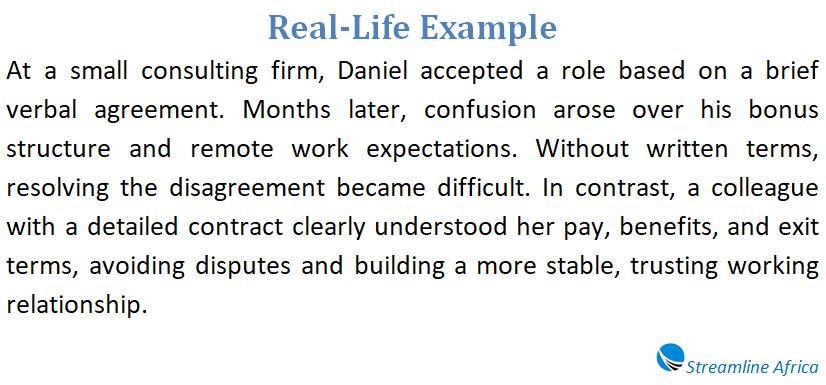
An employment contract is a formal or informal agreement between an organization and an individual who will perform work for that organization. The agreement can take the form of a written document, a verbal conversation, or even an implied understanding based on actions and expectations. Regardless of the format, its purpose is to establish what each party promises to provide during the working relationship. These agreements often outline when work begins, how long the relationship may continue, how the employee will be compensated, and what workplace expectations or policies apply. Some contracts also address sensitive areas like the protection of proprietary information, procedures for resolving conflicts, and the conditions that allow either party to end the relationship. Even when the details vary, the contract sets a foundation that guides both everyday operations and long-term expectations.
The Importance of Establishing Clear Employment Terms
A carefully drafted employment agreement can create structure and clarity for employers and employees alike. For the employer, it helps ensure consistency across their workforce and reduces misunderstandings about roles, expectations, and consequences. For employees, a contract can provide reassurance that their role, salary, working conditions, and rights are recognized and honored. In addition, clear documentation strengthens legal protection on both sides. By explaining what each party expects, the agreement minimizes confusion and supports a healthier working relationship. It can also safeguard sensitive business information and intellectual property by restricting how certain information is used or shared outside the workplace. Overall, the contract acts as a mutual guide that supports trust and transparency.
Crafting an Effective and Practical Employment Agreement
When developing an employment contract, flexibility is essential. While every agreement must reflect the policies and structure of the organization, it should also account for the specific responsibilities, seniority, and needs of the employee being hired. A contract often begins with a description of the position, including the title and core responsibilities. Employers typically include details about pay structure, whether wages are hourly or salaried, and how often payments will be issued. Another crucial component clarifies the type of employment relationship, such as whether the position is at-will, whether the employee has authority to bind the company to agreements, or whether the relationship is nonexclusive. The contract should also specify the employment start date, whether the role is full-time or part-time, and where the work will be performed. If employment is temporary or has an end date, this information should be included as well.

Outlining Benefits, Opportunities, and Additional Provisions
A comprehensive contract must also address the benefits that accompany the role. Typical benefits include paid time off, holiday schedules, sick leave, insurance options, and retirement plans. When applicable, the agreement may also state whether opportunities exist for annual raises, performance bonuses, promotions, or additional responsibilities. Many employers specify how employees can request time away from work and whether unused leave carries over. If the employee may work at different locations or under special circumstances—such as remote work or hybrid arrangements—the contract should detail how those arrangements function. Including these points at the outset ensures there are no surprises as the working relationship progresses.
Protocols for Ending Employment
Every employment contract should include a clear explanation of how the relationship may come to an end. Even if employment has a set duration, both parties should understand under what circumstances employment may terminate early. Employees may resign voluntarily, typically receiving payment up to their last working day, including any outstanding commissions or bonuses outlined in the contract. In some cases, employees may resign for what is considered a “good reason,” which can occur if the employer experiences financial difficulty, undergoes significant structural changes, or otherwise fails to uphold essential promises. Contracts also explain situations in which an employer may end employment “for cause,” meaning the employee engaged in misconduct, violated policies, or abandoned the role. Termination “without cause” occurs when no such violation exists, but the employer still ends the relationship; in these cases, employees generally receive their regular pay through the termination date. The agreement may additionally address what happens if the employee becomes disabled or passes away while employed, ensuring clarity for their estate or beneficiaries.
Confidentiality and Protection of Company Information
To safeguard sensitive business information, many employers include confidentiality clauses within their employment agreements. These clauses restrict employees from sharing proprietary information—such as business strategies, client lists, manufacturing processes, or inventions—with competitors or the public. In roles involving highly confidential data, the employer may require employees to sign a separate nondisclosure agreement. These measures help companies protect their competitive advantage and ensure that valuable knowledge does not leave the organization without authorization.
Handling Disagreements and Ensuring Fair Resolution
Another essential component of an employment contract addresses how disputes will be handled. Instead of immediately resorting to court proceedings, many contracts require disputes to be resolved through arbitration or mediation. This can simplify the process, reduce expenses, and help both sides reach a mutually acceptable outcome. The agreement may also specify who pays legal fees or how attorneys will be compensated. Establishing these rules before problems arise protects each party and promotes smoother conflict resolution.
Addressing Personal Needs and Accommodations
A thoughtful employment contract acknowledges that employees may have religious, personal, or educational needs that require special accommodations. These clauses emphasize that employees are free to practice their religion, seek education, or participate in other lawful activities outside the workplace without discrimination or penalty. Addressing these matters reinforces that the organization is committed to respecting employee beliefs, backgrounds, and personal development goals.
Who Should Receive an Employment Contract?
Employment contracts are suitable for nearly all new hires, as well as for current employees transitioning into new roles or responsibilities. While some entry-level positions may not legally require a formal contract, providing one helps both employer and employee understand expectations from the start. Favorable circumstances for a detailed agreement include positions involving high-level decision-making, access to confidential data, or specialized expertise that would make replacement difficult. In unionized work environments, employment terms are typically governed by collective bargaining agreements negotiated by both the employer’s and employees’ representatives. In executive roles, attorneys on both sides may review and negotiate contract terms before final approval. The more responsibility or confidentiality a role demands, the more necessary a well-defined contract becomes.
Written, Verbal, and At-Will Employment Agreements
Employment agreements can take several forms. Written contracts are the most common because they clearly document obligations, roles, timelines, and termination conditions. They help reduce ambiguity and are easier to enforce than other forms. Verbal agreements are also legally recognized, but proving their terms can be difficult if a dispute arises; in such cases, surrounding evidence like emails or workplace policies may be used to reconstruct the agreement. Many states also follow at-will employment practices, allowing either party to end the working relationship at any time without giving a reason, as long as the decision does not violate anti-discrimination laws. Employers may choose one form of contract over another based on the nature of the role, the level of risk, and the operational needs of the company. Understanding these contract types helps employers create clear, responsible hiring practices while ensuring employees know what to expect.
Frequently Asked Questions about Employment Contract
Why do employers use employment contracts?
Employers use contracts to create clarity, set expectations, and protect the company from misunderstandings. A contract also helps ensure the employee understands their role, pay, benefits, and obligations.
How does an employment contract benefit employees?
Employees gain security and transparency. They know what their job involves, how much they’ll earn, what benefits they receive, and the processes for resolving conflicts or ending employment.
What should be included in a job description section?
A job description outlines the job title, core duties, and performance expectations. It offers a clear picture of what the employer requires and helps prevent confusion later.
How is compensation typically addressed?
The contract usually explains whether the employee is hourly or salaried, how much they’ll earn, and how often paychecks are issued. It may also cover overtime rules, bonuses, or commission plans.

What types of employment relationships can a contract define?
A contract can specify at-will employment, indicate whether an employee can legally bind the company to agreements, or clarify if the relationship is nonexclusive—allowing work with other parties.
What information is usually included about employment duration?
This section lists the start date, whether the job is full-time or part-time, and where the work will occur. If the position has an end date, or could be extended, the contract explains that too.
Why is it important to outline benefits in the contract?
Detailing benefits ensures employees understand what paid time off, health coverage, holidays, and advancement opportunities are available. It avoids misunderstandings about entitlements later on.
How does the contract handle termination?
The contract explains how employment can end—whether through resignation, termination for cause, termination without cause, or circumstances like disability or death. It clarifies what compensation applies in each case.
What is the purpose of confidentiality clauses?
Confidentiality clauses protect a company’s sensitive information, such as trade secrets or business data. Some roles may also require a separate nondisclosure agreement.
How are disputes between employers and employees resolved?
Most contracts specify a dispute resolution process, such as arbitration or mediation. This helps both sides address conflicts without immediately involving courts or excessive legal fees.
Who should have an employment contract?
Employment contracts are useful for almost any hire, but they’re especially important for positions involving sensitive information, leadership roles, hard-to-replace skills, or union environments.