
Poultry farming has steadily grown into one of Ghana’s most attractive agribusiness ventures, driven largely by the country’s increasing appetite for chicken and eggs. Despite the rising demand, local farms are only able to supply a small share of what consumers need. Each year, hundreds of thousands of metric tons of chicken are eaten nationwide, yet most of it is imported. With domestic producers meeting less than a fifth of this demand, a huge supply gap has emerged—one that small-scale farmers can step into with the right preparation and strategy.
This shortfall has created a thriving market for new entrants who are willing to start small and scale gradually. Many households, eateries, schools, and food vendors now prefer fresh, locally raised chicken because of growing concerns about quality, safety, and the rising cost of imports. As a result, poultry farming has become an accessible way for young entrepreneurs, families, and cooperatives to generate income and support local food security.
Whether one chooses broiler farming for meat or layer farming for eggs, starting out does not require massive capital. Some farmers begin with a modest setup worth between GHS 8,000 and GHS 10,000 and still earn competitive returns in each production cycle. A batch of 100 broiler chicks can mature in under two months, providing a quick turnover and helping farmers reinvest profits into bigger operations.
Why Poultry Demand Continues to Grow
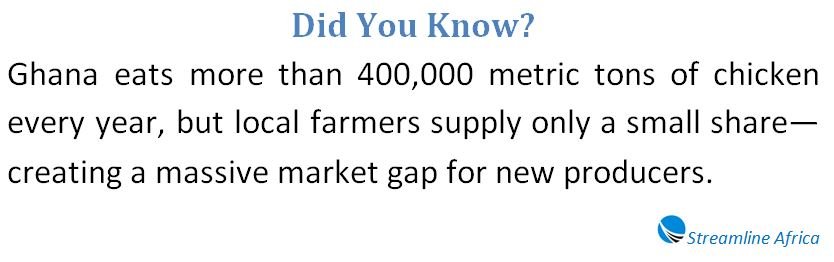
Chicken is one of the most consumed proteins in Ghana, finding its way into homes, restaurants, street food joints, and large institutions. As the population grows and the economy expands, this demand keeps rising. Currently, the country consumes over 400,000 metric tons of chicken yearly. Unfortunately, most of this is sourced from foreign suppliers because local production cannot meet the needs of the market.
This heavy reliance on imports has opened up a business opportunity valued at billions of Ghana cedis. Ghanaian farmers have a clear chance to produce fresh chicken and eggs to replace what is sourced abroad. Government programs aimed at boosting the poultry sector, including training initiatives and tax exemptions on selected inputs, further make it easier for new farmers to enter and thrive in the industry.
Consumers are also driving this shift. Many now prefer locally raised birds because they support the domestic economy, reduce carbon footprints associated with long-distance shipping, and provide fresher options for cooking. As inflation increases the cost of imports, local poultry farming becomes even more profitable for those who operate efficiently.
Exploring the Poultry Market Landscape
Anyone entering the poultry industry must understand the different segments of the market. Broilers, which are raised for meat, command strong demand from chop bars, frozen chicken retailers, caterers, and supermarkets. Prices vary depending on whether the birds are sold live or processed. Layers, on the other hand, produce eggs and have a consistent year-round market, especially from households, bakeries, hotels, and trading women who buy eggs in crates.
Feed, chicks, and manure also have their own markets. Hatcheries deliver day-old chicks to farms across the country, while agro-input shops supply feed, vitamins, and vaccines. Even poultry manure is valuable, as vegetable farmers often buy it for soil improvement. Understanding these multiple revenue streams helps farmers reduce waste and maximize every aspect of the business.
Regional pricing trends also influence profitability. Urban centers like Accra, Kumasi, and Takoradi typically offer higher retail prices due to greater demand, whereas rural communities may have lower overheads and cheaper feed options. Farmers who successfully balance production costs with market prices often achieve healthy profit margins between 20 and 30 percent, especially for broilers.
Preparing to Launch Your Poultry Farm
Before purchasing the first chick, it is essential to spend a few days researching local demand and potential customers. This short study helps new farmers decide between broiler farming for quick returns or layer farming for long-term income. Broilers mature fast, typically within six to eight weeks, making them ideal for farmers who want to start generating money quickly. Layers require patience, as they only start producing eggs after several months, but they provide a steady daily or weekly income once production begins.
Choosing a good location is also important. Many new farmers begin in their backyard or on a family plot, as long as the site is well-drained, airy, and far from flood-prone areas. Clean surroundings and good ventilation help protect birds from diseases and stress.
After selecting a site, the next step is constructing a simple but effective coop. Using basic materials like wooden frames, roofing sheets, wire mesh, and raised floors, farmers can create a shelter that protects birds from predators, pests, and adverse weather conditions. Spacing is crucial; overcrowding leads to disease outbreaks and low weight gain, so at least one square foot per bird is recommended.
Sourcing Quality Chicks and Essential Supplies
The success of any poultry farm begins with the quality of chicks purchased. It is best to buy from reputable hatcheries that are known for healthy, fully vaccinated stock. Trusted hatcheries often include well-established names that supply day-old chicks across the country. These chicks are vaccinated against common diseases, but additional vaccinations throughout the rearing period remain essential.
Farmers should also invest in a reliable feeding plan. Commercial feed brands supply starter, grower, and finisher feed for broilers, as well as layers mash and layer concentrate for egg-producing birds. Waterers, feeders, heat lamps, disinfectants, and weighing scales are also necessary to maintain healthy growth and monitor progress.
Record keeping should begin from day one. Every bag of feed used, every vaccination given, and every bird lost must be recorded. These records help farmers calculate their actual profits and identify areas where costs can be controlled.
Managing Birds From Day One to Market Age
The first week of a chick’s life is the most delicate. Farmers must maintain warm temperatures, clean bedding, constant water supply, and proper lighting. As the birds grow, temperatures can be gradually reduced. Fresh clean water and feed must always be available, and feeders should be cleaned regularly to prevent mold and contamination.
Vaccination schedules should be strictly followed. Diseases such as Newcastle, Gumboro, and Fowl Pox are common in Ghana, and missing a single vaccination can lead to significant losses. Regular disinfection of the coop, removal of wet bedding, and keeping visitors away from the birds all help maintain a healthy flock.
For broilers, weight monitoring is key. Birds must gain weight steadily to reach market size within the expected timeframe. Farmers who manage feeding efficiently often produce heavier birds and earn more money when selling.
Read Also: How Ghanaian Entrepreneurs Can Access Small Business Grants to Grow and Expand Their Companies
Selling Your Birds and Eggs for Maximum Returns
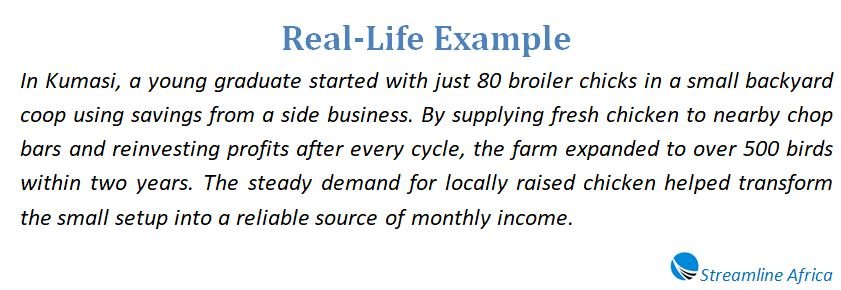
Once the birds reach the right size or eggs are produced regularly, it is time to enter the market. Many farmers succeed by selling directly to chop bars, frozen chicken sellers, event caterers, schools, and local markets. Others use digital platforms such as WhatsApp groups and online marketplaces to reach retail customers.
Pre-selling birds before slaughter helps guarantee cash flow and reduces the risk of keeping unsold stock. Farmers may choose to sell live birds to reduce processing labor or process the birds themselves to earn slightly higher prices. Eggs typically sell in crates, with medium and large sizes having different price points depending on the location.
To scale the business, farmers reinvest profits by increasing flock size, improving housing, or diversifying into products like smoked chicken or packaged manure. Each addition expands revenue opportunities and strengthens the farm’s market position.
Building a Sustainable Poultry Enterprise
Starting a poultry farm in Ghana with less than GHS 10,000 is entirely achievable. What matters most is discipline, planning, and continuous learning. By starting small, observing market behavior, and reinvesting profits wisely, a farmer can grow from a backyard operation into a sustainable business that supplies meat, eggs, or both.
Poultry farming remains one of the most promising agribusiness ventures in the country, offering steady income while contributing to Ghana’s broader goal of improving local food production. With consumer preferences shifting toward fresh, locally raised options and import prices continuing to rise, farmers who enter the industry now stand to benefit greatly from this growing opportunity.
FAQs about Poultry Farm Business in Ghana
What makes poultry farming such a profitable venture in Ghana?
Poultry farming is profitable because the country consumes far more chicken and eggs than local farmers can produce. With most chicken imported, small-scale farmers who offer fresh, local alternatives often find ready buyers and strong profit margins.
How much capital is needed to start a small poultry farm?
Many beginners start with GHS 8,000–10,000. This covers chicks, feed, housing materials, and basic equipment. Starting small allows farmers to learn, reduce risk, and reinvest profits as they grow.
Should beginners choose broilers or layers?
Broilers are great for people who want quick returns because they mature in six to eight weeks. Layers take longer to produce income, but once they start laying eggs, they offer steady daily or weekly cash flow.
Why is market research important before starting?
Research shows you who your customers are, how much they are willing to pay, and where demand is strongest. This early step helps you avoid losses and choose the best farming model.
What characteristics make a good poultry farm location?
The site should be well-drained, airy, and free from flooding. Good ventilation reduces disease, while a quiet environment helps birds grow with less stress.
Where can farmers buy quality day-old chicks?
It is best to purchase chicks from trusted hatcheries known for healthy breeding stock. Reputable hatcheries provide vaccinated chicks and maintain strict hygiene standards, reducing early mortality.
What type of housing structure works for small farms?
Simple wooden or metal-framed coops with wire mesh and roofing sheets work well. The structure should be raised to prevent flooding and provide enough space to keep the birds comfortable.
How important is record keeping in poultry farming?
Records help farmers track feed consumption, growth rates, mortality, and overall costs. This information is essential for knowing if the business is profitable and where improvements are needed.
What are the biggest health risks for poultry birds?
Diseases like Newcastle, Fowl Pox, and Gumboro are common. Strict vaccination schedules, clean water, dry bedding, and regular disinfection all help prevent outbreaks.
How can farmers market their birds and eggs effectively?
Farmers often succeed by selling directly to chop bars, caterers, frozen chicken sellers, markets, schools, and through WhatsApp or Facebook Marketplace. Pre-selling ensures quicker turnover and reduces storage risk.
What strategies can increase poultry farm profitability?
Cost control, quality feed, timely vaccinations, proper housing, and strong customer relationships all drive profitability. Farmers who reinvest earnings in expansion usually see consistent growth.
Can poultry manure become an extra income source?
Yes. Poultry manure is in high demand among vegetable farmers. Selling bagged manure creates an additional revenue stream and helps reduce waste on the farm.