

When organizations acquire long-term resources—whether heavy machinery, office technology, commercial buildings, or software licenses—they need a consistent way to report those items in their financial statements. Carrying value is one of the most widely used accounting measurements for this purpose. It reflects how much of an asset’s recorded cost remains after accounting for its gradual use over time.
Rather than estimating what an asset could fetch in today’s marketplace, carrying value focuses on systematic cost allocation. It begins with the documented purchase price and decreases as the asset provides economic benefit. Understanding how this figure is calculated helps managers, investors, and analysts interpret financial statements with greater clarity.
What Carrying Value Represents
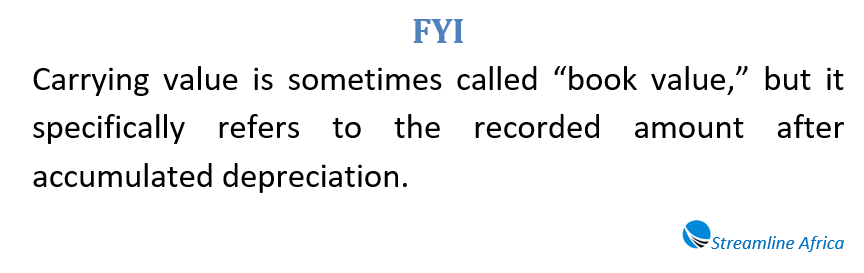
Carrying value, sometimes referred to as book value, is the net amount at which an asset appears on the balance sheet. It is determined by subtracting accumulated depreciation or amortization from the asset’s original acquisition cost.
For tangible resources such as equipment, vehicles, and office furniture, depreciation is used to allocate cost over time. For intangible items like trademarks or proprietary software, amortization performs a similar function. Both processes ensure that the cost of the asset is spread across the periods in which it helps generate revenue.
Because carrying value is anchored in documented purchase records and established accounting methods, it is objective and verifiable. It does not rely on fluctuating market estimates.
Distinguishing Carrying Value from Market Value
Carrying value and market value are often confused, yet they serve very different purposes. Market value reflects what buyers are willing to pay at a given moment. It can rise or fall based on economic shifts, technological innovation, or changes in demand.
Carrying value, however, follows a structured accounting formula. It declines according to predetermined depreciation or amortization schedules. As a result, carrying value may be higher or lower than current market value.
For instance, a company’s printing equipment might have a carrying value of $18,500 after several years of depreciation. In the open market, that same equipment could sell for $22,000 if demand is strong—or only $15,000 if newer models dominate the industry. The accounting records will continue to reflect the calculated carrying amount unless an impairment adjustment becomes necessary.
The Core Calculation Formula
The formula for carrying value is straightforward:
Carrying Value = Acquisition Cost − Accumulated Depreciation (or Amortization)
Acquisition cost includes not only the purchase price but also any additional expenses required to make the asset operational. These may include transportation fees, installation costs, or legal expenses associated with acquiring intangible rights.
Accumulated depreciation represents the total amount of depreciation expense recorded since the asset was placed into service. Each reporting period increases the accumulated balance and reduces the carrying value accordingly.
This systematic reduction ensures that the remaining book value reflects the unallocated portion of the asset’s original cost.
The Role of Depreciation and Amortization
Depreciation and amortization exist to match expenses with revenue generation. Instead of recognizing the full cost of a long-term asset in the year it is purchased, accounting standards distribute that cost over its useful life.
For physical assets, depreciation accounts for wear, usage, aging, and technological obsolescence. For intangible assets, amortization reflects the gradual consumption of legal or contractual benefits.
This approach prevents financial statements from showing distorted results in the year of purchase. It promotes fairness in reporting by aligning costs with the income they help produce.
As these expenses accumulate, the carrying value steadily declines, illustrating how much of the asset’s value has already been consumed.
Why Land Is Treated Differently
Most tangible assets decline in value due to use or aging. Land, however, is treated as having an indefinite useful life. Because it does not wear out in the same manner as equipment or buildings, it is generally not depreciated.
Its carrying value usually remains equal to its original purchase price unless circumstances require an impairment adjustment.
However, improvements made to land—such as paving, drainage systems, lighting installations, or constructed facilities—are depreciable. Buildings erected on land are also depreciated over their expected lifespan. Therefore, while the land itself maintains a steady book value, the total recorded value of a property may decrease as improvements and structures are depreciated.
Practical Example: Company Delivery Van
Consider a logistics company called BrightPath Couriers that purchases a delivery van for $31,000. The company estimates that after four years of service, the van will have a residual value of $5,000. This residual amount represents what the company expects to recover at the end of the van’s useful life.
To determine annual depreciation under the straight-line method, BrightPath first calculates the depreciable base:
Depreciable base = $31,000 − $5,000 = $26,000
The useful life is four years, so the annual depreciation expense is:
$26,000 ÷ 4 = $6,500 per year
At the end of the first year, accumulated depreciation totals $6,500. The carrying value becomes:
$31,000 − $6,500 = $24,500
By the end of the second year, accumulated depreciation reaches $13,000. The carrying value is then:
$31,000 − $13,000 = $18,000
This process continues until the carrying value equals the $5,000 residual value at the conclusion of year four.
This example demonstrates how carrying value evolves in a structured and predictable manner.
Presentation on the Balance Sheet
In financial statements, carrying value is typically shown indirectly. The balance sheet lists the asset at its original acquisition cost and separately displays accumulated depreciation.
For example:
Delivery Van: $31,000
Less: Accumulated Depreciation: ($13,000)
The net result, $18,000, represents the carrying value at that point in time.
This format allows readers to see both the historical investment and the total depreciation recognized to date. It enhances transparency by separating original cost from the portion already allocated as expense.
Adjustments Beyond Regular Depreciation
While carrying value generally declines according to a planned schedule, certain events may require additional adjustments.
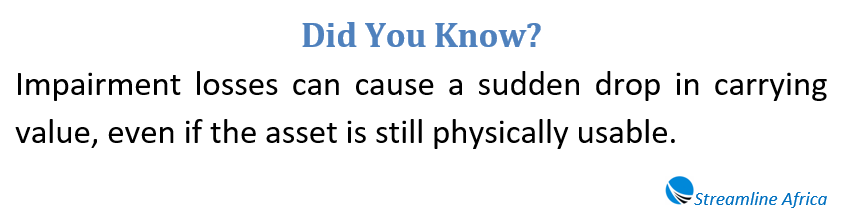
If an asset becomes technologically obsolete, damaged, or significantly less valuable than anticipated, an impairment test may be necessary. If the recoverable amount falls below the carrying value, the company must reduce the recorded amount and recognize an impairment loss.
In some accounting systems, upward revaluations may be permitted under strict guidelines. However, such increases are less common and heavily regulated.
These adjustments ensure that carrying value does not materially overstate the economic benefit the asset can realistically provide.
Why Carrying Value Matters for Decision-Making
Carrying value influences several financial metrics. It affects total assets on the balance sheet, which in turn impacts return on assets, debt-to-equity ratios, and asset turnover calculations.
For management teams, monitoring carrying values helps anticipate capital replacement needs. If a significant asset is nearing the end of its useful life and has a low remaining carrying value, it may signal the need for reinvestment.
For investors and lenders, carrying value provides insight into how effectively a company manages long-term investments. It reflects disciplined cost allocation and compliance with accounting standards.
Although it does not mirror real-time market prices, carrying value offers stability and consistency in financial reporting.
The Broader Importance of Carrying Value
At its foundation, carrying value embodies structured accounting discipline. It ensures that long-term investments are recorded responsibly and that expenses are recognized gradually over time rather than all at once.
While market values may fluctuate unpredictably, carrying value follows a logical, documented process. By subtracting accumulated depreciation or amortization from acquisition cost, companies maintain an accurate record of remaining book investment.
Understanding this concept allows readers of financial statements to interpret asset balances more effectively. It clarifies why a company’s equipment, buildings, or vehicles may appear at values different from their potential resale prices.
Ultimately, carrying value is not about predicting future selling prices. It is about faithfully tracking the allocation of costs across the lifespan of valuable business resources. Through consistent calculation and transparent reporting, it remains a cornerstone of sound financial accounting practice.
Frequently Asked Questions
What does carrying value actually mean in accounting?
Carrying value is the amount an asset is recorded at on the balance sheet after deducting accumulated depreciation or amortization. It represents the remaining book value of the asset based on its original cost, not its current market price.
How is carrying value calculated?
It is calculated by subtracting accumulated depreciation (for tangible assets) or accumulated amortization (for intangible assets) from the asset’s original acquisition cost. The formula ensures the asset’s value declines systematically over time.
Why is carrying value usually different from market value?
Market value reflects what buyers are willing to pay at a specific moment, which can fluctuate. Carrying value, however, follows accounting rules and historical cost principles, making it more stable and less subjective.
What role does depreciation play in carrying value?
Depreciation gradually reduces the recorded value of tangible assets as they are used to generate income. Each depreciation expense increases accumulated depreciation and lowers the asset’s carrying value accordingly.
Do all assets depreciate over time?
No. Land is generally not depreciated because it is considered to have an indefinite useful life. However, improvements made to land—like buildings or paved surfaces—are depreciable.
How does carrying value appear on financial statements?
On the balance sheet, assets are listed at their original cost with accumulated depreciation shown separately. The difference between these two figures represents the carrying value.
Can carrying value change outside regular depreciation?
Yes. If an asset becomes impaired due to damage, obsolescence, or economic decline, its carrying value may be reduced through an impairment adjustment to reflect a lower recoverable amount.
Why is understanding carrying value important for investors and managers?
Carrying value helps assess how much of an asset’s cost has been consumed and how efficiently a company manages long-term investments. It also influences financial ratios and overall balance sheet strength.