

In modern workplaces, the difference between an average team and a high-performing one often comes down to how well employees manage their time. Organizations today operate in environments where deadlines are tight, expectations are high, and competition is intense. Under these conditions, time management becomes more than a personal habit—it becomes a strategic advantage.
Employees who manage their time effectively can accomplish more tasks without feeling overwhelmed. They experience less stress, maintain better focus, and contribute more consistently to organizational goals. On the other hand, poor time management can lead to delayed projects, constant pressure, and reduced morale within teams.
Consider the case of BrightWave Solutions, a marketing agency based in Nairobi. When project manager Daniel Mwangi noticed that deadlines were frequently missed despite long working hours, he realized the issue was not workload—it was time management. By introducing structured productivity practices, his team improved output, reduced overtime, and increased client satisfaction.
For employers, this directly affects return on investment. Time is one of the most valuable resources in any organization. When employees spend it wisely, businesses benefit from increased efficiency, better quality work, and stronger collaboration.
The goal of time management is not simply doing more work. Instead, it focuses on doing the right work at the right time. Below are seven practical strategies that can help employees improve time management and boost productivity across the workplace.

1. Start Each Day by Prioritizing Tasks
One of the most effective ways employees can control their time is by clearly defining what needs attention first.
Imagine Amina Hassan, a logistics coordinator in Lagos. Every morning, she writes down everything she needs to accomplish that day. Instead of tackling tasks randomly, she ranks them based on importance and urgency.
However, long task lists can quickly become overwhelming. A simple prioritization framework can help categorize responsibilities into four groups:
Urgent and Important
These tasks demand immediate attention and usually relate to critical deadlines or pressing problems. Examples include submitting a final proposal to a client or resolving a system failure that affects operations.
Important but Not Urgent
These tasks contribute significantly to long-term goals but do not require immediate action. Examples include strategic planning, professional development, or building new partnerships.
Urgent but Less Important
Some tasks require quick responses but do not directly impact major goals. For instance, replying to routine emails or handling minor administrative requests.
Neither Urgent nor Important
These are activities that consume time without producing meaningful results. Examples include unnecessary browsing, excessive chatting, or repeatedly checking social media during work hours.
By sorting tasks into these categories, employees can focus on activities that truly move projects forward rather than reacting to every small interruption.
2. Define Clear Goals Using the SMART Method
Without clear goals, even hardworking employees can waste time working in the wrong direction.
That’s why productivity experts often recommend the SMART goal framework. This approach ensures that objectives are:
Specific
Measurable
Achievable
Relevant
Time-bound
For example, instead of setting a vague goal like “improve customer response,” a team could define a SMART goal such as:
“Reduce average customer support response time from 18 hours to 8 hours within two months.”
This goal clearly identifies the objective, the measurement of success, and the timeline.
At MapleTech Services in Johannesburg, customer support manager Lerato Nkosi implemented SMART goals for her team. Within three months, response times improved significantly because employees knew exactly what they were working toward.
Clear goals eliminate confusion and help employees allocate their time more effectively.
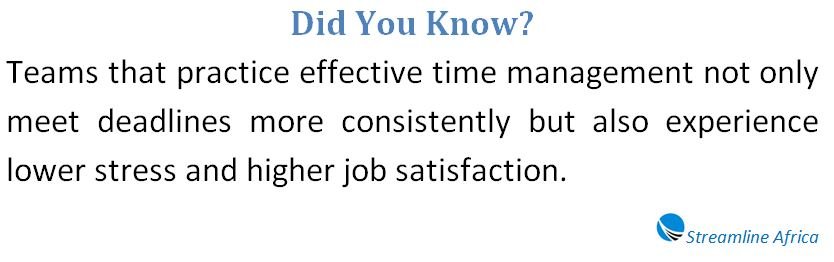
3. Use Time Blocking to Structure the Workday
Multitasking often feels productive, but research consistently shows that it reduces efficiency. Constantly switching between tasks forces the brain to repeatedly refocus, which wastes valuable time.
Time blocking offers a simple solution.
This technique involves dividing the day into specific time segments dedicated to particular tasks.
For example:
8:30–10:30 AM – Deep project work
10:30–11:00 AM – Emails and quick communications
11:00–1:00 PM – Client research
2:00–3:30 PM – Team collaboration and meetings
By assigning tasks to specific time slots, employees reduce the temptation to jump between activities.
Consider Javier Morales, a software developer in Madrid. Before adopting time blocking, his day was filled with scattered meetings and constant interruptions. Once he began scheduling focused coding sessions during his most productive morning hours, his project completion rate increased dramatically.
Planning the workday in advance helps employees stay disciplined and ensures that important work receives dedicated attention.
4. Reduce Distractions and Manage Interruptions
Distractions are one of the biggest obstacles to productivity in modern workplaces.
Every notification, message, or unexpected conversation pulls attention away from the task at hand. Studies suggest that it can take more than twenty minutes for the brain to fully regain concentration after an interruption.
Consider what happens when employees repeatedly check messages, emails, or social media throughout the day. Even short distractions can add up to hours of lost productivity.
Employees can manage interruptions by taking a few practical steps:
Turning off non-essential notifications during focused work periods
Setting designated times for checking emails
Using “do not disturb” settings when working on critical tasks
Creating quiet spaces or focus zones in the office
At a consulting firm in Toronto, team members introduced two daily “focus hours” when internal messaging was paused. Within weeks, productivity improved and employees reported feeling less mentally drained.
Reducing distractions allows employees to complete tasks faster and with greater accuracy.
5. Use Technology to Improve Efficiency
Technology, when used wisely, can significantly enhance workplace productivity.
Modern digital tools help teams organize tasks, track progress, and collaborate more effectively. Instead of relying on scattered spreadsheets and manual updates, many organizations now use project management platforms that centralize information.
For instance, task management apps allow employees to:
Track assignments and deadlines
Share updates with teammates
Automate recurring processes
Monitor project progress in real time
At BluePeak Analytics, a startup in Cape Town, managers introduced an automated reporting system that replaced manual weekly reports. What previously took several hours each week now takes only minutes.
However, technology only works if employees understand how to use it effectively. Organizations should invest in training to ensure team members are comfortable with digital tools.
When technology and human skills work together, teams can operate faster and smarter.
6. Learn When to Say No and Delegate Responsibilities
Many professionals struggle with overcommitment. They accept every request, attend every meeting, and take on too many responsibilities.
While this may seem helpful, it often leads to burnout and declining work quality.
Knowing when to say “no” is an essential time management skill.
Employees should evaluate whether a request aligns with their priorities and responsibilities. If it does not, they can politely decline or suggest an alternative.
For example:
“I’d like to help, but I’m currently focused on completing the quarterly report. Perhaps we can revisit this next week.”
Delegation is equally important. Managers and team leaders should distribute tasks according to each person’s strengths.
At a retail company in Dubai, operations manager Khalid Al-Sayeed encouraged his supervisors to delegate more responsibilities to junior staff. This not only improved efficiency but also helped employees develop new skills and confidence.
When teams share responsibilities effectively, workloads become more manageable and collaboration improves.
7. Reflect and Continuously Improve Work Habits
Time management is not a one-time skill—it evolves over time.
Employees benefit from regularly reviewing how they spend their work hours and identifying opportunities for improvement.
A weekly reflection session can help answer important questions:
Which tasks consumed the most time this week?
Which strategies helped me stay focused?
Where did distractions occur?
What can I adjust next week to improve productivity?
For example, Sofia Almeida, a financial analyst in Lisbon, realized through weekly reflection that she spent too much time in unnecessary meetings. By requesting clear meeting agendas and declining sessions that did not require her input, she reclaimed several hours each week.
Continuous reflection encourages employees to refine their approach and build stronger productivity habits.
Why Time Management Matters in Every Workplace
Imagine a workplace where every employee understands how to manage their time effectively.
Projects are completed on schedule. Meetings start and end on time. Deadlines are met without last-minute panic. Employees feel focused rather than overwhelmed.
This type of environment does not happen by accident. It is built through consistent habits and practical time management strategies.
When teams develop these skills, organizations experience smoother workflows, higher efficiency, and better results overall.
It is also important to recognize that time management looks different for everyone. Some employees perform best in the early morning, while others reach peak productivity later in the day. The key is helping individuals discover systems that allow them to work effectively while contributing to team goals.
Ultimately, strong time management skills benefit everyone involved. Employees gain better control over their workload and stress levels, while organizations benefit from improved performance and stronger outcomes.
In a competitive business landscape, the ability to manage time wisely can be one of the most valuable professional skills a team can develop.
Important Questions and Answers About Employee Time Management
What does effective time management mean in the workplace?
Effective time management means organizing tasks, setting priorities, and allocating time wisely so employees can complete important work efficiently without unnecessary stress or wasted effort.
Why is time management considered a critical workplace skill?
Time management helps employees meet deadlines, reduce pressure, and maintain consistent productivity. When teams manage time well, organizations achieve goals faster and operate more smoothly.
How does poor time management affect workplace productivity?
When employees struggle to manage time, tasks pile up, deadlines are missed, and work quality can decline. It can also increase stress levels and create frustration across teams.
How can prioritizing tasks improve productivity?
Prioritizing tasks ensures that the most important responsibilities are completed first. This prevents employees from spending valuable time on less impactful activities while critical work remains unfinished.
What role do clear goals play in managing time effectively?
Clear goals provide direction and help employees focus on meaningful outcomes. When people know exactly what they need to accomplish, they can plan their time more efficiently.
Why is the SMART goal framework useful for employees?
The SMART framework helps employees set goals that are specific, measurable, achievable, relevant, and time-bound, making it easier to track progress and stay focused on results.
What is time blocking and how does it help productivity?
Time blocking involves scheduling specific periods for particular tasks. This reduces multitasking, helps employees stay focused, and ensures important work receives dedicated attention.
Why are workplace distractions a major productivity challenge?
Distractions interrupt concentration and force employees to restart their mental focus repeatedly. Even short interruptions can significantly reduce efficiency throughout the day.
How can technology support better time management?
Digital tools such as task managers, collaboration platforms, and automated systems help employees organize tasks, track progress, and streamline repetitive work processes.
Why is learning to say “no” an important time management skill?
Saying “no” when necessary prevents employees from becoming overwhelmed. It helps them maintain a manageable workload and focus on responsibilities that align with team goals.
How does delegation improve team productivity?
Delegation distributes tasks across team members based on their strengths. This reduces pressure on individuals while encouraging collaboration and skill development.
Why should employees regularly reflect on their time management habits?
Reflection allows employees to identify what works well and what needs improvement. By reviewing their work habits regularly, they can adjust strategies and continuously improve productivity.