

In every successful organization, strategy provides direction and talent supplies the capability to move forward. Yet there is another element that quietly determines whether plans actually become results: communication. Without clear communication, even the strongest strategy and the most talented employees struggle to deliver meaningful outcomes.
Communication connects ideas to action. It ensures that people understand what needs to be done, why it matters, and how their work contributes to a larger objective. However, many organizations underestimate how central communication is to operational performance. Instead of being treated as a strategic discipline, it is often viewed as a simple exchange of information.
When communication breaks down, the effects rarely appear overnight. Instead, the organization gradually slows. Decisions take longer, teams hesitate to act, and misunderstandings accumulate. Over time, this lack of clarity erodes trust, fragments collaboration, and ultimately weakens overall performance.
In a business landscape defined by remote teams, rapid innovation, and constant change, communication is no longer just a soft skill. It has become a core leadership responsibility that determines how quickly and effectively organizations can move.

When Too Much Information Still Creates Confusion
Many companies assume they communicate effectively simply because they share a lot of information. Meetings fill the calendar, internal chat channels buzz with updates, and emails arrive throughout the day. On the surface, communication appears constant.
Yet frequent messages do not necessarily produce alignment. In fact, too much communication without structure can create its own form of confusion.
Consider the experience of a logistics firm based in Rotterdam. The leadership team held regular strategy meetings and sent weekly updates to department heads. Despite this effort, the operations team and the customer service unit often made conflicting decisions about shipping priorities. Each group believed they were following leadership guidance, but their interpretations differed.
The problem was not a lack of communication. The problem was a lack of clarity.
When messages are vague, overly complex, or passed through multiple layers of management, people interpret them differently. Small shifts in language or emphasis can transform the original intent. By the time instructions reach the individuals responsible for executing them, the message may no longer resemble the original directive.
Over time, these small distortions accumulate and begin to influence how the entire organization operates.
How Communication Problems Quietly Slow Organizations
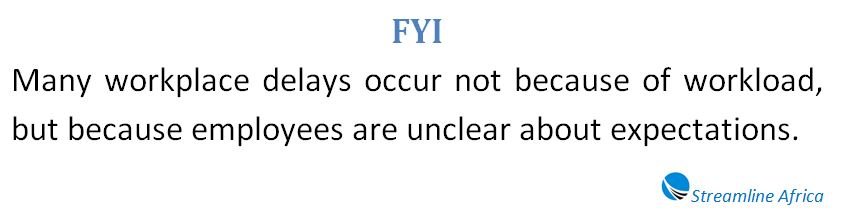
Speed is often associated with urgency, deadlines, or pressure. But in reality, organizational speed depends largely on shared understanding. When people know exactly what is expected, they can act decisively.
When expectations are unclear, progress slows down.
A renewable energy startup in Barcelona learned this lesson while launching a new solar installation program. Engineers believed their priority was rapid deployment, while the finance team thought cost reduction was the main objective. Both groups worked diligently, yet their efforts repeatedly collided.
Because the priorities had not been communicated clearly, teams spent valuable time clarifying instructions, requesting approvals, and revisiting decisions that should have been straightforward.
The result was a slowdown that no one had intended.
This kind of friction appears in subtle ways across organizations. Employees pause to confirm tasks, managers re-explain objectives, and teams hold extra meetings to resolve misunderstandings. Individually, these moments seem minor. Collectively, they drain momentum.
When communication lacks precision, execution becomes cautious instead of confident. The organization begins moving more slowly—not because employees lack motivation, but because they lack certainty.
Why Trust Begins to Erode
Trust inside a company rarely collapses suddenly. Instead, it weakens gradually when communication becomes inconsistent or unclear.
Employees rely on leadership communication to understand expectations and priorities. When those signals become confusing or contradictory, people begin to question what they are hearing.
A healthcare technology company in Toronto faced this issue during a period of rapid expansion. Leadership encouraged innovation while simultaneously emphasizing strict budget control. Product managers were unsure which priority carried more weight. When one team’s new project was rejected for financial reasons, employees began wondering whether leadership truly supported experimentation.
The uncertainty created a perception gap. Executives believed they had communicated a balanced message, but employees interpreted the signals differently.
As these gaps grow, trust begins to erode. Workers may start second-guessing leadership intentions, withholding feedback, or hesitating to share concerns. Communication becomes guarded rather than open.
When that happens, collaboration suffers. Teams stop raising issues early, problems escalate quietly, and decision-making becomes slower and more defensive.
Trust, once weakened, is difficult to rebuild. And poor communication is often the root cause.
How Performance Declines Even When Effort Increases
Many organizations experience performance challenges despite having skilled and hardworking teams. In many cases, the problem is not capability but coordination.
High-performing teams rely on shared clarity. They understand their roles, their priorities, and how their contributions fit into the broader mission. Communication ensures that individual efforts move in the same direction.
Without that alignment, teams can work intensely while producing disappointing results.
A digital marketing agency in Sydney experienced this during a large international campaign. Designers, analysts, and content strategists were all working long hours to meet launch deadlines. Yet after the campaign launched, the results were underwhelming.
An internal review revealed the issue: teams had interpreted the campaign objective differently. Some focused on brand awareness, while others prioritized conversion rates. Because the central goal had not been communicated clearly, the campaign lacked a unified strategy.
Everyone worked hard, but their efforts were scattered.
Situations like this create frustration within teams. Employees often feel personally responsible for underperformance, even though the problem stems from unclear organizational communication.
Over time, persistent ambiguity can also contribute to stress and burnout. When people struggle to understand priorities or expectations, everyday work becomes more mentally exhausting.
Communication Failures Often Reflect Leadership Design
Communication problems are frequently described as individual skill issues. A manager did not explain something well. A team member misunderstood instructions.
However, these explanations only address the surface of the issue.
In many cases, communication breakdowns are symptoms of deeper leadership design problems. Leaders determine how information flows within the organization. They shape whether communication remains clear and consistent or becomes fragmented across departments.
Clarity rarely happens by accident. It requires deliberate systems.
For example, a manufacturing company in Stuttgart redesigned its leadership communication approach after noticing persistent delays in product development. Instead of relying on informal updates, leaders introduced structured weekly briefings focused on three questions: What are the priorities? What decisions have changed? What actions are required this week?
The change dramatically improved coordination across teams.
Effective leadership communication provides direction, reinforces priorities, and ensures that everyone understands the same message. When this foundation exists, teams can make decisions confidently without waiting for constant approval.
Moving From More Communication to Better Communication
Improving communication does not mean sending more messages or holding more meetings. Instead, it requires improving the quality and clarity of the message itself.
One useful approach is verifying understanding rather than assuming it. A project manager in Copenhagen implemented a simple practice during team briefings: after explaining a task, she asked the responsible employee to summarize the assignment in their own words. This quick step revealed misunderstandings immediately and allowed them to be corrected before work began.
Another key practice involves simplifying strategic language. Many leaders unintentionally use complex terminology that sounds impressive but lacks practical meaning for employees responsible for execution.
When strategy is explained in straightforward language, teams can translate it into concrete actions. Simplicity improves alignment.
Direct communication also helps prevent message distortion. Whenever possible, leaders should speak directly with the individuals responsible for completing a task rather than relying on multiple intermediaries. Each additional layer increases the risk that the message will change slightly.
Finally, organizations benefit from fostering a culture where clarification is encouraged. Employees should feel comfortable asking questions when expectations are unclear. Open dialogue strengthens understanding and prevents small misunderstandings from turning into larger operational problems.
Alignment as a Competitive Advantage
In modern organizations, ambition is rarely the limiting factor. Most companies have bold goals and talented people ready to pursue them. The real constraint is often alignment.
When communication lacks precision, teams move in slightly different directions. The resulting inefficiencies slow progress and weaken collaboration.
Organizations that communicate clearly gain an advantage. They make decisions faster, maintain stronger trust between leaders and employees, and execute strategies more effectively.
Clear communication compounds over time. Every well-understood message strengthens alignment and improves momentum. Conversely, miscommunication slowly corrodes performance by creating uncertainty and hesitation.
Leaders who recognize this treat communication as a strategic capability rather than a routine task. They design systems that prioritize clarity, consistency, and direct dialogue.
In doing so, they ensure that strategy does not remain an abstract plan on paper. Instead, it becomes a shared understanding that guides everyday action.
Ultimately, communication determines whether ideas stay theoretical or become reality. When leaders align their teams through clear, thoughtful communication, they create the conditions where strategy can finally turn into measurable success.
Key Takeaways
Lets take a look at some important take-homes about this topic:
Clear Communication Drives Organizational Speed
When teams fully understand priorities, expectations, and outcomes, they can act confidently and make decisions faster without constant approvals or clarification.
Too Much Information Does Not Equal Alignment
Frequent meetings, emails, and messages can create the illusion of good communication, but clarity—not volume—is what actually keeps teams aligned.
Miscommunication Gradually Slows Teams Down
Unclear instructions force employees to double-check assumptions, revisit decisions, and spend time interpreting intent rather than executing tasks.
Trust Depends on Consistent Messaging
When leaders communicate priorities clearly and consistently, employees feel more confident in leadership decisions and are more willing to collaborate openly.
Hard Work Cannot Replace Clear Direction
Teams can put in significant effort, but if goals and expectations are misunderstood, their work may move in different directions instead of producing unified results.
Leadership Shapes Communication Systems
Effective communication is rarely accidental. Leaders must design structured processes that ensure information flows clearly across departments and teams.
Simplicity Strengthens Execution
Strategies explained in simple, practical language are far easier for employees to understand and turn into actionable steps.