

In today’s unpredictable business climate, organizations can no longer afford to treat performance management as a routine administrative task. Economic pressures, evolving workforce expectations, and increased competition have pushed companies to rethink how they guide, evaluate, and develop their people. Hiring may be slowing in some sectors, but expectations for productivity and innovation are rising. As a result, many organizations are shifting focus toward developing existing talent, strengthening internal mobility, and building agile teams that can adapt quickly.
At the heart of this transformation is performance management. When done well, it becomes a powerful tool that aligns individual contributions with organizational goals, builds employee confidence, and improves long-term outcomes. However, when poorly executed, it creates confusion, disengagement, and missed opportunities.
Many organizations struggle with everyday performance issues such as poor prioritization, delays in completing tasks, lack of responsiveness, and difficulty maintaining focus. While these may seem minor in isolation, over time they compound and begin to erode productivity, team morale, and overall business performance.
To truly unlock employee potential, organizations must move beyond outdated practices and embrace a more intentional, human-centered approach to performance management.

Building a Culture of Continuous Feedback
One of the most effective ways to improve employee performance is by replacing infrequent evaluations with consistent, ongoing conversations. Traditional annual reviews often fail because they are too distant from the actual work being done. By the time feedback is given, the moment for improvement has already passed.
A more effective approach is to create regular check-ins between managers and employees. These conversations should not feel like formal evaluations but rather ongoing discussions focused on progress, challenges, and opportunities for growth. When employees receive timely feedback, they are better equipped to adjust their efforts, refine their skills, and stay aligned with expectations.
Frequent feedback also builds momentum. Employees begin to see their progress in real time, which can be highly motivating. Instead of waiting months to understand how they are performing, they gain clarity week by week. This helps reduce anxiety and fosters a sense of ownership over their work.
For managers, this approach requires discipline and commitment. It demands time and attention, but the payoff is significant. Teams become more responsive, issues are addressed early, and performance improvements happen faster. Over time, this consistent engagement creates a culture where feedback is normal, expected, and valued.
Using Technology to Enhance, Not Replace, Performance Management
Digital tools have transformed how organizations manage performance, making it easier to track goals, document progress, and streamline administrative processes. Performance management systems can automate routine tasks such as scheduling reviews, collecting feedback, and maintaining performance records.
These tools also provide a more comprehensive view of employee performance. Instead of relying on a single evaluation, managers can access data from multiple sources, including peer feedback, self-assessments, and ongoing performance notes. This creates a richer and more accurate picture of each employee’s contributions.
However, the real value of technology lies in its ability to free up time for meaningful interactions. By reducing administrative burdens, managers can focus more on coaching, mentoring, and supporting their teams.
It is important to remember that technology should support human interaction, not replace it. Over-reliance on systems, dashboards, or automated feedback can create distance between managers and employees. Performance management is ultimately about people, and no tool can replace the value of genuine conversations and personal connection.
Organizations that strike the right balance—using technology to enhance efficiency while maintaining strong human engagement—are better positioned to drive meaningful performance improvements.
Creating Fair and Balanced Evaluations
A common challenge in performance management is ensuring that evaluations are fair, accurate, and comprehensive. When reviews are based on limited perspectives or recent events, they can become biased and fail to reflect the full scope of an employee’s work.
One way to address this is by incorporating multiple viewpoints into the evaluation process. Feedback from peers, team members, and other stakeholders can provide valuable insights that a single manager might overlook. This broader perspective helps create a more balanced assessment and reduces the risk of bias.
Balanced evaluations also recognize that performance is multi-dimensional. An employee may excel in one area while still developing in another. A fair review acknowledges both strengths and areas for improvement, providing a more realistic and constructive assessment.
Highlighting strengths is particularly important because it reinforces positive behavior and boosts morale. At the same time, identifying development areas allows employees to focus their efforts and improve over time. When done correctly, performance reviews become a tool for growth rather than judgment.
Ultimately, fairness in performance management builds trust. Employees are more likely to accept feedback and take action when they believe the process is objective and transparent.
Strengthening Relationships Through Performance Conversations
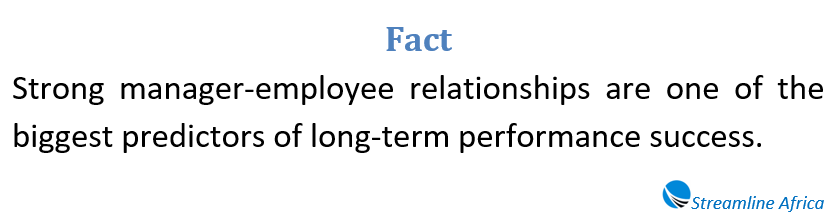
At its core, performance management is not just about measuring results—it is about building relationships. Employees perform better when they feel supported, understood, and valued by their managers.
Strong relationships create an environment where employees are comfortable discussing challenges, asking for help, and sharing ideas. This openness leads to better collaboration, increased engagement, and improved performance outcomes.
Managers play a critical role in fostering these relationships. By showing genuine interest in their team members, listening actively, and providing meaningful support, they create a sense of trust and psychological safety.
Regular performance conversations also contribute to relationship building. These interactions go beyond discussing tasks and metrics; they provide an opportunity to connect on a human level. Over time, this connection strengthens the bond between managers and employees, making it easier to navigate difficult conversations and drive continuous improvement.
Organizations that prioritize relationships in their performance management approach often see higher levels of employee satisfaction, retention, and productivity.
Common Pitfalls That Undermine Performance Management
Despite the availability of modern tools and strategies, many organizations continue to struggle with performance management due to a few recurring challenges.
One of the most significant issues is relying on outdated methods. Traditional annual reviews, conducted once a year and focused primarily on evaluation rather than development, are no longer effective in today’s fast-paced work environment. They often feel disconnected from daily work and fail to provide actionable insights.
Another common problem is designing performance systems that prioritize managerial approval over employee growth. When employees feel that their primary goal is to impress their supervisor rather than contribute meaningfully to the organization, it can lead to misaligned priorities. In some cases, behaviors that are not beneficial to the organization may be rewarded simply because they align with a manager’s preferences.
Additionally, while technology can be a powerful enabler, it can also become a barrier if misused. Relying solely on digital communication tools such as emails, surveys, or messaging platforms can reduce the quality of feedback and limit meaningful interaction. Important nuances may be lost, and opportunities for deeper understanding may be missed.
These challenges highlight the importance of adopting a balanced and thoughtful approach to performance management—one that combines modern tools with strong human engagement.
Turning Performance Management into a Strategic Advantage
For many organizations, performance management remains a source of frustration rather than a driver of success. It is often seen as a compliance requirement rather than a strategic priority. However, when approached intentionally, it can become a powerful lever for organizational growth.
A key step in this transformation is adopting a mindset of continuous improvement. Organizations should regularly evaluate their performance management practices to ensure they are delivering the desired outcomes. This involves asking critical questions about effectiveness, efficiency, and alignment with business goals.
Leaders should consider whether their current approach is helping employees perform better, whether it is worth the time and resources invested, and whether it reflects the evolving needs of the workforce. They should also assess whether performance conversations are happening consistently and whether the insights gained are being translated into meaningful actions.
Taking a test-and-learn approach can be particularly effective. By experimenting with new methods, gathering feedback, and making adjustments, organizations can refine their performance management processes over time.
It is also important to ensure that performance management is integrated into the broader organizational strategy. It should not exist in isolation but rather align with goals related to talent development, employee engagement, and business performance.
When performance management is treated as a strategic priority, it shifts from being a periodic task to an ongoing process that drives continuous improvement and long-term success.
Moving Forward with Confidence
Improving performance management does not require a complete overhaul overnight. Small, intentional changes—such as increasing the frequency of feedback, fostering stronger relationships, and using technology more effectively—can have a significant impact over time.
Organizations that embrace these practices create an environment where employees feel empowered to grow, contribute, and succeed. They move away from rigid, outdated systems and toward a more dynamic, people-centered approach.
In the end, performance management is not just about evaluating employees—it is about helping them thrive. When organizations get this right, the benefits extend far beyond individual performance. Teams become more cohesive, cultures become stronger, and businesses become more resilient in the face of change.
By making performance management a continuous, thoughtful, and strategic process, organizations can unlock the full potential of their workforce and position themselves for sustained success.
Frequently Asked Questions
What is performance management really about today?
It’s no longer just about evaluating employees—it’s about continuously guiding, developing, and aligning people with business goals so they can perform at their best.
Why are annual performance reviews no longer enough?
Because they are too infrequent. By the time feedback is given, it’s often outdated and no longer useful for real improvement.
How does frequent feedback improve employee performance?
Regular check-ins help employees adjust quickly, stay focused, and build momentum, leading to steady and visible progress over time.
What role does technology play in performance management?
Technology simplifies tracking, documentation, and feedback collection, allowing managers to focus more on coaching and meaningful conversations.
Can technology replace human interaction in performance reviews?
No. While helpful, technology should support—not replace—real conversations, which are essential for trust and clarity.
Why is a balanced evaluation important?
Because it captures both strengths and development areas, giving a fair and complete picture of an employee’s contribution.
How do strong manager-employee relationships impact performance?
They create trust, openness, and engagement, making employees more motivated and willing to improve.
What is a common mistake organizations make in performance management?
Focusing too much on pleasing managers instead of genuinely developing employees, which can lead to misaligned priorities.
How can organizations make performance management more effective?
By treating it as a continuous, strategic process—testing, refining, and aligning it with real business and employee needs.