
Walk into a busy electronics store in Singapore or browse an online marketplace from anywhere in the world, and you’ll notice something subtle but powerful at work. Some products sell out quickly, others linger on shelves, and prices seem to follow an invisible pattern. That pattern isn’t random—it’s driven by one of the most essential ideas in economics: supply and demand.
First popularized by Adam Smith, this concept continues to shape how markets behave across the globe. Whether someone is shopping for a smartphone, negotiating a salary, or launching a new business, supply and demand quietly influence nearly every economic decision.
Let’s explore how these forces operate in a global context, using relatable examples from different parts of the world.
Key Takeaways
- Supply and demand influence prices and availability across global markets.
- Market equilibrium occurs when supply matches demand.
- Governments and institutions can influence or disrupt natural market forces.
- The concept applies to goods, services, and labor worldwide.
- Real-world markets are shaped by more than just supply and demand alone.
Understanding Consumer Demand Across Markets
Picture Elena, a young professional living in Madrid. She’s been thinking about buying a new smartwatch. When she sees one priced at €40 during a seasonal sale, she’s tempted—not only to buy one, but maybe even gift another to a friend.
Now imagine the same smartwatch priced at €1,200. Suddenly, her enthusiasm fades. She may postpone the purchase or look for more affordable alternatives.
This behavior reflects a fundamental principle: as prices rise, most consumers buy less; as prices fall, they tend to buy more.
In economic terms, demand refers to the quantity of a product that consumers are willing and able to purchase at different price levels over a certain period.
To better understand this, economists often simplify the scenario by assuming:
- A single product with no variations
- Uniform pricing for all buyers
- No close substitutes available
- Stable expectations about future prices
While reality is more complex, these assumptions help clarify the basic relationship between price and consumer behavior.
How Supply Responds in a Global Economy
Now consider Lucas, a manufacturer based in São Paulo who produces smartwatches for international markets.
If global demand rises and consumers are willing to pay higher prices, Lucas increases production. Higher prices mean higher potential profits, making it worthwhile to scale operations, hire more workers, or invest in better equipment.
However, if prices drop significantly—perhaps due to oversupply or competition—he may reduce production. Selling at a price that doesn’t cover costs isn’t sustainable.
This reflects the concept of supply: the quantity of a good that producers are willing and able to offer at different price levels.
In general:
- Higher prices encourage producers to supply more
- Lower prices discourage production
This is why supply tends to increase as prices rise—producers respond to financial incentives.
Where It All Meets: Market Equilibrium
Markets are constantly adjusting as buyers and sellers respond to each other.
If Lucas sets his smartwatch prices too high, consumers like Elena may walk away. If prices are too low, he risks selling out too quickly or operating at a loss.
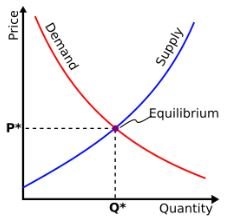
Over time, a balance emerges—a price point where:
- Consumers are willing to buy
- Producers are willing to sell
This balance is known as market equilibrium.
At equilibrium:
- Supply equals demand
- Shortages and surpluses are minimized
- Transactions occur efficiently
However, equilibrium is not permanent. Changes in income levels, global trends, technology, or even cultural shifts can move markets away from this balance.
When Markets Are Influenced by External Forces
While supply and demand provide a powerful framework, they don’t always operate freely in the real world.
Governments and institutions often intervene in markets for various reasons. For example:
- Price controls may be introduced to keep essential goods affordable
- Trade restrictions can limit imports or exports
- Subsidies may support specific industries
In such cases, prices may not reflect pure supply and demand conditions.
Additionally, in industries dominated by a few large companies, those firms may have the power to influence prices rather than simply respond to them.
This shows that while the theory assumes competitive markets, real-world dynamics can be more complex.
Supply and Demand in the Global Job Market
The principles of supply and demand extend beyond physical goods—they also shape labor markets worldwide.
Consider Aisha, a data analyst based in Dubai. If companies across industries are rapidly adopting data-driven strategies, the demand for her skills increases. Employers compete to hire qualified professionals, often offering higher salaries.
On the other hand, if many graduates enter the job market with similar qualifications but job opportunities remain limited, wages may stagnate.
In this context:
- Workers supply labor
- Employers demand it
The balance between these forces determines wages, hiring trends, and career opportunities across regions.
Why Supply and Demand Don’t Explain Everything
Although supply and demand are central to understanding markets, they are not the only factors at play.
Real-world markets are influenced by a wide range of elements, including:
- Technological advancements
- Changes in consumer preferences
- Production costs and resource availability
- Government policies and global regulations
- Unexpected events such as pandemics or geopolitical tensions
For instance, a disruption in semiconductor production can affect the global supply of electronics, pushing prices higher regardless of consumer demand.
Adam Smith famously described supply and demand as an “invisible hand” guiding markets. Today, that hand still operates—but alongside many visible forces shaping economic outcomes.
A Simple Global Example
Think about travel demand during major international events like the FIFA World Cup.
As millions of fans plan trips:
- Demand for flights and hotels surges
- Available seats and rooms become limited
In response, airlines and hotels raise prices. Some travelers still book, while others delay or cancel their plans.
Eventually, as the event ends and demand falls, prices begin to normalize.
This cycle—rising demand, limited supply, price increases, and eventual stabilization—illustrates supply and demand at a global scale.
The Bottom Line
Supply and demand remain foundational to how markets function around the world. They help explain why prices change, why shortages occur, and how buyers and sellers interact across different industries.
As prices rise, consumers typically reduce their purchases while producers increase output. When prices fall, the opposite tends to happen. The point where these forces meet—market equilibrium—creates balance in the system.
Although this model works best in free markets, its influence extends far beyond simple transactions. From global trade to employment trends, supply and demand shape economic realities in ways that affect people everywhere.
Understanding these forces doesn’t just deepen your knowledge of economics—it empowers you to make smarter decisions in an increasingly interconnected global economy.
Top Questions and Answers about Supply and Demand
What Is Supply and Demand in Simple Terms?
Supply and demand describe how the availability of a product and people’s desire to buy it work together to determine price. When something is scarce but highly wanted, prices rise. When it’s abundant but less desired, prices fall.
Why Do Prices Change So Often in Markets?
Prices constantly shift because supply and demand are always changing. Factors like trends, income levels, production costs, and global events can quickly influence how much people want something and how much of it is available.
What Does Market Equilibrium Really Mean?
Market equilibrium is the point where buyers and sellers agree on a price. At this level, the quantity supplied matches the quantity demanded, and the market operates smoothly without shortages or excess.
How Do Businesses Use Supply and Demand?
Businesses monitor demand to decide what to produce and how much to charge. If demand rises, they often increase production or prices. If demand drops, they may cut prices or reduce output to avoid losses.
Does Supply and Demand Apply Only to Products?
Not at all. It also applies to services and jobs. For example, when certain skills are in high demand but short supply, salaries tend to increase.
Can Governments Affect Supply and Demand?
Yes, governments can influence markets through policies like price controls, taxes, subsidies, and trade restrictions. These actions can either support or disrupt the natural balance of supply and demand.
Why Don’t Markets Always Follow Supply and Demand Perfectly?
Real-world markets are influenced by more than just supply and demand. Things like monopolies, regulations, consumer behavior, and unexpected global events can all affect how markets function.
How Can Understanding Supply and Demand Help You Personally?
It helps you make smarter decisions—whether you’re buying, selling, investing, or choosing a career. Knowing how prices are set gives you an advantage in everyday financial situations.