
In the bustling commercial district of Accra, a young entrepreneur named Kojo Mensah launched a footwear brand that quickly gained traction. What began as a modest operation soon evolved into a growing enterprise with expanding teams, suppliers and customer expectations. Like many founders, Kojo initially believed that success depended on a perfect plan. But as reality unfolded, he discovered something far more practical: effective management is not static—it’s dynamic, situational and deeply human.
This realization echoes the work of Henry Mintzberg, whose ideas reshaped how we understand what managers actually do. Rather than viewing management as a rigid set of functions, Mintzberg revealed it as a collection of roles that shift depending on context, relationships and decisions. His framework remains a powerful lens for businesses of all sizes, especially those navigating growth and uncertainty.
Understanding the Everyday Reality of Management
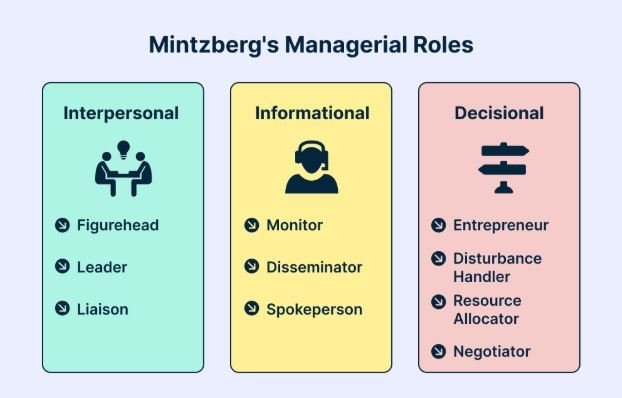
Kojo’s journey reflects a universal truth: managers wear many hats. Mintzberg identified ten distinct roles that managers perform, grouped into three broad categories—interpersonal, informational and decisional. These roles are not theoretical abstractions; they are lived experiences that unfold daily in meetings, negotiations, crises and quiet moments of reflection.
By understanding these roles, leaders can better navigate complexity, delegate effectively and build organizations that are both structured and adaptable.
The Human Side of Leadership: Interpersonal Roles
At the heart of any organization lies human connection. Managers are not just decision-makers—they are relationship builders, motivators and representatives.
Symbolic Leadership in Action
Kojo often found himself attending local trade fairs, signing partnership agreements and representing his brand in community initiatives. In these moments, he wasn’t just a business owner—he was the face of his company. This role, often underestimated, shapes perception and builds trust both internally and externally.
Inspiring and Guiding Teams
As his team expanded, Kojo realized that hiring talent was only the beginning. He needed to mentor employees, set clear goals and create an environment where people felt motivated to contribute. Leadership, in this sense, became less about authority and more about influence—helping others see purpose in their work.
Building Bridges Across Networks
Growth also required connection. Kojo spent time nurturing relationships with suppliers in Kumasi, retailers in Lagos and logistics partners across West Africa. Acting as a bridge between different stakeholders allowed him to access resources, insights and opportunities that would have otherwise remained out of reach.
The Information Engine: Informational Roles
As the business matured, Kojo became the central hub of information. His ability to gather, interpret and share knowledge became critical to decision-making.
Staying Ahead Through Awareness
Every morning, Kojo reviewed sales data, monitored competitor activity and kept an eye on shifting consumer preferences. This constant scanning of the environment helped him anticipate trends rather than react to them.
Sharing What Matters
Information, however, is only valuable when it reaches the right people. Kojo regularly held team briefings, ensuring that designers, marketers and sales staff were aligned with the company’s direction. Clear communication reduced confusion and empowered employees to act confidently.
Representing the Brand’s Voice
Externally, Kojo spoke on behalf of his company—whether pitching to investors or engaging with the media. His ability to articulate the brand’s vision played a crucial role in building credibility and attracting partnerships.
The Decision Arena: Decisional Roles
With relationships established and information flowing, the next challenge was action. Managers must make decisions—sometimes quickly, often with incomplete data.
Driving Innovation and Change
Kojo constantly explored new product ideas, from eco-friendly materials to custom designs. Acting as an innovator, he pushed the company forward, ensuring it stayed competitive in a crowded market.
Managing the Unexpected
Not all challenges were planned. When a shipment delay threatened a major launch, Kojo had to act swiftly—reworking timelines, communicating with customers and finding alternative solutions. These moments tested his resilience and problem-solving skills.
Allocating Limited Resources
With finite capital and growing demands, Kojo faced tough choices. Should he invest in marketing or expand production capacity? Should he hire more staff or upgrade equipment? Every decision carried trade-offs, requiring careful prioritization.
Negotiating for Advantage
From supplier contracts to retail agreements, negotiation became a regular part of Kojo’s role. Success depended not just on securing favorable terms, but on building long-term relationships that benefited all parties involved.
Designing Organizations That Actually Work
Beyond individual roles, Mintzberg emphasized the importance of organizational design—how a company structures itself to achieve its goals. For Kojo, this became increasingly relevant as his business scaled.
The Building Blocks of Structure
Every organization consists of key components: leadership at the top, managers in the middle, frontline workers, analysts who shape processes and support teams that keep everything running. Additionally, shared values and culture influence how people behave and collaborate.
Kojo noticed that as his team grew, clarity around these roles became essential. Without it, confusion and inefficiency crept in.
How Work Gets Coordinated
Different organizations rely on different methods to stay aligned. In Kojo’s early days, he directly supervised most activities. But as the company expanded, he introduced standardized processes for production, training programs for staff and performance metrics to track results.
At the same time, creative teams relied on collaboration and flexibility, adjusting their work through constant communication rather than rigid rules.
Balancing Control and Autonomy
One of the biggest challenges Kojo faced was deciding how much control to retain. Keeping all decisions centralized slowed progress, but too much decentralization risked inconsistency. Finding the right balance became a continuous process, shaped by trust, capability and business needs.
Recognizing Patterns in Organizational Structures
As Kojo explored different ways to structure his business, he realized that organizations tend to fall into recognizable patterns.
In the early stages, his company resembled a simple, founder-led structure—fast, flexible and highly centralized. As operations grew, certain departments became more standardized, resembling a more formal system. Meanwhile, his design team operated with a high degree of creativity and autonomy, reflecting a more flexible, innovation-driven approach.
Each structure came with strengths and weaknesses. The key was not to rigidly follow one model, but to adapt based on context.
Applying These Ideas in Real Business Situations
Mintzberg’s insights are not confined to textbooks—they play out in everyday business decisions.
Starting Small with Clarity
For entrepreneurs like Kojo, simplicity is often the best starting point. With limited resources, taking on multiple roles is inevitable. Understanding these roles helps founders prioritize their efforts and avoid burnout.
Scaling Without Losing Direction
As businesses grow, complexity increases. Delegation becomes essential, but it must be done thoughtfully. Assigning the right roles to the right people ensures that the organization remains efficient and aligned.
Adapting to Change
Markets evolve, customer preferences shift and unexpected challenges arise. By recognizing the different roles managers play, leaders can adjust their focus—sometimes emphasizing communication, other times prioritizing decision-making or relationship-building.
Industry Perspectives on Management and Structure
Different industries naturally gravitate toward different organizational styles.
Healthcare institutions often rely on specialized professionals working independently yet coordinated through standardized practices. Manufacturing firms prioritize efficiency through structured processes. Technology companies embrace flexibility and innovation, while professional service firms depend on expertise and autonomy.
Retail businesses like Kojo’s often evolve through multiple stages, blending elements from various structures as they expand into new markets.
Exploring Alternative Management Perspectives
While Mintzberg’s framework is influential, it is not the only lens through which to view management.
Some approaches emphasize human relationships and workplace culture, highlighting the importance of employee satisfaction and teamwork. Others focus on structure and hierarchy, advocating for clear rules and defined roles. There are also theories that prioritize collaboration, empowerment and innovation, encouraging leaders to create environments where ideas can flourish.
Each perspective offers valuable insights. The challenge for modern leaders is to integrate these ideas in ways that suit their unique context.
Building Organizations That Thrive
Kojo’s journey illustrates a powerful lesson: there is no single formula for successful management. Instead, effectiveness comes from understanding roles, designing structures thoughtfully and adapting to changing circumstances.
Mintzberg’s work reminds us that management is not about rigid systems—it’s about balance. It’s about knowing when to lead and when to listen, when to control and when to empower, when to plan and when to learn from experience.
For small business owners, especially those navigating growth, these insights provide a practical guide. By embracing flexibility, fostering collaboration and aligning structure with strategy, leaders can build organizations that are not only efficient but also resilient and human-centered.
In the end, management is less about titles and frameworks and more about action—what leaders do every day to move their organizations forward.
Frequently Asked Questions about Henry Mintzberg’s Management Roles
What Is the Core Idea Behind Henry Mintzberg’s Management Roles?
Mintzberg’s central idea is that management isn’t a fixed job description—it’s a collection of dynamic roles that shift based on real-life situations, relationships and decisions.
Why Are Managerial Roles Divided Into Three Categories?
They are grouped into interpersonal, informational and decisional roles to reflect how managers interact with people, handle knowledge and make critical business choices.
How Do Interpersonal Roles Impact a Business?
They shape trust, culture and collaboration by helping managers lead teams, represent the organization and build valuable relationships.
Why Is the Leader Role Considered So Important?
Because it directly influences employee motivation, performance and alignment with company goals, making it the backbone of effective management.
What Makes Informational Roles So Critical?
Managers act as the organization’s information hub, ensuring the right insights are gathered, interpreted and shared for better decision-making.
How Does the Monitor Role Help Businesses Stay Competitive?
It keeps leaders aware of trends, risks and opportunities, allowing them to respond proactively instead of reacting too late.
What Is the Difference Between Entrepreneur and Disturbance Handler Roles?
The entrepreneur role is proactive—focused on innovation and growth—while the disturbance handler is reactive, solving unexpected problems and crises.
Why Is Resource Allocation a Key Managerial Responsibility?
Because every business operates with limited resources, and how those resources are distributed directly affects performance and growth.
How Does Organizational Design Influence Business Success?
A well-designed structure improves communication, reduces inefficiencies and ensures that everyone understands their responsibilities.
What Does “Fit” Mean in Organizational Design?
“Fit” refers to aligning structure, coordination methods and decision-making authority with the company’s strategy and environment.
Why Do Small Businesses Often Start With a Simple Structure?
Because it allows quick decisions, flexibility and strong leadership control—essential for early-stage growth and survival.
How Can Managers Adapt These Roles Over Time?
By shifting focus depending on business needs—prioritizing people during growth, information during transitions and decisions during critical moments.