

Operating a small business already demands constant attention, but the risk of unexpected disruptions adds another layer of complexity. Whether caused by natural forces, technological failures, or public health crises, disasters can halt operations overnight. The difference between businesses that collapse and those that recover often lies in preparation. A thoughtfully designed disaster recovery plan enables a company not only to survive disruption but, in some cases, emerge stronger.
This guide reimagines disaster preparedness through a practical, real-world lens—introducing new examples, settings, and strategies while preserving the core principles of resilience planning.
Why Preparedness Is a Strategic Advantage
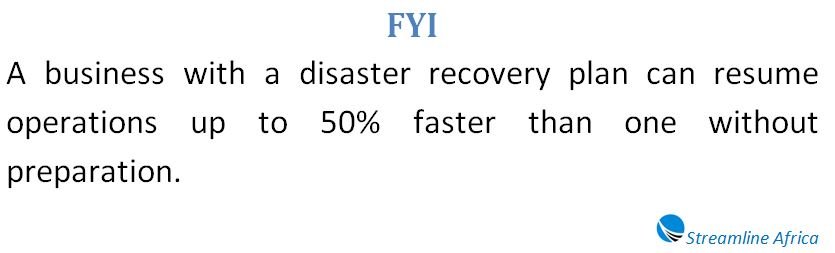
In Kumasi, Ghana, a mid-sized printing company called Ashanti Prints faced severe flooding during an unusually heavy rainy season. While nearby competitors shut down for weeks, Ashanti Prints resumed operations within three days. Their secret was not luck—it was preparation. Months earlier, the owner had initiated simulated emergency exercises where staff practiced responses to hypothetical crises.
These exercises revealed overlooked vulnerabilities, such as poorly stored paper inventory and reliance on a single power source. By addressing these gaps in advance, the company minimized downtime when the real disaster struck. Interestingly, they gained new clients afterward because they were one of the few providers still operational. This example underscores a key principle: preparedness is not merely defensive—it can create competitive advantage.
Four Core Phases of an Effective Disaster Recovery Plan
A robust disaster recovery strategy can be broken down into four essential phases. Each phase builds upon the previous one, forming a comprehensive system that protects both people and operations.
Phase 1: Risk Identification and Assessment
The first step is understanding what could realistically go wrong. Risks vary depending on geography, industry, and infrastructure. A coastal business might prioritize storm surges, while a tech startup may focus on data breaches or server outages.
For instance, a small e-commerce company based in Nairobi identified risks beyond physical disasters. Their biggest vulnerability was actually internet downtime and cyberattacks. By broadening their risk assessment, they were able to implement cloud backups and redundant connectivity solutions.
When identifying risks, consider:
- Environmental threats such as floods, droughts, or extreme heat
- Operational risks like equipment failure or supply chain disruption
- Human-related risks including staff shortages or safety incidents
- External dependencies such as vendors, logistics providers, and utilities
It is equally important to examine indirect risks. If your suppliers or employees are affected, your operations may still suffer even if your premises remain intact.
Phase 2: Designing a Structured Response Plan
Once risks are identified, the next step is to build a structured response plan. This requires clear ownership. Assign a disaster response coordinator responsible for developing and maintaining the plan.
In a small bakery in Cape Town, the owner appointed her operations manager as the emergency coordinator. He worked with team members to map out procedures tailored to their roles, ensuring no ambiguity during a crisis.
A well-designed plan should address three primary objectives:
- Safeguarding employees and customers
- Protecting physical and digital assets
- Maintaining or quickly restoring operations
At a minimum, your plan should include:
- Clearly marked evacuation procedures and assembly points
- Emergency contact lists for staff, authorities, and vendors
- Defined roles for critical functions such as shutdown procedures
- Medical response protocols and first-aid responsibilities
- Guidelines for handling hazardous materials or sensitive equipment
Customization is critical. For example, if your business relies on specialized machinery, include detailed instructions for securing or relocating it. If employees have unique needs, such as mobility challenges, your plan must accommodate them explicitly.
Phase 3: Execution, Communication, and Training
A plan that exists only on paper is ineffective. Implementation transforms strategy into action. This phase focuses on embedding preparedness into daily operations.
Establishing Clear Evacuation Systems
Employees must know exactly how to exit safely during an emergency. Posting visible evacuation maps and assigning evacuation leaders ensures accountability. A practical benchmark is assigning one leader for every 15–20 employees.
Preparing Communication Protocols
Communication breakdowns are common during crises. Draft pre-approved messages for employees, customers, and suppliers in advance. These templates should cover various scenarios and be easily adaptable.
For example, a logistics firm in Lagos created SMS and email templates for service delays, ensuring customers received timely updates even during disruptions.

Assembling Emergency Kits
Preparedness kits should be readily accessible. These may include:
- Nonperishable food and bottled water
- Flashlights and spare batteries
- First-aid supplies
- Portable communication devices
Consider employees’ commuting distances and the possibility of transportation disruptions when planning these kits.
Conducting Regular Training
Training ensures that employees understand their roles during emergencies. This includes evacuation drills, equipment handling, and communication protocols.
In smaller businesses, the owner often assumes multiple roles, including crisis communication and operational recovery. Regardless of size, every employee should have a clearly defined responsibility.
Additionally, forming two functional groups can improve response efficiency:
- A continuity team responsible for restoring operations
- A communication team responsible for internal and external messaging
Even if these roles overlap in smaller organizations, defining them improves clarity.
Phase 4: Extending Preparedness Beyond Your Business
A business does not operate in isolation. Its recovery often depends on the resilience of the surrounding community.
Consider a scenario in a commercial district in Dakar, where one poorly secured construction site caused debris to damage neighboring shops during a storm. Businesses that had robust internal plans still suffered due to external vulnerabilities.
Proactive engagement with neighboring businesses can mitigate such risks. Sharing preparedness strategies and encouraging others to adopt similar measures strengthens the entire ecosystem.
There are additional benefits to being a preparedness advocate:
- It enhances your reputation as a responsible employer
- It builds trust with customers and partners
- It creates opportunities for collaboration and mutual support
Publicizing your preparedness efforts—through community meetings or social media—can also differentiate your brand in a crowded market.
Real-World Adaptability: Planning Meets Improvisation
Preparation does not eliminate uncertainty; it enables better improvisation.
A café owner in Kigali experienced a prolonged power outage that rendered electronic payment systems useless. However, because she had anticipated such a scenario, she switched to manual receipts and mobile money transactions. She also limited her menu to items that required minimal electricity.
Her ability to adapt quickly kept revenue flowing and reinforced customer loyalty.
This illustrates a crucial insight: a disaster plan is not about predicting every outcome but about building the flexibility to respond effectively.
Immediate Actions You Can Take Today
While comprehensive planning takes time, there are simple steps you can implement immediately:
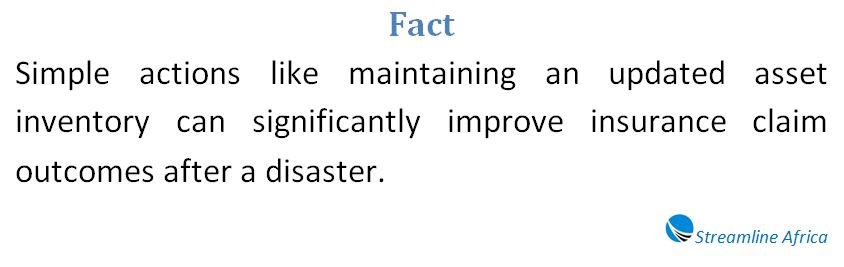
- Create and update an inventory of all critical assets
- Back up important data to secure, off-site locations
- Review your insurance coverage for potential gaps
- Identify a temporary alternative workspace or backup supplier
These actions require minimal investment but significantly enhance resilience.
Embedding Preparedness Into Business Culture
The most resilient organizations treat disaster preparedness as an ongoing process rather than a one-time task. Regular reviews—quarterly or at least annually—help ensure that plans remain relevant as the business evolves.
Incorporating preparedness into routine operations, such as staff meetings or training sessions, reinforces its importance. Over time, it becomes part of the company’s culture rather than an afterthought.
Final Perspective
Disasters are unpredictable, but their impact can be managed. Businesses that invest in preparation are better positioned to protect their people, preserve their assets, and maintain continuity.
More importantly, preparedness creates opportunities. When competitors falter, resilient businesses can step in to meet demand, strengthen relationships, and build long-term credibility.
Ultimately, the strength of your disaster recovery plan is measured not just by survival, but by your ability to recover swiftly and continue growing in the aftermath.
Key Highlights
Disaster Preparedness Is a Competitive Advantage
Businesses that plan ahead don’t just survive disruptions—they often outperform competitors by staying operational when others cannot.
Risk Assessment Goes Beyond Natural Disasters
Effective planning includes operational, technological, and human risks, not just events like floods or storms.
A Single Coordinator Improves Accountability
Assigning one person to oversee disaster planning ensures clarity, faster decision-making, and consistent execution.
Employee Safety Is the Top Priority
Every disaster recovery plan must first focus on protecting lives before addressing assets or business continuity.
Communication Planning Prevents Chaos
Pre-written emergency messages for staff, customers, and suppliers reduce confusion and maintain trust during crises.
Training Turns Plans Into Action
Regular drills and role assignments ensure employees know exactly what to do when an emergency occurs.
Emergency Kits Enhance Readiness
Simple resources like food, water, and first-aid supplies can make a significant difference during prolonged disruptions.
Community Preparedness Impacts Business Recovery
A business’s ability to recover often depends on how well surrounding businesses and infrastructure are prepared.
Flexibility Is Just as Important as Planning
A strong disaster plan allows businesses to adapt quickly and improvise when real-life situations don’t go exactly as expected.