
Introduction to EBITDA
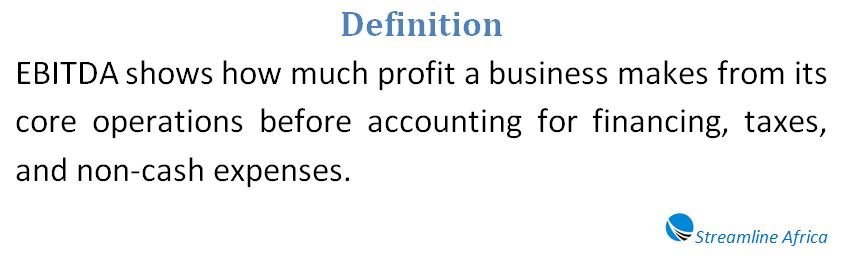
Imagine trying to evaluate how well a business is truly performing without being distracted by taxes, loan payments, or accounting adjustments. That’s where EBITDA comes in. EBITDA—short for earnings before interest, taxes, depreciation, and amortization—is a financial metric designed to spotlight a company’s operational strength.
Although it is not officially recognized under standard accounting rules, EBITDA has become one of the most widely used tools among investors, analysts, and executives. It helps compare companies across industries and regions by stripping away factors that may vary widely, such as tax environments or financing strategies.
At its core, EBITDA answers a simple question: how much profit does the business generate from its main operations?
How EBITDA Is Calculated
Even if a company does not explicitly report EBITDA, it can be derived from standard financial statements. There are two primary ways to calculate it, both leading to roughly the same result.
The first approach starts with net income:
EBITDA = Net Income + Taxes + Interest Expense + Depreciation + Amortization
The second approach begins with operating income:
EBITDA = Operating Income + Depreciation + Amortization
To break it down, net income already accounts for taxes and interest, while operating income excludes them. Depreciation and amortization—non-cash expenses—are then added back in both methods.
For example, consider a fictional logistics company based in São Paulo. It earns $150 million in revenue, spends $60 million on direct costs, and another $40 million on overhead. With $15 million in depreciation and amortization, its operating income stands at $35 million. After deducting $7 million in interest and $6 million in taxes, net income becomes $22 million. Adding back those excluded expenses results in an EBITDA of $50 million.
This figure provides a clearer view of the company’s operating engine, independent of financing and accounting decisions.
What EBITDA Reveals About a Business
EBITDA is especially useful when comparing companies with different capital structures or tax obligations. By removing these variables, it highlights the profitability of core operations.
This makes it particularly valuable in industries that require heavy investment in physical assets, such as transportation, manufacturing, or energy. In such sectors, depreciation can significantly reduce reported profits, even if the business is generating strong cash flow.
Similarly, in technology startups based in cities like Berlin or Bangalore, amortization of intellectual property—such as software development—can distort earnings. EBITDA helps smooth out these effects, giving investors a more consistent basis for comparison.
It is also commonly used in valuation metrics like the enterprise multiple (EV/EBITDA), which helps determine whether a company is overvalued or undervalued relative to its peers.
A Brief History of EBITDA
EBITDA did not emerge from academic theory but from practical necessity. During the 1970s, a media entrepreneur named Richard Calder developed a similar concept while expanding a cable television network across North America. His strategy relied heavily on debt financing, and he needed a way to demonstrate to lenders that the business could generate enough cash to service its obligations.
The metric gained traction in the 1980s during the rise of leveraged buyouts. Investment firms acquiring companies with borrowed money needed a quick way to assess whether those companies could handle additional debt. EBITDA became a convenient proxy for cash flow in these situations.
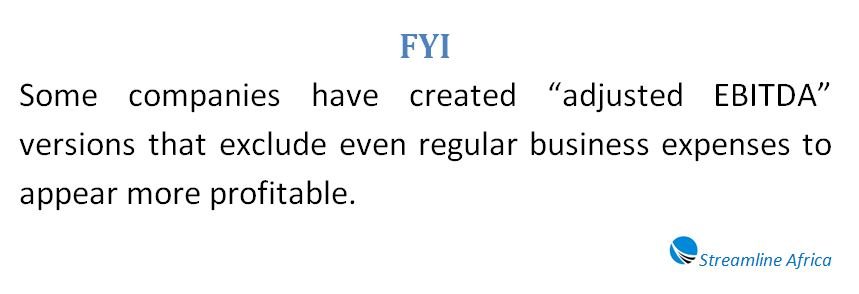
However, its popularity also led to misuse. During the early 2000s tech boom, several startups highlighted EBITDA figures that painted an overly optimistic picture of their performance. In some cases, companies even created customized versions of EBITDA, excluding expenses that were clearly part of normal operations.
This pattern resurfaced in later years, reinforcing concerns about the reliability of the metric when used without proper context.
Common Criticisms of EBITDA
Despite its usefulness, EBITDA has drawn significant criticism from analysts and seasoned investors.
One major concern is that it ignores the cost of assets. Businesses require equipment, infrastructure, and technology to operate, and these assets wear out over time. Depreciation reflects this reality, so excluding it can make profitability appear stronger than it truly is.
Another issue is inconsistency. Since EBITDA is not governed by strict accounting standards, companies may calculate it differently. Some may adjust earnings in ways that make their performance look more favorable, leading to confusion or even manipulation.
Valuation can also become distorted. When investors rely heavily on EBITDA-based multiples, they may underestimate the true cost structure of a business. For instance, a retail chain in Toronto might appear attractively priced based on EBITDA, but once capital expenditures and debt obligations are considered, the valuation could look far less appealing.
There are also warning signs to watch for. If a company that historically focused on net income suddenly emphasizes EBITDA, it may be attempting to divert attention from underlying challenges such as rising debt or declining margins.

Comparing EBITDA With Related Metrics
To fully understand EBITDA, it helps to compare it with similar financial measures.
EBIT (earnings before interest and taxes) includes depreciation and amortization, making it a more conservative indicator of operating performance. It reflects the cost of maintaining assets, which EBITDA ignores.
EBT (earnings before tax) goes one step further by including interest expenses while excluding taxes. This makes it useful for comparing companies operating under different tax regimes.
Operating cash flow, on the other hand, provides a more comprehensive picture of cash generation. Unlike EBITDA, it accounts for changes in working capital—such as inventory, receivables, and payables—which can significantly impact liquidity.
For example, a construction firm in Dubai may report strong EBITDA, but if clients delay payments, its actual cash flow could be strained. This is why many analysts prefer to look at operating cash flow alongside EBITDA.
EBITDA vs. Gross Profit
It is also important to distinguish EBITDA from gross profit. Gross profit is simply revenue minus the cost of goods sold, reflecting how efficiently a company produces its products.
EBITDA goes further by considering operating expenses while excluding financing costs and non-cash charges. In other words, gross profit focuses on production efficiency, while EBITDA evaluates overall operational performance.
A Simple Explanation
Think of a small bakery in Lisbon. It earns money by selling bread and pastries. However, it also pays interest on a loan, taxes to the government, and experiences wear and tear on its ovens.
EBITDA looks only at how much money the bakery makes from baking and selling, ignoring those additional costs. It’s a way of asking, “How well is the bakery running its core business?”
What Makes a “Good” EBITDA?
There is no universal benchmark for a strong EBITDA figure. What is considered healthy depends on the industry, company size, and growth stage.
However, one commonly used guideline is the interest coverage ratio. If EBITDA is at least twice the company’s interest expense, it is generally seen as a sign of financial stability.
Margins also matter. In some sectors, an EBITDA margin above 15% may be considered strong, while in others, lower margins are the norm.
Final Thoughts
EBITDA remains a powerful tool for analyzing and comparing businesses, especially across different industries or financial structures. By focusing on operational performance, it provides insights that traditional metrics may obscure.
However, it is not a perfect measure. By excluding certain costs, EBITDA can create an overly optimistic view of profitability. For this reason, it should never be used in isolation.
The most effective approach is to combine EBITDA with other financial metrics and carefully examine how it is calculated. By doing so, investors and decision-makers can gain a more balanced and accurate understanding of a company’s true performance.
FAQs about EBITDA
Why Do Investors Use EBITDA?
It helps investors compare companies more easily by removing factors like debt structure and tax differences.
How Is EBITDA Calculated?
You calculate it by adding interest, taxes, depreciation, and amortization back to net income or operating income.
Is EBITDA the Same as Cash Flow?
No, EBITDA is not actual cash flow because it ignores working capital changes and capital expenditures.
Why Is EBITDA Popular in Certain Industries?
Asset-heavy industries use it because depreciation can distort real operating performance.
What Makes EBITDA Useful for Startups?
It allows early-stage companies to highlight operational performance without heavy accounting adjustments.
Can EBITDA Be Misleading?
Yes, it can overstate profitability by ignoring real costs like equipment wear and debt payments.
Why Do Analysts Compare EBITDA With EV?
The EV/EBITDA ratio helps determine whether a company is overvalued or undervalued.
What Is a Good EBITDA Margin?
A margin above 15% is often considered strong, but it varies widely by industry.
How Does EBITDA Differ From EBIT?
EBIT includes depreciation and amortization, while EBITDA excludes them.
Why Do Regulators Care About EBITDA?
Because it’s a non-standard measure, companies must reconcile it with net income to ensure transparency.
When Should You Be Cautious With EBITDA?
If a company suddenly emphasizes EBITDA over net income, it may be hiding financial weaknesses.