
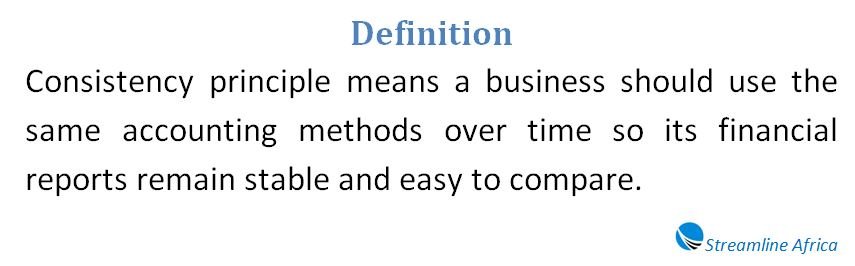
In financial reporting, the consistency principle serves as a foundational guideline that ensures stability in how transactions are recorded over time. Once a business selects a specific accounting approach—whether for recognizing revenue, valuing inventory, or recording expenses—it is expected to apply that same approach across successive reporting periods. This continuity allows financial statements to reflect a coherent narrative rather than a series of disconnected snapshots.
At its core, consistency is about preserving uniformity in accounting practices so that users of financial statements can interpret results without confusion. When a company adheres to a stable set of policies, its financial data becomes more meaningful, enabling comparisons that reveal performance trends and operational patterns.
Financial Statements Influenced by Consistency
The application of consistent accounting methods extends across all major financial reports. Each document relies on uniform principles to maintain credibility and usefulness. The balance sheet, for example, reflects a company’s financial position at a given point in time, and inconsistencies in valuation methods could distort asset or liability figures.
Similarly, income statements—often referred to as profit and loss reports—depend on consistent expense recognition and revenue recording practices to present an accurate measure of profitability. Cash flow statements also benefit from uniform classification of operating, investing, and financing activities, ensuring that liquidity trends are easy to interpret.
Supporting reports, such as accounts payable and receivable schedules, also require consistency. When these records are maintained using stable procedures, businesses can better monitor obligations and incoming payments without discrepancies caused by shifting methodologies.
The Role of Disclosure When Changes Occur
Although consistency is strongly encouraged, accounting is not rigid to the point of resisting improvement. Situations may arise where a change in method is justified, such as the introduction of new accounting standards or the adoption of practices that better reflect economic reality. In such cases, the principle does not prohibit change but demands transparency.
Any modification to an established accounting policy must be thoroughly documented and disclosed in the financial statements. This includes explaining the reason for the change and outlining its impact on reported figures. By doing so, companies preserve trust and ensure that stakeholders understand how and why the new approach differs from the previous one.
Why Consistency Matters in Financial Reporting
The importance of consistency becomes evident when examining its practical benefits. One of its primary advantages is the ability to compare financial results across different periods. Investors, managers, and analysts rely on this comparability to evaluate growth, detect inefficiencies, and assess long-term viability.
Consistency also enhances the efficiency of auditing. When auditors review financial statements prepared using stable methods, they can focus on verifying accuracy rather than untangling changes in accounting approaches. This streamlines the audit process and improves confidence in the results.
Decision-making within an organization is also strengthened by consistent reporting. Reliable financial data allows business leaders to plan strategically, allocate resources effectively, and respond to market conditions with greater precision. Without consistency, decisions may be based on misleading or incomplete information.
Operational efficiency is another benefit. Accounting teams that follow established procedures avoid unnecessary complexity, reducing the likelihood of errors and minimizing the time required to prepare reports. Over time, this leads to smoother financial management and more dependable outputs.
Practical Illustration Through Inventory Methods
The consistency principle becomes particularly clear when examining inventory valuation techniques. Businesses often choose between methods such as First-In, First-Out (FIFO) and Last-In, First-Out (LIFO), each of which produces different financial outcomes.
Under FIFO, the earliest purchased goods are assumed to be sold first. In periods of rising prices, this approach typically results in lower cost of goods sold and higher reported profit. Conversely, LIFO assumes that the most recently acquired items are sold first, often leading to higher costs and reduced profit in the same economic environment.
A company may select either method based on its operational realities or financial objectives, but once chosen, it should not alternate between them arbitrarily. Switching back and forth without justification would distort financial comparisons and potentially mislead stakeholders. If a change is warranted, it must be justified and clearly communicated.
Acceptable Exceptions to the Principle
While consistency is a guiding rule, there are legitimate circumstances where deviation is appropriate. One common scenario involves the adoption of new accounting standards. As regulatory frameworks evolve, companies may be required—or encouraged—to update their practices to align with improved guidelines.
Another valid reason for change is the pursuit of more accurate financial representation. For instance, if a different accounting method better reflects how a company actually operates, adopting that method can enhance the quality of reporting. Such improvements, however, must be accompanied by full disclosure.
Corrections of prior errors also fall within acceptable exceptions. If earlier financial records were prepared using flawed or inconsistent methods, revising them to establish a uniform approach is necessary. Transparency remains critical in these cases to maintain credibility and trust.
Challenges in Maintaining Consistency
Despite its importance, maintaining consistency is not always straightforward. Organizational factors, such as staff turnover, can introduce variations in how transactions are recorded. New personnel may interpret procedures differently, especially in the absence of well-documented policies.
Another challenge arises when businesses experiment with multiple accounting methods across different periods. Without strict controls, this can lead to inconsistencies that undermine the reliability of financial reports. Standardization and internal controls are essential to prevent such issues.
There is also the risk of intentional manipulation. Adjusting accounting methods to produce more favorable financial results—such as inflating profits or minimizing tax liabilities—can erode trust and violate ethical standards. The consistency principle acts as a safeguard against such practices by emphasizing stability and transparency.

Consistency as a Quality of Useful Information
In the broader framework of financial reporting, consistency is recognized as a key attribute that enhances the usefulness of accounting information. Standard-setting bodies emphasize that uniform application of principles allows users to make meaningful comparisons and informed judgments.
Ultimately, consistency does not imply rigidity but rather disciplined application of sound practices. It ensures that financial statements tell a clear and reliable story, enabling stakeholders to interpret data with confidence. By adhering to this principle, businesses strengthen the integrity of their reporting and support better economic decision-making over time.
Frequently Asked Questions about Consistency Principle
Why is consistency important in accounting?
It ensures that financial data can be compared across periods, helping users identify trends and make informed decisions.

Which financial statements are affected by this principle?
Key reports include the balance sheet, income statement, cash flow statement, and supporting records like receivables and payables.
Can a company ever change its accounting method?
Yes, but only when there is a valid reason, such as improved accuracy or new standards, and the change must be clearly disclosed.
What happens if a company does not follow consistency?
Financial reports may become misleading, making it difficult for stakeholders to trust or interpret the data.
How does consistency help auditors?
It simplifies their work by allowing them to focus on accuracy rather than adjusting for changes in accounting methods.
What is an example of consistency in practice?
A company using one inventory valuation method, like FIFO, continues using it each year instead of switching methods frequently.
What is the risk of switching accounting methods frequently?
It can distort financial results and give a false impression of performance or financial health.
Are there exceptions to the consistency principle?
Yes, including adopting new accounting standards, correcting errors, or improving how financial information is presented.

How does consistency support business decisions?
Reliable and comparable data helps managers plan, budget, and evaluate performance with greater confidence.
What challenges can affect consistency?
Staff changes, poor documentation, and intentional manipulation of results can all disrupt consistent reporting.
Is consistency the same as rigidity in accounting?
No, it allows flexibility for improvement, but any changes must be justified and transparently reported.