
For businesses in Ghana, fire risk is not theoretical—it is a recurring operational threat. From market stalls in Accra to manufacturing plants in Tema and warehouses in Kumasi, fire incidents can disrupt supply chains, destroy inventory, and halt revenue overnight. Fire insurance provides a structured financial buffer, enabling businesses to recover without absorbing the full economic shock.
Unlike generic property coverage, fire insurance is designed to respond specifically to fire-related damage, including flames, smoke, and the collateral impact of extinguishing efforts. For Ghanaian enterprises—especially SMEs operating with tight margins—this form of risk transfer is often the difference between recovery and closure.
How Fire Insurance Integrates with Business Risk Management
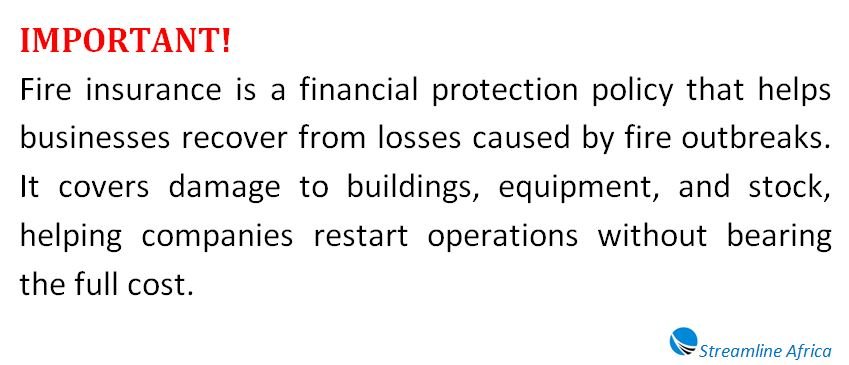
Most Ghanaian businesses obtain some form of commercial property insurance, often bundled within broader policies. These may include protection against theft, weather damage, and liability exposures. Fire coverage is typically embedded, but the default limits are frequently inadequate relative to real asset values.
For example, a small-scale food processing company may insure its premises but underestimate the replacement cost of industrial equipment. In the event of a fire, compensation may fall short, leaving a funding gap. Dedicated fire insurance or policy extensions can bridge this gap by aligning coverage with actual replacement costs in Ghana’s current economic environment, where import-dependent machinery and construction materials are subject to currency fluctuations.
Regulatory oversight from the National Insurance Commission encourages proper underwriting practices, but the responsibility ultimately lies with business owners to ensure their policies reflect operational realities.
What Fire Insurance Covers for Ghanaian Businesses
Fire insurance for businesses in Ghana typically addresses three primary areas: physical assets, operational disruption, and associated costs.
First, it covers structural damage to buildings, whether owned or leased. This includes offices, factories, shops, and storage facilities. Fires caused by electrical faults—common in areas with unstable power supply—are generally included, as are incidents triggered by gas explosions or lightning strikes during the rainy season.
Second, it extends to business contents such as machinery, raw materials, finished goods, and office equipment. For trading businesses in markets like Makola or Kejetia, inventory protection is particularly critical, as stock often represents the bulk of working capital.
Third, many policies incorporate business interruption coverage. This compensates for lost income during the period required to restore operations. For example, if a printing business in Accra cannot operate for two months after a fire, the policy may cover lost profits and fixed expenses such as salaries and rent.
Additional provisions may include debris removal, professional fees for rebuilding, and temporary relocation costs.
How Claims Are Assessed and Paid
In Ghana, fire insurance claims follow standard industry principles but are influenced by local economic conditions. Two valuation approaches are commonly used: replacement cost and actual cash value.
Replacement cost policies reimburse the expense of restoring assets to their pre-loss condition using current market prices. This is particularly important in Ghana, where inflation and exchange rate volatility can significantly increase rebuilding costs within short periods.
Actual cash value policies deduct depreciation, resulting in lower payouts. While premiums may be cheaper, businesses risk under-compensation, especially for older equipment.
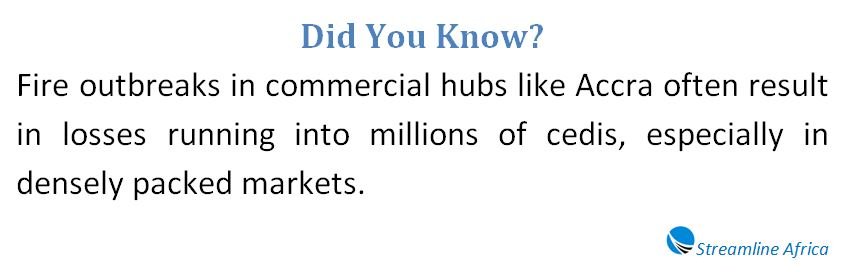
Claims are also subject to the sum insured. If a warehouse in Tema is insured below its true value—a situation known as underinsurance—the insurer may apply an average clause, reducing the payout proportionally. This is a common pitfall among Ghanaian SMEs and can severely limit recovery after a major fire.
Practical Business Scenario
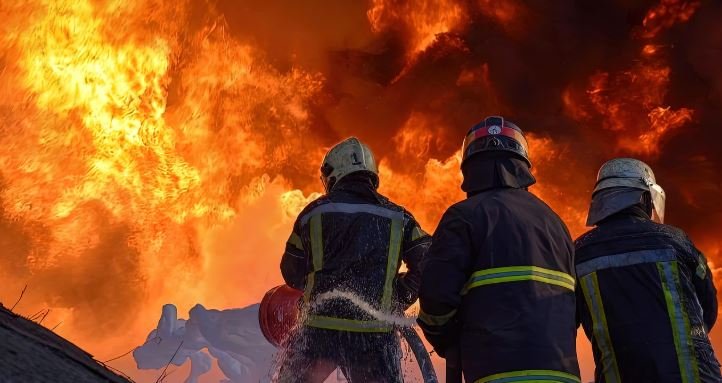
Consider a wholesale distributor operating in Kumasi. The company stores goods worth several million cedis in a central warehouse. A fire breaks out due to an electrical surge, destroying inventory and damaging the structure.
If the business holds adequate fire insurance with business interruption cover, the policy would typically fund the rebuilding of the warehouse, replacement of stock, and compensation for lost income during downtime. Without such coverage, the company would need to rely on reserves or external financing, which may not be readily available.
This example illustrates how fire insurance functions not just as protection, but as a continuity mechanism for Ghanaian enterprises.
Key Exclusions Businesses Must Understand
Fire insurance is not all-encompassing. Ghanaian business owners must pay close attention to exclusions embedded in their policies.
Intentional acts are universally excluded. Any fire caused deliberately by the insured party invalidates the claim. Similarly, losses linked to war or nuclear risks fall outside standard coverage frameworks.
Policies also do not cover non-fire perils such as flooding—an important consideration in flood-prone areas of Accra—or earthquake damage. Separate policies or endorsements are required to address these risks.
Additionally, negligence-related clauses may apply. For instance, failure to maintain basic fire safety measures—such as extinguishers or proper electrical systems—could complicate claims or reduce payouts.
The Importance of Accurate Asset Valuation
One of the most critical steps for Ghanaian businesses is determining the correct sum insured. Underestimating asset value leads to underinsurance, while overestimating increases premium costs without added benefit.
Businesses should conduct periodic asset valuations, factoring in current market prices, import duties, and currency fluctuations. This is especially relevant for industries reliant on imported machinery or specialized equipment.
For high-value or unique assets—such as specialized manufacturing tools or rare inventory—businesses may need additional coverage beyond standard fire insurance limits.
Documentation and Claims Preparedness
Efficient claims processing depends heavily on documentation. Ghanaian businesses should maintain detailed records of assets, including purchase receipts, invoices, and photographic evidence.
Digital record-keeping is strongly recommended. Storing backups in cloud systems ensures that critical information remains accessible even if physical records are destroyed in a fire.
In the event of a claim, insurers will require proof of ownership and value. Businesses that maintain organized records typically experience faster claim resolution and fewer disputes.
Stand-Alone Fire Insurance vs. Bundled Policies
For many Ghanaian SMEs, bundled insurance policies offer a convenient starting point. However, as businesses grow, their risk exposure becomes more complex.
Stand-alone fire insurance policies provide more tailored coverage, higher limits, and flexibility in addressing specific operational risks. For example, a manufacturing firm in Tema may require specialized coverage for heavy machinery that exceeds the limits of a standard policy.
The choice between bundled and stand-alone coverage should be guided by a risk assessment, considering factors such as industry, asset value, and location-specific hazards.
Final Perspective for Ghanaian Businesses
Fire insurance is not merely a compliance requirement or optional expense—it is a strategic risk management tool. In Ghana’s dynamic business environment, where infrastructure challenges and urban density can elevate fire risk, having the right coverage is essential.
Businesses that proactively align their insurance policies with real asset values, maintain proper documentation, and review coverage regularly are better positioned to recover from unexpected disruptions. Fire insurance, when properly structured, safeguards not just physical assets but the long-term viability of the enterprise.
Frequently Asked Questions
Does standard business insurance already include fire coverage?
Yes, most general business insurance policies include some fire protection. However, the coverage limits are often basic, so businesses may need additional fire insurance to fully protect high-value assets.
What types of fire incidents are usually covered?
Typical policies cover fires caused by electrical faults, gas explosions, lightning strikes, and accidental incidents. They may also include damage from smoke and water used to extinguish the fire.
Will fire insurance cover loss of income after a fire?
Many policies include business interruption coverage. This means a company can receive compensation for lost income while operations are paused due to fire damage.
How are payouts calculated after a fire?
Claims are usually settled based on either replacement cost (current rebuilding cost) or actual cash value (after depreciation). The method used depends on the policy agreement.
Are all fire-related damages automatically covered?
No, certain situations are excluded. Fires caused deliberately, or those linked to events like war, are not covered. Other risks like flooding require separate insurance.
Why is proper valuation of assets important?
If a business underestimates the value of its property or stock, it may receive less compensation than needed. Accurate valuation ensures the insurance truly reflects potential losses.
What role does documentation play in claims?
Keeping records such as receipts, invoices, and photos of assets helps speed up the claims process. Without proof, it becomes harder to verify losses.
Should a business choose stand-alone fire insurance?
It depends on the scale and risk level of the business. Larger or high-risk operations often benefit from stand-alone policies with broader and higher coverage limits.