
In today’s tightly interwoven global economy, disruption rarely stays confined to its origin. A shock in one corner—especially at sea—travels quickly through energy markets, logistics networks and, eventually, into the everyday costs faced by businesses and households. While headlines tend to fixate on oil prices during maritime crises, the deeper and more enduring consequences often unfold in less visible domains: freight dynamics, insurance structures and the strategic behavior of supply chains.
Drawing from years of operational exposure across shipping, infrastructure and logistics strategy, it becomes clear that maritime disruptions are not isolated incidents. They function as systemic triggers—events that recalibrate how global trade operates, often long after the initial crisis fades from public attention.
Pressure Points in Global Trade Arteries
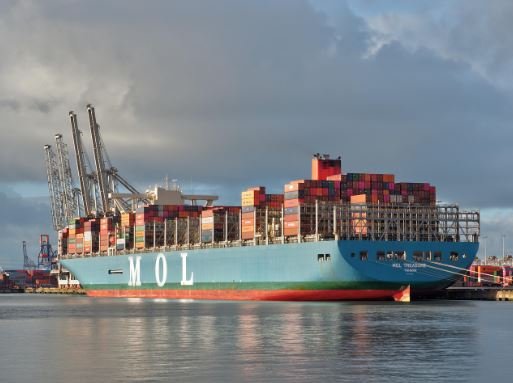
Critical maritime corridors serve as the backbone of international commerce. When these arteries come under strain, the consequences extend far beyond the immediate geography. Take the Strait of Hormuz, a narrow passage through which a substantial portion of the world’s oil and liquefied natural gas flows. Even the perception of instability here is enough to alter global trade patterns.
Before any physical interruption occurs, subtle but significant shifts begin. Shipowners hesitate to commit vessels, charter rates fluctuate unpredictably and insurers reassess risk exposure. These early tremors gradually evolve into measurable economic signals.
A similar dynamic unfolded during the Suez Canal blockage involving the vessel Ever Given. What appeared to be a singular operational mishap quickly escalated into a global bottleneck, halting a significant share of international trade. The blockage illustrated how a single chokepoint disruption can stall billions of dollars’ worth of goods daily, with cascading effects across industries.
Looking further back, the Tanker War demonstrated how sustained maritime insecurity can reshape entire shipping markets. Similarly, piracy incidents near the Horn of Africa forced operators to reroute vessels and invest heavily in onboard security, raising costs across global supply chains.
More recently, instability in the Red Sea has prompted vessels to bypass the Suez Canal entirely, opting instead for the longer journey around the Cape of Good Hope. This detour significantly extends transit times and reduces the effective availability of global shipping capacity.
Across these examples, a consistent pattern emerges: maritime disruptions propagate outward through pricing mechanisms, logistical delays and evolving risk perceptions.
Early Indicators Beneath the Surface
One of the less obvious yet highly reliable indicators of maritime stress lies in vessel behavior. Under stable conditions, shipping flows exhibit a predictable rhythm. Ports operate on schedules, routes remain consistent and fleet deployment follows established patterns.
Disruption introduces hesitation. Shipowners delay decisions, charterers become cautious and routes are reconsidered in real time. This behavioral shift often precedes more visible breakdowns in supply chains. In essence, the shipping industry signals distress before the broader economy fully registers it.
The Expanding Impact of Distance
A critical but often overlooked concept in maritime economics is the “ton-mile effect.” When vessels are forced to take longer routes or face delays at congested passages, the total distance traveled for transporting goods increases. Even if the number of ships remains constant, their productivity declines because each voyage takes longer to complete.
This effectively tightens global shipping capacity without removing a single vessel from service. Freight rates rise, delivery timelines stretch and supply chains become less predictable. Over time, these changes reshape trade flows, as companies seek alternative sourcing strategies to mitigate delays.
Beyond Energy: The Silent Disruptors
While oil dominates public discourse during maritime crises, other cargoes often carry equally significant long-term implications. Fertilizers, liquefied natural gas, sulfur and petrochemical inputs are essential to agriculture and manufacturing ecosystems.
A delay in fertilizer shipments today can translate into reduced agricultural output months later. Interruptions in LNG supply can disrupt power generation and industrial processes. These delayed consequences exemplify the “bullwhip effect,” where minor disruptions at the source amplify as they move through the supply chain.
Such impacts are less immediate but often more persistent, quietly influencing production cycles, pricing structures and food security across regions.
The Human Element at Sea
Amid discussions of freight rates and trade flows, the role of seafarers is frequently underappreciated. These individuals operate on the front lines of maritime disruption, navigating not only physical خطر but also heightened operational complexity.
Rapid changes in routing, evolving compliance requirements and prolonged periods at sea contribute to fatigue and psychological strain. The industry must therefore address not just logistical resilience but human resilience as well.
Effective responses include structured crew rotation systems, real-time communication channels and access to welfare and mental health support. Without these measures, the sustainability of maritime operations—and the industry’s ability to attract new talent—comes into question.
From Industry Shock to Economic Reality
The financial implications of maritime disruption extend far beyond shipping companies. Increased freight costs and elevated insurance premiums eventually filter into manufacturing expenses, energy pricing and consumer goods.
Unlike sudden spikes in oil prices, these cost increases are often gradual and less visible. However, they tend to persist longer, embedding themselves into the broader economic system. Over time, this creates sustained inflationary pressure that affects both businesses and households.
In this way, maritime disruption evolves from a sector-specific issue into a macroeconomic force.
Rethinking Globalization
These recurring disruptions are driving a fundamental shift in how globalization is structured. For decades, efficiency—minimizing cost and maximizing speed—was the dominant principle guiding supply chains. Today, resilience is taking equal precedence.
Organizations are increasingly diversifying their supplier networks, maintaining strategic inventories and investing in regional redundancy. The goal is not to eliminate risk—an impossible task—but to manage it more effectively.
In practical terms, this means holding buffer stock for critical inputs, developing alternative sourcing options across multiple regions and designing logistics systems capable of rapid rerouting. Enhanced visibility into supply chains, supported by digital tracking and analytics, has also become essential.
Collaboration between cargo owners, logistics providers and shipping companies is now a strategic necessity rather than an operational afterthought.
A New Operating Reality
The era of frictionless global trade is giving way to a more complex and uncertain landscape. Maritime disruptions, whether caused by geopolitical tensions, environmental factors or operational incidents, are no longer anomalies. They are recurring features of the system.
Businesses that recognize this shift and adapt accordingly will be better positioned to navigate future shocks. Those that continue to prioritize efficiency at the expense of resilience may find themselves increasingly vulnerable.
Conclusion
Global trade does not collapse overnight when maritime routes are disrupted. Instead, it adjusts—gradually but decisively. Costs rise, timelines extend and supply chains reconfigure themselves in response to new constraints.
The real impact lies not in the immediate disruption, but in the structural changes that follow. As sea lanes shift and uncertainties grow, resilience is no longer optional. It is the defining requirement for operating in an interconnected world where even distant disruptions can reshape local realities.
Commonly Asked Questions
Why do maritime disruptions matter beyond shipping?
They ripple through the entire global economy. What begins as a routing or security issue at sea quickly affects fuel costs, delivery timelines and ultimately the prices consumers pay for everyday goods.
What makes maritime chokepoints so critical?
Key passages like the Strait of Hormuz and the Suez Canal handle massive volumes of global trade. Even minor instability in these areas can disrupt supply chains on a worldwide scale.
How do disruptions show early warning signs?
Before goods stop moving, behavior changes. Ships delay departures, charter rates fluctuate and insurers adjust premiums—these are early indicators that stress is building within the system.
What is the “ton-mile effect” in simple terms?
It means longer routes equal less efficiency. When ships travel farther due to rerouting, fewer deliveries are completed over time, tightening supply and pushing up freight costs.
Are oil shipments the only concern during disruptions?
Not at all. Cargo like fertilizers, LNG and industrial chemicals are just as vital. Delays in these can affect food production, energy supply and manufacturing months later.
How did past events illustrate these risks?
Incidents like the Suez Canal blockage involving the Ever Given showed how one disruption can stall global trade. Similarly, conflicts like the Tanker War reshaped shipping risk and costs.
What role do seafarers play during disruptions?
They are at the frontline. Increased risks, longer voyages and operational uncertainty make their work more demanding, highlighting the human cost behind global trade.
How do these disruptions affect everyday consumers?
Higher shipping and insurance costs eventually raise the price of goods—from food to electronics. The impact may be gradual, but it is widespread and long-lasting.
What should businesses do differently today?
Companies need to prioritize resilience—diversifying suppliers, holding buffer stock and building flexible logistics systems that can adapt quickly when disruptions occur.