

In the modern economy, organizations are no longer judged solely by how much revenue they generate. Increasingly, communities, governments, and investors are evaluating institutions based on the impact they create. This shift has fueled ongoing debates about whether businesses should operate as nonprofit entities devoted to public service or as for-profit enterprises designed to maximize earnings. Each structure offers unique opportunities and significant limitations, making the decision far more complex than a simple financial calculation.
The distinction often begins with tax treatment and organizational purpose. In the United States, nonprofit organizations that meet federal requirements under Section 501(c)(3) are exempt from many taxes because they operate for charitable, educational, scientific, or humanitarian goals. In exchange for those benefits, they must reinvest surplus income into their mission instead of distributing profits to owners or shareholders.
For entrepreneurs, activists, and community leaders, choosing between these two paths can shape everything from fundraising options to leadership authority and long-term sustainability.
The Role of Nonprofit Organizations in Society
Nonprofit institutions exist to address needs that may not be adequately served by traditional markets. These organizations range from neighborhood literacy programs and wildlife conservation groups to medical research foundations and international relief agencies.
Consider the fictional example of Horizon Bridges, a nonprofit founded in Portland, Oregon, to provide career training for formerly incarcerated individuals. Instead of generating profits for shareholders, the organization channels donations and grants into apprenticeship programs, counseling services, and employer partnerships.
Across the country, organizations like Horizon Bridges often fill gaps left by government systems and commercial businesses. Some focus on local issues such as food insecurity, while others tackle global concerns like climate resilience or refugee assistance.
Their mission-first orientation frequently attracts volunteers, philanthropic donors, and socially conscious employees who are motivated by impact rather than financial return.
Tax Advantages and Public Support
One of the greatest advantages of nonprofit status is exemption from certain federal, state, and local taxes. This financial relief allows organizations to dedicate more resources toward their mission instead of tax obligations.
For donors, contributions to qualifying nonprofits may also be tax deductible, creating an incentive for charitable giving. A technology executive in Seattle, for instance, might donate to a youth coding initiative knowing the contribution supports a meaningful cause while also reducing taxable income.
Nonprofits can also pursue grant funding unavailable to most commercial enterprises. Public agencies, charitable foundations, and international development institutions often reserve funding exclusively for tax-exempt organizations.
These advantages can significantly strengthen operational capacity. A community health nonprofit in Atlanta may secure federal grants to expand mobile clinics, while a wildlife rescue organization in Arizona could receive foundation support for habitat restoration.
Beyond finances, nonprofit designation often builds public trust. Many consumers and donors view these organizations as more ethical or community-oriented because profits are not distributed to private owners.
Legal Protection and Organizational Continuity
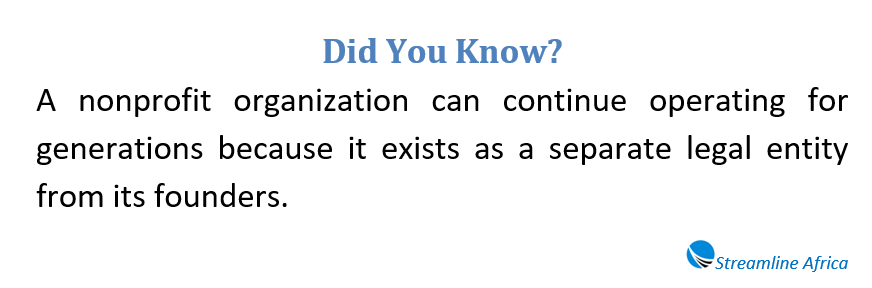
Another important benefit involves legal separation between the organization and its founders. Once incorporated, the nonprofit becomes its own legal entity.
Suppose a group of educators establishes a nonprofit arts academy in Minneapolis. If the organization faces contractual disputes or financial liabilities, the founders’ personal assets are generally protected, provided they acted lawfully and responsibly.
This structure also helps organizations outlive their original creators. A mission-driven institution can continue operating for decades after its founders retire or pass away. That continuity often reassures donors who want confidence that their contributions will support lasting change.
Long-standing charitable institutions tend to attract more consistent funding precisely because they demonstrate stability, governance, and endurance over time.
The Financial Difficulties Nonprofits Face
Despite those advantages, nonprofits often encounter major financial obstacles. Launching and maintaining a charitable organization requires significant administrative work, legal compliance, and ongoing reporting.
Take the example of Riverstone Learning Collective, a fictional nonprofit based in Denver that provides free tutoring for underserved students. Before opening its doors, the organization must pay incorporation fees, prepare tax exemption applications, establish governance procedures, and create detailed accounting systems.
Unlike startups backed by venture capital, nonprofits may struggle to access large pools of investment capital. Since investors cannot receive equity ownership or profit distributions, fundraising depends heavily on donations, sponsorships, and grants.
This limitation can slow expansion and reduce flexibility during economic downturns. When donations decline during recessions, nonprofits often face difficult staffing and program cuts.
Attracting top talent can also become challenging. Skilled professionals in finance, technology, or operations may choose higher-paying corporate positions over nonprofit careers, especially when compensation budgets are limited.
Public Scrutiny and Reporting Obligations
Nonprofits also operate under intense public examination. Because they receive tax advantages and public support, stakeholders expect transparency regarding finances and leadership decisions.
Organizations are typically required to file annual reports detailing revenue, expenses, salaries, and operational activities. These filings are accessible to the public, meaning donors, journalists, and watchdog groups can closely evaluate how money is being spent.
For example, if a nonprofit housing organization in Chicago allocates large executive salaries while reducing community programs, public criticism may quickly follow.
Government audits and regulatory reviews can add further pressure. Even well-intentioned organizations must carefully document operations to maintain compliance and preserve tax-exempt status.
This environment often forces nonprofit leaders to balance mission effectiveness with public perception.
Leadership Challenges Within Nonprofits
Founders who enjoy strong personal control over decision-making may find nonprofit governance restrictive.
Most nonprofits operate under a board of directors responsible for oversight, strategic guidance, and accountability. Major decisions usually require collective approval rather than unilateral executive authority.
Imagine a social entrepreneur launching a nonprofit environmental initiative in Vancouver. While the founder may envision rapid expansion into multiple cities, board members could prioritize financial caution or different strategic goals.
This shared governance structure protects organizations from misuse of authority, but it can also slow innovation and create internal conflicts.
For some leaders, the collaborative model strengthens accountability. For others, it limits entrepreneurial freedom.
Why Many Businesses Prefer the For-Profit Structure
For-profit businesses operate with greater flexibility and fewer restrictions on revenue generation. Owners can attract investors by offering equity stakes, distribute profits, and scale rapidly through commercial markets.
A renewable energy startup in Austin, for instance, can raise millions from private investors eager for financial returns. That capital can fund hiring, marketing campaigns, research, and infrastructure expansion much faster than most nonprofits could achieve.
For-profit companies also tend to offer more competitive salaries, helping them recruit highly specialized talent.
The entrepreneurial environment encourages experimentation, innovation, and fast decision-making. Leaders can pivot strategies quickly in response to market conditions without waiting for board consensus or grant approvals.
However, the pressure to generate profits may sometimes conflict with broader social goals.
The Emergence of Hybrid Organizations
As the lines between social impact and business innovation blur, many organizations are embracing hybrid models that combine elements of both structures.
One example is the fictional company GreenPulse Mobility, headquartered in Amsterdam. Its nonprofit arm develops affordable electric transportation solutions for low-income regions, while its commercial division manufactures premium electric bikes for urban consumers.
Revenue from commercial sales helps finance social initiatives, creating a cycle where profit supports public benefit.
This blended approach has become increasingly popular among social entrepreneurs who want both financial sustainability and meaningful impact.
Hybrid organizations often maintain separate legal entities for nonprofit and commercial operations. The nonprofit side may handle education, advocacy, or charitable distribution, while the business division manages manufacturing, marketing, and investor relations.
Such models allow organizations to attract philanthropic support alongside private investment.
Transitioning Between Organizational Models
Changing from a nonprofit to a for-profit structure—or vice versa—is possible but rarely simple.
Organizations considering such a transition must navigate regulatory approvals, legal restructuring, financial evaluations, and governance changes. Assets may need to be reassigned, tax obligations recalculated, and operational frameworks rebuilt.
For instance, if a nonprofit medical research institute decides to commercialize its discoveries through a biotech company, leadership must carefully separate charitable assets from investor-owned operations.
These transitions often resemble launching an entirely new organization.
As a result, founders should think carefully about long-term goals before selecting a structure.
Choosing the Best Path Forward
There is no universally superior model between nonprofit and for-profit organizations. The right choice depends on mission, funding strategy, leadership style, and growth objectives.
Nonprofits excel at building public trust, advancing social causes, and accessing charitable funding. For-profit companies thrive in innovation, scalability, and capital generation.
Meanwhile, hybrid organizations demonstrate that impact and profitability do not always have to compete.
As consumer expectations evolve and social entrepreneurship expands, organizations across industries are increasingly seeking ways to balance purpose with sustainability. The future may belong not to purely charitable institutions or purely profit-driven corporations, but to adaptable models capable of achieving both economic success and meaningful social change.
Key Takeaways
Nonprofits Exist to Serve a Mission
Nonprofit organizations are designed to address social, educational, charitable, or humanitarian needs rather than generate profits for owners or shareholders.
Tax Benefits Give Nonprofits a Major Advantage
Tax-exempt status allows nonprofits to direct more resources toward their mission while also encouraging donations from supporters seeking tax deductions.
Public Trust Often Favors Nonprofits
People are generally more willing to support organizations that prioritize community impact over financial gain, especially in areas like healthcare, education, and poverty relief.
For-Profit Businesses Have Greater Financial Flexibility
Commercial companies can attract investors, distribute profits, and scale operations faster because they are not restricted by nonprofit regulations.
Raising Capital Is Harder for Nonprofits
Since nonprofits cannot offer ownership shares or profits to investors, they often depend heavily on grants, donations, and sponsorships to survive.
Leadership Control Works Differently in Nonprofits
Nonprofits are usually governed by boards of directors, meaning founders often have less personal control compared to traditional businesses.
Transparency Is Essential for Nonprofits
Because nonprofits receive public support and tax benefits, they face strict reporting requirements and ongoing public scrutiny regarding finances and operations.
Hybrid Models Are Becoming More Popular
Many modern organizations combine nonprofit and for-profit structures to balance social impact with financial sustainability and business growth.
Long-Term Vision Matters Before Choosing a Structure
Selecting between nonprofit and for-profit status affects fundraising, hiring, taxation, leadership authority, and future expansion opportunities.
Social Impact and Profit Can Coexist
The article highlights how modern businesses increasingly blend purpose with profitability, proving that financial success and community impact are not always opposites.