
Scrap value is an important component of fixed-asset accounting, capital planning, and end-of-life asset management. It represents the estimated amount a business expects to recover from an asset once the asset can no longer perform its intended operational function. Recovery may occur through resale, dismantling, recycling, or the sale of individual components.
Although scrap value is often modest relative to an asset’s original purchase price, it can materially affect depreciation calculations, financial reporting, insurance settlements, replacement decisions, and disposal budgets. For this reason, organizations should treat scrap value as a forward-looking financial estimate rather than as a minor accounting assumption.
A well-supported scrap value estimate enables management to assess the full economic cost of ownership. It also provides greater visibility into whether an asset is likely to generate proceeds at retirement or create additional costs through removal, transportation, environmental compliance, or specialist disposal requirements.
Defining Scrap Value
Scrap value is the estimated residual value of a tangible asset at the end of its useful economic life. The term is frequently used interchangeably with residual value or salvage value, although the precise terminology may differ across accounting frameworks, industries, and internal company policies.
The estimate reflects the amount that may be recovered after the asset has been fully utilized for its original purpose. A manufacturing machine, for example, may no longer meet production requirements but may still contain valuable motors, steel, electronic controls, or other reusable parts.
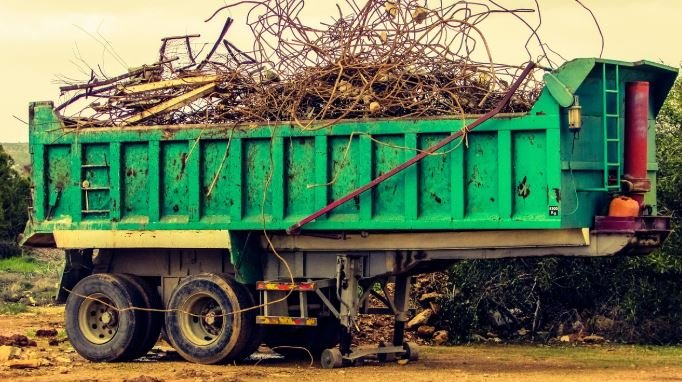
Similarly, a commercial vehicle may be unsuitable for continued fleet operations but could still generate proceeds from the sale of its engine, tyres, body panels, or metal structure. The remaining value is therefore not necessarily linked to the asset’s ability to continue operating as a complete unit.
The following formula provides a basic method of calculating scrap value:
Scrap Value = Original Cost of the Asset − Accumulated Depreciation
Where depreciation is charged at a consistent annual amount, the formula may be expressed as:
Scrap Value = Asset Cost − (Annual Depreciation × Useful Life)
This formula calculates the remaining accounting value after accumulated depreciation has been deducted. However, the resulting book value may not always equal the amount that can be recovered in the market.
Relationship Between Scrap Value and Depreciation
Scrap value plays a central role in determining an asset’s depreciable amount. Depreciation allocates the cost of a long-term asset over the period during which it contributes to operations and revenue generation.
Where management expects to recover a residual amount at the end of the asset’s useful life, that amount is normally excluded from the depreciable base.
The standard straight-line depreciation formula is:
Annual Depreciation = (Asset Cost − Estimated Scrap Value) ÷ Useful Life
Assume that Crestfield Processing acquires an industrial packaging unit for $84,000. Management expects the unit to remain in productive service for seven years and estimates that it will have a scrap value of $7,000 at the end of that period.
The depreciable amount is therefore $77,000:
$84,000 − $7,000 = $77,000
Annual straight-line depreciation would be:
$77,000 ÷ 7 = $11,000
The company would recognize an annual depreciation expense of $11,000 while maintaining an expected residual value of $7,000 at the end of the asset’s useful life.
This approach prevents the organization from depreciating the asset to zero when management reasonably expects to recover value from its disposal.
Importance of Reliable Estimates
Scrap value is based on management judgment and available market information. An inaccurate estimate can affect depreciation expense, asset carrying values, reported profit, and future disposal planning.
If scrap value is set too high, the depreciable amount will be understated. This may result in lower annual depreciation expenses, higher reported profits, and an overstated asset balance.
Conversely, an excessively low scrap value may lead to higher depreciation charges and an understated carrying amount. Although conservative estimates may appear prudent, they can distort performance measures and reduce the usefulness of financial statements.
Organizations should therefore support scrap value assumptions with relevant evidence. This may include recent auction prices, dealer quotations, metal recovery rates, industry disposal trends, historical asset sales, and estimated dismantling expenses.
Periodic review is also necessary because market conditions, technology, environmental requirements, and asset condition may change significantly during the useful life of the asset.
Effect of Depreciation Methods
The depreciation method selected by an organization determines how quickly an asset’s carrying value declines over time. As a result, different methods can produce significantly different book values at the end of a specified period.
Straight-line depreciation allocates an equal amount of depreciation each year. Declining-balance depreciation applies a fixed percentage to the asset’s remaining book value, resulting in higher depreciation charges during the earlier years and lower charges during later years.
Consider a commercial printing business that purchases a digital production press for $90,000. The asset has an estimated useful life of six years, and the business applies a 15% annual depreciation rate.
Under a simplified straight-line approach based on 15% of the original cost, annual depreciation would be $13,500:
$90,000 × 15% = $13,500
Over six years, accumulated depreciation would total $81,000:
$13,500 × 6 = $81,000
The remaining value would be:
$90,000 − $81,000 = $9,000
Under the declining-balance method, depreciation would instead be applied to the asset’s carrying value at the beginning of each year.
In the first year, depreciation would be $13,500, reducing the asset value to $76,500. In the second year, depreciation would be $11,475, leaving a carrying value of $65,025. The annual depreciation charge would continue to decline because it is calculated on a progressively smaller balance.
At the end of the sixth year, the press would have a carrying value of approximately $33,943. This amount would be significantly higher than the $9,000 balance produced under the simplified straight-line calculation.
The comparison demonstrates that depreciation methods affect accounting values and expense recognition patterns. However, they do not independently determine the actual amount an asset will generate when sold or dismantled.
Market demand, equipment condition, technological relevance, and disposal costs remain the primary drivers of realized scrap proceeds.
Scrap Value in Insurance Settlements
Scrap value may also influence insurance claims where damaged property retains some recoverable value. In such cases, an insurer may deduct the value of the retained property from the settlement amount, particularly where the policyholder chooses to keep the damaged asset.
Assume that a distribution company owns a refrigerated delivery vehicle that is severely damaged in an accident. The assessed loss is $18,000, the policy deductible is $2,500, and the damaged vehicle has an estimated recovery value of $6,000.
The insurer may calculate the settlement as follows:
$18,000 − $2,500 − $6,000 = $9,500
The $6,000 deduction reflects the value that remains with the policyholder. The company may recover that amount by selling the engine, refrigeration unit, wheels, metal body, or other usable components.
Actual insurance treatment will depend on policy wording, jurisdiction, ownership arrangements, and the insurer’s claims procedures. Nevertheless, the principle is that retained salvage value may reduce the amount payable under the policy.
Understanding Negative Scrap Value
Scrap value is not always positive. In some circumstances, an asset may create a net financial liability at the end of its useful life.
Negative scrap value occurs when the cost of dismantling, transporting, remediating, or disposing of an asset exceeds the proceeds expected from its sale or recycling.
For example, Northbridge Industrial Services owns an outdated storage installation containing recyclable materials worth $14,000. However, safe dismantling, environmental treatment, regulatory permits, and transportation are expected to cost $37,000.
The resulting net scrap value would be negative $23,000:
$14,000 − $37,000 = −$23,000
Negative scrap values are particularly relevant for assets involving hazardous substances, contaminated land, asbestos, underground structures, specialist electronics, or regulated industrial equipment.
These costs should be assessed during the investment approval stage rather than identified only when the asset reaches retirement. Failure to account for them can understate the true lifetime cost of an investment.
Strengthening Scrap Value Governance
Organizations can improve scrap value estimates by introducing a structured review process. Finance, operations, procurement, engineering, insurance, and sustainability teams may all hold information relevant to the assessment.
Management should consider the asset’s expected physical condition, available resale markets, component demand, recycling prices, removal requirements, transportation costs, and regulatory obligations.
External quotations from equipment dealers, auctioneers, recyclers, and specialist disposal firms can also provide valuable evidence. Internal records from previous asset disposals may help management identify differences between estimated and actual recovery values.
Where those differences are recurring or material, the organization should refine its estimation methodology.
Scrap value assumptions should also be reviewed when there are significant changes in asset usage, maintenance practices, market demand, technological relevance, or environmental regulation.
Any material revision should be documented, approved through the appropriate governance process, and reflected in future depreciation calculations in accordance with the applicable accounting framework.
Strategic Implications for Management
Scrap value should be incorporated into capital expenditure analysis and asset replacement decisions. Two assets with similar purchase prices may have very different total ownership costs if one retains strong resale value while the other requires expensive decommissioning.
By considering residual proceeds and disposal liabilities at the investment stage, management can compare options more accurately and avoid focusing exclusively on acquisition cost.
Scrap value also supports cash-flow forecasting by indicating whether an asset retirement is expected to generate income or require additional funding. This information can strengthen replacement budgets and reduce the risk of unplanned disposal expenditure.
Ultimately, scrap value connects the acquisition, utilization, depreciation, insurance, and retirement stages of the asset lifecycle. A disciplined estimation process improves the reliability of financial reporting and provides management with a more complete view of long-term asset economics.
Organizations that assess scrap value carefully are better positioned to calculate depreciation accurately, plan asset replacements, manage insurance recoveries, anticipate disposal obligations, and make more informed capital allocation decisions.
Key Takeaways
Scrap Value Reflects an Asset’s Remaining Worth
Scrap value is the estimated amount a business may recover from an asset after it can no longer serve its original purpose.
It Directly Affects Depreciation
A higher scrap value reduces the amount depreciated, while a lower estimate increases annual depreciation expenses.
The Basic Formula Is Straightforward
Scrap value is generally calculated by subtracting accumulated depreciation from the asset’s original purchase cost.
Depreciation Methods Produce Different Results
Straight-line and declining-balance methods reduce an asset’s book value at different rates, which can lead to different ending values.
Book Value May Differ From Market Value
The figure shown in accounting records does not always match the actual amount a company will receive when the asset is sold or recycled.
Disposal Costs Must Be Considered
Transport, dismantling, environmental treatment, and regulatory fees can significantly reduce the amount recovered from an old asset.
Scrap Value Can Be Negative
When disposal costs exceed resale or recycling proceeds, the asset creates a financial obligation rather than a cash benefit.
Insurance Settlements May Include Scrap Value
Insurers may deduct the recoverable value of damaged property from a claim payment when the policyholder keeps the asset.
Regular Reviews Improve Accuracy
Businesses should reassess scrap value when market prices, technology, regulations, asset condition, or disposal requirements change.