
Customer Understanding as a Source of Competitive Advantage
In increasingly competitive markets, organizations are under growing pressure to differentiate not only through products and pricing, but also through the quality of the customer experience they deliver. As consumers interact with businesses across digital and physical channels, the ability to interpret customer behaviour accurately has become an important source of strategic advantage.
Customer insights provide the analytical foundation for that understanding. They convert customer data into practical intelligence that can guide commercial, operational, and strategic decisions. While data indicates what customers are doing, insight helps explain the drivers behind that behaviour and the implications for the business.
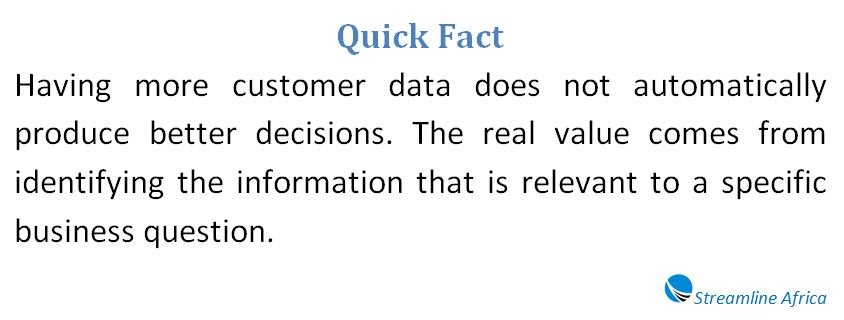
For leadership teams, this distinction is important. Collecting information does not automatically create value. Value emerges when organizations identify patterns, understand their significance, and translate those findings into actions that improve customer retention, revenue growth, service quality, and resource allocation.
A fitness business operating in Nairobi, for example, may observe that a significant proportion of members cancel subscriptions after several months. The cancellation figure alone is a performance indicator. However, combining attendance data, customer surveys, application usage, and instructor feedback may reveal that engagement declines once introductory coaching ends. That finding can inform targeted retention programmes, revised membership structures, and more proactive customer engagement.
Defining Customer Insights in a Business Context
Customer insights are evidence-based interpretations of customer behaviour, preferences, expectations, and experiences. They are developed by analysing multiple sources of information and identifying patterns that have commercial or operational relevance.
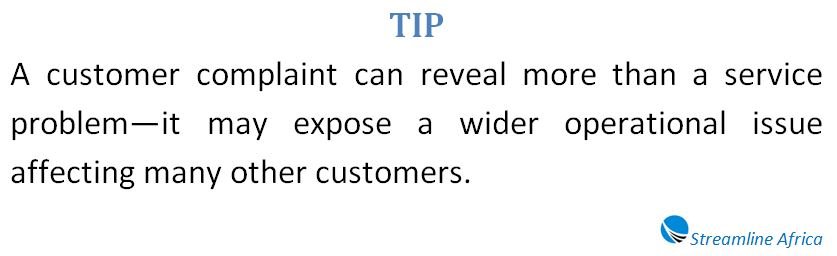
Organizations commonly generate significant volumes of customer data through transactions, digital channels, customer-service interactions, sales activity, loyalty programmes, surveys, reviews, and CRM platforms. The strategic challenge is not the availability of data but the organization’s ability to distinguish meaningful signals from background information.
Consider a restaurant group in Kigali experiencing a decline in weekday lunch sales. Transaction reports may confirm the reduction in revenue, but additional analysis could show that customers increasingly value shorter ordering times, advance ordering, and faster collection options. The relevant insight is therefore not simply that sales have declined. It is that customer expectations around convenience and service speed are changing.
This distinction enables management to address underlying causes rather than symptoms.
Why Customer Insights Matter to Business Performance
Customer insight supports several dimensions of organizational performance. It can improve acquisition by helping businesses understand which customer groups are most attractive and what influences their decisions. It can strengthen retention by identifying early warning signs of dissatisfaction or disengagement. It can also support cross-selling, product development, pricing decisions, and service design.
The commercial implications can be substantial. Organizations that fail to understand changing customer expectations risk allocating capital and management attention to areas that do not materially improve customer value.
Retention is particularly important. In many industries, acquiring new customers requires significant marketing and sales expenditure. Where businesses can identify why existing customers reduce spending, switch providers, or disengage, management can intervene before revenue is lost.
Customer insight should therefore be viewed not only as a marketing capability, but as an input into broader commercial strategy.
Building a Reliable Customer Insight Base
High-quality customer insight depends on the quality and breadth of the information being analysed. Businesses should avoid relying on isolated data sources when customer behaviour is influenced by multiple touchpoints.
Transaction data can reveal purchase frequency, average order value, category preferences, and seasonal patterns. CRM platforms can capture sales conversations, customer history, account status, and follow-up activity. Website and application analytics can show where customers enter, hesitate, abandon transactions, or return. Reviews, surveys, interviews, complaints, and service interactions provide qualitative evidence that helps explain the numbers.
A home-appliance distributor in Accra may, for example, observe increasing sales of energy-efficient refrigerators. At the same time, customer-service teams may receive more questions about electricity consumption, while online reviews indicate growing sensitivity to household energy costs.
Taken together, these signals suggest a broader market opportunity. Management may decide to strengthen energy-efficiency messaging, adjust product assortment, train sales teams to discuss lifetime operating costs, and develop marketing campaigns around affordability and energy use.
The insight becomes valuable because it informs a coordinated business response.
The Role of Artificial Intelligence in Customer Analysis
Artificial intelligence is expanding the speed and scale at which organizations can analyse customer information. AI-enabled tools can review large volumes of structured and unstructured data, classify customer concerns, identify recurring themes, detect sentiment shifts, and highlight unusual patterns.
For businesses handling large volumes of customer interactions, these capabilities can materially improve visibility.
A telecommunications provider in Lusaka may receive thousands of service messages each week. AI can categorize those interactions into themes such as billing, network performance, payment issues, device configuration, and account access. Management can then assess which problems are increasing, which customer segments are most affected, and where operational intervention may be required.
Predictive analytics can also support forward-looking decisions by identifying customers who may be at risk of leaving, likely to repurchase, or potentially receptive to specific products.
However, AI should be treated as a decision-support capability rather than a substitute for management judgment. Models can identify statistical relationships, but leadership teams must still assess causality, context, operational feasibility, and commercial impact.
CRM Systems as an Integrated Customer Intelligence Platform
Customer relationship management systems can play a central role in consolidating information across the customer lifecycle. When implemented effectively, CRM platforms can connect sales activity, service interactions, marketing engagement, account history, and renewal information.
This integrated view is important because customer insight is frequently fragmented across functions.
A software provider serving independent hotels in Casablanca may have several disconnected sources of valuable intelligence. Marketing teams may know which prospects engage with industry content. Sales teams may understand which features customers value most. Implementation teams may know where onboarding problems occur, while customer-support teams may identify recurring product frustrations.
If these insights remain in separate systems or departments, the organization may respond slowly. A well-maintained CRM environment allows management to identify common patterns and coordinate action across teams.
The effectiveness of the system, however, depends on data governance. Incomplete records, inconsistent tagging, duplicate information, and poor user adoption can significantly reduce the quality of insight generated.

Translating Insight Into Commercial Action
The primary objective of customer insight is to improve decision-making. Organizations should therefore avoid treating insight generation as an end in itself.
Dashboards, reports, and analytical outputs have limited value unless they result in defined actions, accountable owners, and measurable outcomes.
A grocery delivery company in Dakar may discover that first-time customers have a low repeat-purchase rate because delivery windows are unclear. Management could respond by improving delivery estimates, simplifying tracking notifications, and redesigning post-purchase communication.
The business should then measure whether repeat-order rates improve after these changes are implemented.
This creates a disciplined management cycle: collect relevant information, identify material patterns, formulate a hypothesis, implement an intervention, measure results, and adjust where necessary.
Organizations that institutionalize this process are more likely to develop stronger customer responsiveness over time.
Common Risks in Customer Insight Programmes
One of the most significant analytical risks is confusing correlation with causation. A business may observe that customers using a mobile application spend more, for example, and conclude that the application is driving higher expenditure. In reality, more loyal or higher-value customers may simply be more likely to use the application.
Major commercial decisions should therefore be supported by testing, experimentation, or additional analysis where possible.
Another common weakness is excessive data collection without clear decision relevance. Organizations may track large numbers of metrics because the technology is available, even where those metrics provide limited strategic value.
A stronger approach begins with specific management questions. Why is retention weakening? Which customer groups are generating sustainable value? Where are customers abandoning the buying process? Which service failures are creating avoidable cost? What unmet needs could support future growth?
Data should be collected and analysed with these decisions in mind.
Privacy, Trust, and Responsible Data Use
Customer insight programmes also create responsibilities around privacy and data protection. Businesses should ensure that customer information is collected for legitimate purposes, stored securely, used transparently, and accessed only where necessary.
The reputational consequences of poor data practices can outweigh the potential analytical benefit. Customers are increasingly sensitive to how their information is being used, particularly where personalization becomes intrusive or where data collection appears disproportionate to the service being provided.
Responsible customer analytics should therefore balance commercial objectives with trust, governance, and ethical data use.
Creating an Organization-Wide Customer Insight Capability
Customer understanding should not remain within a single department. Different business functions hold different parts of the customer experience.
Sales teams understand objections and buying motivations. Customer-service teams hear complaints and recurring frustrations. Operations teams see delivery and fulfilment problems. Finance teams observe payment patterns. Product teams monitor usage and feature adoption. Marketing teams understand engagement and campaign response.
Organizations can generate stronger insight when these perspectives are brought together.
Cross-functional customer reviews, shared reporting structures, integrated systems, and clear ownership of customer initiatives can help convert fragmented observations into coordinated action.
Senior leadership plays an important role in establishing this discipline. Management teams should move beyond asking whether a metric has increased or declined and focus instead on why the change occurred, what it means for the business, and what action should follow.
Customer Insight as a Long-Term Strategic Capability
The organizations best positioned for sustainable growth are not necessarily those with the largest volumes of customer data. They are those that can consistently convert relevant information into timely and commercially sound decisions.
Customer insights can support stronger retention, more effective acquisition, improved personalization, better product development, reduced service failures, and more efficient allocation of resources. AI, CRM platforms, analytics tools, and automation can strengthen these capabilities, but technology remains an enabler rather than the source of competitive advantage.
The real advantage lies in the organization’s ability to combine reliable information with analytical discipline, management judgment, responsible data practices, and effective execution.
Markets, technologies, and customer expectations will continue to evolve. The underlying management principle, however, remains durable. Businesses that understand what customers value, why their behaviour changes, where friction occurs, and what influences purchasing decisions will be better positioned to adapt.
Customer insight should therefore be treated as a core strategic capability rather than a temporary marketing initiative. For organizations seeking sustainable growth, stronger customer relationships, and better commercial outcomes, the ability to understand and act on customer behaviour is increasingly fundamental.
9 Important Takeaways
Customer Insight Goes Beyond Data
Customer data only becomes valuable when businesses interpret it correctly and use it to guide real decisions.
Understanding Customers Creates an Advantage
Companies that understand what customers value, expect, and struggle with are better positioned to compete and adapt.
Retention Depends on Early Understanding
Customer insights can help businesses identify dissatisfaction before it leads to reduced spending, disengagement, or customer loss.
Multiple Data Sources Give Better Answers
CRM records, transactions, surveys, reviews, digital behaviour, and service interactions are more powerful when analysed together.
AI Makes Customer Analysis Faster
Artificial intelligence can identify patterns, sentiment, recurring complaints, and behavioural changes across large volumes of customer information.
CRM Systems Improve Visibility
A well-managed CRM creates a more complete picture of the customer by bringing together information from sales, marketing, service, and other functions.
Insight Must Lead to Action
Reports and dashboards have limited value unless the findings influence decisions, improve processes, or solve customer problems.
Customer Data Requires Responsible Management
Privacy, transparency, data security, and ethical use are essential for maintaining customer trust while developing useful insights.
Customer Insight Is a Company-Wide Capability
Marketing cannot build customer understanding alone. Sales, operations, finance, service, and product teams all contribute valuable perspectives.