
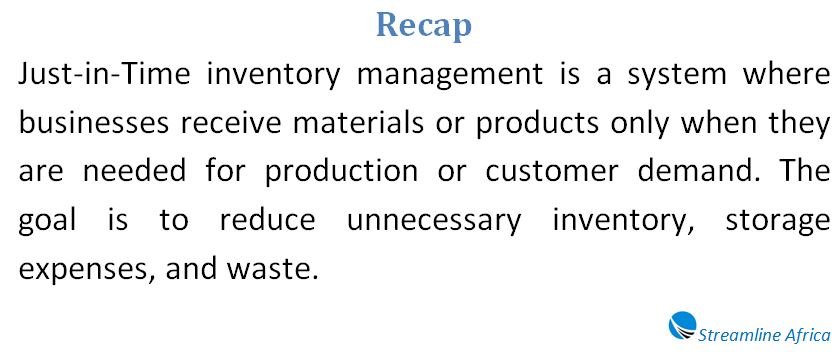
Just-in-time inventory, commonly called JIT, is an inventory and production management approach designed to ensure that materials, components, and finished goods arrive only when they are required. Instead of maintaining large quantities of stock in warehouses, a business coordinates purchasing closely with its operating schedule so that inventory moves rapidly from supplier to production and ultimately to the customer.
The central objective of JIT is efficiency. Businesses attempt to reduce unnecessary storage, limit excess purchasing, release cash tied up in inventory, and prevent products from becoming obsolete before they are sold. The approach is particularly useful in operations where demand can be predicted reasonably well and suppliers are capable of making frequent, dependable deliveries.
However, JIT is not simply a strategy for keeping warehouses empty. It requires disciplined planning, dependable data, consistent product quality, responsive suppliers, and well-maintained equipment. A company that reduces inventory without strengthening these areas may expose itself to significant operational risk.
How the JIT System Works
Consider Meridian Office Furnishings, a fictional manufacturer based in Rotterdam that produces customized desks for corporate customers across Europe. Rather than purchasing enough timber, metal frames, and fittings to cover several months of production, Meridian schedules smaller deliveries around confirmed customer orders.
When a client places an order for 400 adjustable desks, the production planning system determines the required materials and communicates delivery schedules to approved suppliers. Timber panels might arrive two days before cutting begins, while electrical lifting mechanisms arrive shortly before the assembly stage.
This arrangement means Meridian does not need large storage facilities filled with components that may remain unused. Inventory moves through the business quickly, reducing the amount of working capital committed to stock.
The model depends on coordination. If the lifting mechanism supplier misses its delivery window, production may stop even though every other component is available. JIT therefore places greater emphasis on supplier performance, logistics visibility, forecasting, quality control, and production scheduling than inventory-heavy approaches.
Read Also: Days Sales in Inventory (DSI): Formula, Analysis and Strategies for Optimizing Working Capital
Conditions Required for Successful JIT Operations
A successful JIT environment typically has predictable workflows and relatively stable production processes. Machines must operate reliably because unexpected breakdowns can interrupt the carefully planned flow of materials. Employees must also maintain consistent quality standards. Defective components become especially disruptive when there is little replacement inventory available.
Supplier relationships are equally important. Companies using JIT often work closely with selected vendors, sharing forecasts, production requirements, delivery schedules, and quality expectations. Shorter transportation distances can also improve reliability because businesses become less exposed to long international shipping routes.
Technology increasingly supports these arrangements. Enterprise resource planning platforms, warehouse systems, supplier portals, demand forecasting tools, and real-time inventory dashboards allow companies to identify when materials are needed and issue replenishment instructions quickly.
Advantages of Just-in-Time Inventory
One of the most significant JIT benefits is lower inventory holding cost. Warehouses require rent, electricity, insurance, security, handling equipment, and employees. Reducing the volume of stored stock can therefore generate substantial savings.
JIT can also improve cash flow. Instead of spending money months before materials generate revenue, organizations purchase supplies closer to the moment when they will be converted into finished products and sold. This can free capital for recruitment, equipment, marketing, research, or other operating priorities.
Another advantage is reduced waste. Businesses holding large inventories face the possibility that products will expire, become damaged, fall out of fashion, or become technologically outdated. Smaller inventory quantities limit this exposure.
Shorter production runs can also provide greater flexibility. A manufacturer may find it easier to adjust output when customer preferences change because it has not committed heavily to materials intended for outdated products.
Disadvantages and Risks of JIT
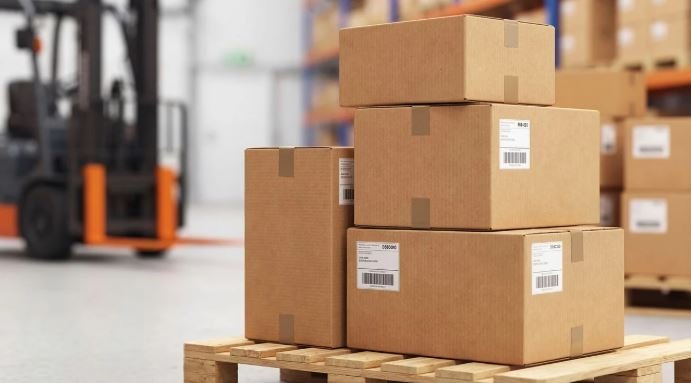
The efficiency of JIT comes with reduced protection against disruption. Businesses operating with minimal safety stock have less room to absorb supplier delays, transportation problems, labor shortages, equipment failures, extreme weather events, or sudden increases in demand.
Suppose Meridian’s primary supplier of electronic desk controls experiences a week-long factory outage. A traditional manufacturer holding several weeks of components might continue production temporarily. Meridian, however, could be forced to suspend assembly within days.
Demand volatility presents another challenge. An unexpectedly large customer order may exceed the capacity of existing suppliers to respond immediately. Even though the business has secured additional sales, insufficient materials could delay delivery and damage customer relationships.
JIT may also increase dependence on a smaller group of reliable vendors. When a highly specialized component has only one approved supplier, disruption at that supplier can quickly affect the entire production network.
A Practical JIT Example
Imagine Coastline Fresh Meals, a fictional ready-meal company operating in Cape Town. The company supplies supermarkets with refrigerated pasta, vegetable bowls, and prepared lunches.
Because many ingredients have short shelf lives, carrying excessive inventory would create significant spoilage. Coastline therefore receives fresh vegetables, dairy products, packaging materials, and other inputs according to daily production plans.
If supermarket orders indicate that 18,000 vegetarian meals are required on Wednesday, purchasing teams calculate the precise ingredient requirements and arrange deliveries shortly before production. This approach helps the company preserve freshness, reduce food waste, and avoid unnecessarily large refrigerated storage facilities.
The weakness becomes obvious when transportation fails. If a vegetable supplier’s trucks cannot make their scheduled delivery, Coastline may have insufficient ingredients to complete production. JIT reduces waste during normal operations but can magnify the consequences of abnormal events.
The Role of Kanban in JIT
Kanban is one method frequently associated with JIT environments. It uses visible signals to indicate when work or inventory should move to the next stage. Historically these signals could be cards attached to containers, while modern organizations commonly use digital notifications, barcode scans, or automated workflow systems.
For example, when assembly workers consume the final container of a particular component, a kanban signal may automatically request replenishment. Materials therefore move according to actual consumption rather than assumptions about how much production might require.
Kanban can also help managers limit work in progress. By establishing maximum quantities for different production stages, businesses can identify bottlenecks and prevent excessive unfinished goods from accumulating between processes.
JIT Compared With Just-in-Case Inventory
JIT differs significantly from a just-in-case inventory strategy. Under just-in-case planning, companies deliberately maintain additional stock to protect themselves against uncertainty. The business accepts higher storage costs in exchange for greater resilience.
Neither system is universally superior. A manufacturer with stable demand, nearby suppliers, and dependable transportation may benefit significantly from JIT. A hospital purchasing critical medical supplies, however, may decide that maintaining reserves is more important than minimizing inventory costs.
Many organizations therefore use hybrid approaches. Ordinary materials may follow JIT principles, while strategically important components are supported by safety stock or alternative suppliers.
Which Businesses Can Use JIT?
JIT principles can be applied beyond automobile manufacturing. Restaurants can order fresh ingredients according to expected customer demand. Electronics manufacturers can synchronize component deliveries with assembly schedules. Fashion businesses can produce smaller batches to respond quickly to changing preferences. Printing companies can manufacture books after customer orders rather than storing thousands of copies.
Retailers and distribution businesses can also use demand data to trigger replenishment only when stock reaches predetermined levels.
The suitability of JIT depends less on industry labels than on operational conditions. Reliable suppliers, accurate information, manageable lead times, stable processes, and strong coordination are usually more important than the type of product being produced.
Managing JIT More Resiliently
Modern businesses increasingly recognize that extreme inventory reduction should not be the only objective. Efficiency must be balanced with resilience.
Companies can strengthen JIT systems by qualifying backup suppliers, monitoring supplier performance, maintaining contingency plans, improving demand forecasting, and identifying components whose absence would stop production entirely. Strategic safety stock may also be appropriate for materials with long lead times or limited sourcing options.
This creates a more balanced model in which businesses retain many benefits of lean inventory without becoming unnecessarily vulnerable to a single disruption.
The Bottom Line
Just-in-time inventory is a coordinated management strategy that aligns purchasing closely with actual production and customer demand. When implemented effectively, it can reduce storage costs, improve cash flow, minimize waste, and make operations more responsive.
Those advantages depend on reliability throughout the supply chain. Supplier failures, transportation delays, unexpected demand, quality problems, or equipment breakdowns can quickly interrupt operations when little backup inventory exists.
For this reason, effective JIT management is not simply about owning less stock. It is about creating an operating system capable of moving materials efficiently while maintaining enough visibility, supplier strength, flexibility, and contingency protection to keep the business functioning when conditions change.
Frequently Asked Questions about JIT
How does JIT improve business efficiency?
JIT keeps inventory moving rather than sitting in warehouses for long periods. This can lower operating costs, free up working capital, and help businesses respond more quickly to changing customer requirements.
What does a company need for JIT to work successfully?
A successful JIT system depends on accurate planning, reliable suppliers, consistent product quality, dependable transportation, properly maintained equipment, and strong communication throughout the supply chain.
What are the main financial benefits of JIT?
Businesses can reduce warehouse expenses, insurance costs, handling requirements, and money tied up in unused inventory. Purchasing materials closer to when they generate revenue can also strengthen cash flow.
What is the biggest disadvantage of JIT?
The main weakness is limited protection against disruption. Because businesses hold relatively little backup stock, supplier delays, transport problems, equipment failures, or shortages can quickly interrupt production.
How does unexpected demand affect a JIT system?
A sudden surge in orders can create problems if suppliers cannot provide additional materials quickly enough. A business may have strong customer demand but still struggle to complete orders within the expected timeframe.
What role does Kanban play in JIT?
Kanban helps control the movement of materials and work through production. It uses physical or digital signals to indicate when inventory should be replenished, helping businesses avoid excessive work-in-progress and unnecessary stock.
How is JIT different from Just-in-Case inventory?
JIT focuses on maintaining minimal inventory and replenishing stock as needed. Just-in-Case inventory deliberately keeps additional stock available as protection against shortages, supply interruptions, or unexpectedly high demand.
What types of businesses can use JIT?
JIT can work in manufacturing, restaurants, retail, publishing, electronics, food production, fashion, and other industries. Its effectiveness largely depends on predictable operations and dependable supply networks.
How can companies make JIT more resilient?
Businesses can reduce JIT risks by developing alternative suppliers, monitoring critical components, improving forecasting, maintaining contingency plans, and keeping limited safety stock for items that would otherwise stop operations.