
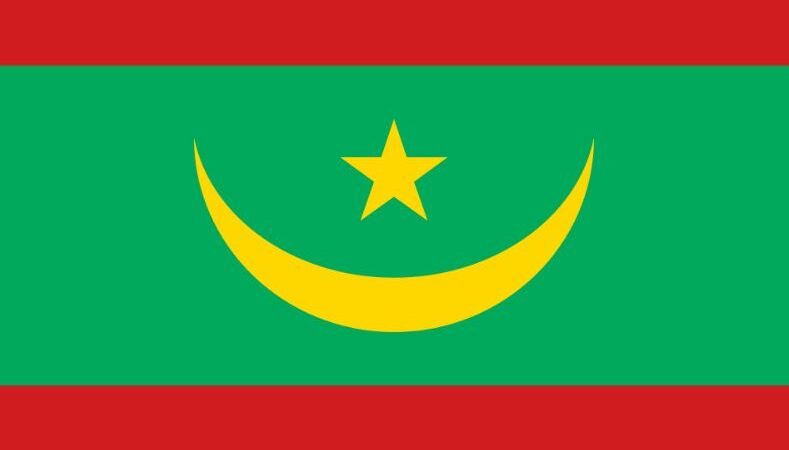
Understanding Mauritania’s Wage Environment
Mauritania’s labour market combines a relatively small formal employment sector with a much larger informal economy. For employers, this makes wage planning more complex than simply checking a statutory figure and placing it into a payroll system. Compensation decisions are influenced by legal requirements, industry conditions, skills availability, regional differences, inflation, employee expectations and the overall cost of maintaining a compliant workforce.
For businesses entering Mauritania, the challenge is therefore twofold: meeting the legal wage floor while offering compensation that is competitive enough to attract and retain the skills required for sustainable operations.
Minimum Wage in Mauritania
Mauritania operates a guaranteed interprofessional minimum wage, commonly referred to by its French abbreviation, SMIG (Salaire Minimum Interprofessionnel Garanti). The SMIG establishes the statutory wage floor that employers must observe for workers covered by the country’s labour framework.
In December 2022, the Mauritanian government approved a 50% increase in the minimum wage. The adjustment moved the monthly minimum from 30,000 old Mauritanian ouguiyas (MRO) to 45,000 old MRO. Because Mauritania redenominated its currency in 2018 at a ratio of 10 old ouguiyas to one new ouguiya, the revised amount was equivalent to MRU 4,500 per month. The government also indicated that the hourly minimum increased from 173.86 to 259 old ouguiyas.
Mauritania’s Investment Promotion Agency subsequently identified MRU 4,500 per month as the country’s minimum wage. This is also consistent with information published by the Ministry of Public Service and Labour concerning the social security system, which identifies MRU 4,500 as the applicable monthly SMIG.
However, wage policy changed again in 2026. On 6 April 2026, the Ministry of Public Service and Labour announced a proposed 12% increase in the SMIG as part of government measures intended to strengthen purchasing power and respond to economic pressures. Three days later, on 9 April, the Council of Ministers approved the proposed decree increasing the guaranteed interprofessional minimum wage.
The Ministry’s official register of labour legislation confirms that Decree No. 2026-064, dated 23 April 2026, was subsequently issued to establish the SMIG rate. Employers preparing payroll, employment contracts or workforce budgets should therefore rely on the latest decree and official Ministry guidance when determining the currently enforceable amount rather than depending solely on older third-party wage databases.
Minimum Wage Versus Actual Market Pay
A statutory minimum wage represents a legal floor. It should not automatically be interpreted as the normal salary for every employee or as an indication of what skilled professionals expect to earn.
This distinction is particularly important in Mauritania because the formal employment market includes industries where specialised skills command significantly higher compensation. Mining, energy, fisheries, banking, telecommunications, construction and information technology all create demand for technical and professional expertise.
Mauritania’s formal labour market is concentrated particularly around Nouakchott and the commercial centre of Nouadhibou, while substantial numbers of people remain economically active outside conventional salaried employment.
Employers should therefore distinguish between three different concepts: the statutory minimum wage required by law, prevailing market compensation for comparable work, and a reasonable compensation package capable of supporting recruitment and retention.
A company can comply fully with the statutory wage requirement and still struggle to recruit employees if its salaries are materially below market expectations.
Salary Conditions Across Major Industries
Mauritania’s economy is strongly influenced by natural resources, particularly iron ore, gold, fisheries and increasingly energy-related investment. These activities create employment opportunities for engineers, technicians, logistics specialists, project managers, financial professionals and operational personnel.
Mining employees with specialised technical capabilities can command salaries far above the statutory wage floor. Fisheries similarly require experienced fleet managers, maintenance specialists, quality professionals and logistics personnel. In Nouakchott, financial services, technology, healthcare, construction and professional advisory services also contribute to salary differentiation.
The original wage information reviewed for this guide identifies mining engineers, fishing fleet managers, IT specialists, financial analysts, construction project managers, healthcare administrators and legal advisers among occupations capable of attracting substantially higher compensation than the minimum wage.
For employers, this means minimum wage should serve primarily as a compliance benchmark rather than a universal salary-setting tool.
How Wage Rules Affect Different Workers
Employment arrangements can influence how wage obligations are administered. Full-time employees should receive compensation that meets the applicable statutory floor, supported by payroll documentation capable of demonstrating compliance.
Part-time compensation should ordinarily reflect the relationship between hours worked and the equivalent full-time arrangement. Employers should therefore maintain reliable working-time records rather than assuming that a monthly payment automatically satisfies wage requirements.
Internships and training arrangements also require attention. Employers should not assume that describing an individual as an intern or trainee automatically removes employment-related wage obligations. The legal nature of the arrangement, the work performed and any applicable training provisions should be examined.
The supplied material also indicates that domestic workers and expatriate employees can fall within Mauritania’s employment protection framework.
International employers should consequently review wage, contractual and immigration requirements together when hiring foreign employees.
Working Hours and Overtime Considerations
Working-time management is another important element of employment compliance. The supplied wage information identifies a standard working week of 40 hours and a legal maximum of 48 hours, while also reporting overtime compensation at 1.5 times the normal rate. Friday is generally identified as a rest day, although working arrangements can differ between industries.
Employers should manage working hours and salary administration as connected processes. An employee may receive a monthly salary comfortably above the minimum wage while still becoming entitled to additional compensation because of overtime or other working-time requirements.
Accurate attendance and overtime records are particularly important in industries such as mining, logistics, transport, construction, fisheries and warehousing, where operational requirements may result in longer or irregular working schedules.
Social Security and Total Employment Cost
Gross salary does not represent the complete financial cost of employing someone in Mauritania. Employers must also consider applicable social security contributions and other mandatory employment expenses.
Official information from Mauritania’s Ministry of Public Service and Labour states that the social security system is financed partly through employer and employee contributions. The Ministry currently describes employer contributions at 13% and employee contributions at 1%, subject to the applicable contribution base and statutory rules.
This is an important correction when compared with some third-party information that may report different contribution percentages.
Employers preparing workforce budgets should therefore distinguish carefully between basic or gross salary, employee deductions, employer statutory contributions, benefits and total employment cost.
Doing so provides management with a more realistic understanding of the cost associated with adding employees and reduces the likelihood of payroll expenses exceeding approved budgets.
Compliance Risks for Employers
Minimum-wage compliance should be treated as an ongoing management responsibility rather than a one-time check during recruitment.
The 2026 reform demonstrates why. A salary that complied with the statutory minimum under the previous framework may require adjustment after a new decree becomes effective.
Employers should maintain accurate employment contracts, payroll registers, attendance records, overtime calculations, salary histories and evidence of statutory contributions. Human resources and finance teams should also establish responsibility for monitoring changes announced by the Ministry of Public Service and Labour.
When regulations change, organisations should determine the effective date, identify affected employees, calculate necessary adjustments and ensure that payroll systems are updated promptly.
For international businesses, retaining documentation showing the official legal basis used for salary decisions can also strengthen internal governance and provide useful evidence during audits or regulatory inspections.
Economic Forces That Influence Pay
Legal requirements represent only one influence on salary levels. Inflation, labour scarcity, economic growth, foreign investment and competition for skilled employees can all affect what businesses must actually pay.
Mauritania’s expanding mining, energy, construction and infrastructure activities can increase demand for specialised workers. When the supply of qualified employees is limited, salaries may rise even when the statutory minimum remains unchanged.
Location also matters. Labour conditions in Nouakchott and Nouadhibou may differ substantially from those in smaller communities and predominantly rural areas.
Employers should therefore conduct periodic compensation reviews using recruitment difficulty, employee turnover, inflation, sector developments, salary benchmarks and competitor behaviour as indicators.
This allows organisations to distinguish between a statutory wage adjustment, which is fundamentally a compliance requirement, and a market salary adjustment designed to maintain competitiveness.
A Practical Approach for Employers
Businesses hiring in Mauritania should begin by establishing the latest legally effective SMIG from official government publications. Decree No. 2026-064 should now form an important part of that verification process because it represents the government’s latest 2026 action on the minimum wage.
The legal minimum should then be compared with prevailing market salaries for each occupation. Employers should calculate the complete cost of employment, including statutory contributions, and ensure that working-hour and overtime obligations are incorporated into workforce planning.
Employment contracts should clearly explain salary arrangements, while payroll systems should retain accurate information about wages, deductions, contributions and additional hours.
Human resources and finance teams should also maintain a shared salary-control process. This can help prevent outdated wage assumptions from remaining in payroll after legislation changes.
Outlook for Wage Planning in Mauritania
Mauritania’s wage environment is likely to continue evolving alongside inflation, economic development, social policy and investment in mining, energy, fisheries, infrastructure and services.
The government’s decision in April 2026 to pursue another increase in the SMIG, only a few years after the significant 2022 adjustment, demonstrates that employers cannot assume the statutory wage will remain unchanged for long periods.
For organisations operating or planning to invest in Mauritania, effective wage management should therefore combine three disciplines: regulatory monitoring, reliable payroll administration and market-based compensation planning.
The statutory minimum answers an important legal question, but it does not answer every workforce question. Businesses still need to determine what level of compensation will attract suitable employees, support retention, maintain internal fairness and remain commercially sustainable.
Employers that regularly verify official wage requirements, monitor labour-market conditions and understand their complete employment costs will be better positioned to remain compliant while building a stable and productive workforce in Mauritania.
Frequently Asked Questions About Minimum Wage in Mauritania
What is Mauritania’s minimum wage?
Mauritania uses a guaranteed interprofessional minimum wage known as the SMIG. The rate was increased to MRU 4,500 per month after the 2022 reform, and the government approved a further increase in 2026.
What does SMIG mean?
SMIG stands for Salaire Minimum Interprofessionnel Garanti. It is the statutory wage floor that employers are expected to observe for covered employees.
Why should employers verify the latest minimum wage before processing payroll?
Mauritania changed its minimum-wage framework again in 2026. Employers should therefore confirm the latest legally effective rate from official government sources before issuing contracts or running payroll.
Is the minimum wage the same as the average salary?
No. The minimum wage is simply the legal wage floor. Employees in mining, finance, telecommunications, technology, construction and other specialised sectors may earn significantly more.
Do part-time employees qualify for minimum-wage protection?
Generally, part-time pay should reflect the applicable legal wage requirements and the number of hours worked. Employers should maintain accurate working-time and payroll records.
Are expatriate workers exempt from Mauritania’s wage rules?
No automatic exemption applies simply because an employee is foreign. Employers should consider wage requirements alongside immigration, work-permit and contractual obligations.
What is the standard working week in Mauritania?
The standard working week is generally reported as 40 hours, with a legal maximum of 48 hours in certain circumstances.
How is overtime treated?
Overtime may attract additional compensation, with available guidance indicating a rate of about 1.5 times normal pay. Employers should confirm the applicable rules for each employment arrangement.
Why is total employment cost higher than gross salary?
Employers may also incur social security contributions, benefits, insurance and other statutory employment costs. Workforce budgeting should therefore go beyond basic salary alone.
What is the best approach to wage compliance in Mauritania?
Employers should regularly verify the official SMIG, maintain accurate payroll records, monitor working hours, review statutory contributions and compare internal salaries with prevailing market rates.