
When your sales need to exceed expectations just to cover costs, it’s a clear sign that your break-even point is too high. Fortunately, there are practical ways to bring that point down, meaning you’ll need fewer sales to start generating profit. By making strategic adjustments in your product offering, costs, and sales approach, you can boost efficiency and financial stability without sacrificing quality.
Create Higher-Value Products and Services
One effective way to improve your break-even position is to offer premium versions of your products or services. This is not simply a matter of increasing prices—it’s about adding enough value that customers are willing to pay more. Premium offerings can include enhanced features, superior materials, or tailored services that justify a higher price point.
By selling more high-value items, you naturally increase the gap between your selling price and the direct costs involved in creating or delivering the product. That wider margin reduces the number of units you need to sell to cover fixed costs and start earning profit.

Strengthen Your Net Profit Margin
Another path to a lower break-even point is improving your net profit percentage by reducing the proportion of costs relative to your sales. This can be done by identifying and eliminating unnecessary expenses or finding smarter ways to source materials and services.
For example, reducing waste in production can have a substantial impact. This could mean purchasing only what you need, reusing components where possible, or recycling materials rather than disposing of them. You might also save money by cutting features that don’t add real value for customers but drive up production costs.
Additionally, make the most of supplier discounts—whether for buying in bulk, paying invoices early, or maintaining a strong payment record. These small adjustments can collectively add up to a healthier profit margin.
Cut Direct Purchase Costs
The money you spend on raw materials, essential components, or labor directly involved in production is a major factor in your overall costs. Reducing these expenses can dramatically improve your break-even point. Start by ranking your direct costs from highest to lowest, then focus on the top few areas where savings will have the biggest effect.
Consider substituting an ingredient or component with a more affordable alternative that customers won’t object to. If certain products are expensive to make and bring in relatively low returns, adjust your product mix to prioritize more cost-efficient items.
Also, leverage your network—industry associations, chambers of commerce, and trade groups often offer collective buying discounts. For some businesses, importing materials or outsourcing certain services to lower-cost regions can also provide significant savings, as long as quality and reliability remain intact.
Reduce Overhead Without Sacrificing Performance
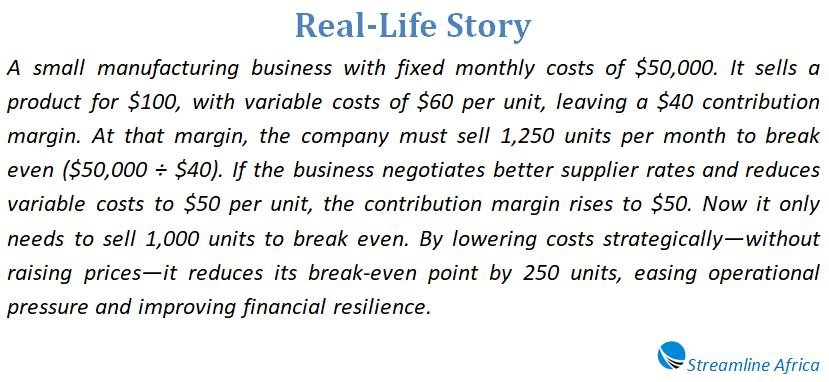
Overhead expenses—those costs that keep your business running regardless of sales volume—can often be trimmed without hurting operations. Just as with direct costs, start by listing these expenses from most to least expensive and tackle the largest ones first.
Switching from manual to digital processes can cut paper, printing, and stationery costs. Identifying and eliminating overcapacity—such as unused phone lines, software subscriptions, or outdated equipment—frees up resources that could be better invested elsewhere.
Energy efficiency is another area where small improvements can add up, from upgrading lighting to optimizing heating and cooling systems. In terms of marketing, track the results of every advertising campaign to ensure your spend is delivering a worthwhile return.
Finally, take full advantage of allowable tax deductions. Working closely with an accountant can help you identify every eligible expense, from office supplies to mileage, ensuring your taxable income is minimized.
Refinance for More Favorable Terms
Your financing arrangements can have a major impact on your break-even point, especially if you carry high-interest debt. Regularly reviewing your banking and loan agreements can uncover opportunities to reduce interest costs or negotiate better terms.
In some cases, replacing expensive business loans with lower-cost financing options—such as personal investment into the business—can significantly cut ongoing expenses. While this approach requires careful consideration of personal risk, it can free your business from the heavy burden of interest payments and allow more of your revenue to contribute to profit.
Boost Sales Through Up-Selling and Cross-Selling
Increasing the value of each transaction is one of the most effective ways to reach profitability faster. Up-selling involves encouraging customers to purchase a more advanced or premium option, while cross-selling adds complementary products or services to their purchase.
For example, a customer buying a standard service package could be offered an upgraded version with additional features for a modest price increase. Similarly, someone purchasing a product could be shown accessories or related items that enhance their experience.
Bundling products and services into attractive packages can also raise the average sale value, which reduces the total number of customers needed to reach your break-even point. By increasing the revenue per customer, you make every sale more efficient in covering costs and generating profit.
Combining Strategies for Greater Impact
Each of these approaches—whether it’s developing premium offerings, cutting costs, or boosting transaction values—can help reduce your break-even point. However, their impact is even greater when applied together. For instance, offering a high-value product while simultaneously lowering production costs widens your margins from both ends, making profitability easier to achieve.
The key is to regularly monitor your costs, pricing, and sales data. A break-even analysis should be an ongoing part of your business planning, not a one-time exercise. By keeping a close eye on these figures, you can spot opportunities to make small changes that have a big effect on your financial health.
Building a More Profitable Future
Lowering your break-even point is about more than just cutting expenses—it’s about creating a smarter, more efficient business model. It requires balancing cost control with maintaining quality, and pricing confidently while delivering value that customers recognize and appreciate.
When you consistently refine your offerings, streamline your operations, and make thoughtful adjustments to pricing and sales strategies, you not only improve your break-even position but also set the stage for stronger, more sustainable profitability in the long term.
FAQs about Break-Even Point
What does lowering the break-even point mean?
It means reducing the number of sales you need to cover all your costs before making a profit.
How can premium products help?
Premium offerings increase the value of each sale, giving you a bigger gap between selling price and costs.
Why focus on net profit percentage?
A higher net profit percentage means more of your revenue turns into profit, reducing the sales needed to break even.
What’s the benefit of reducing direct costs?
Lowering material, component, or direct labor costs increases your margins without raising prices.
Can overhead be cut without hurting performance?
Yes—by eliminating waste, switching to digital processes, and removing unused resources while maintaining efficiency.
How does up-selling and cross-selling help?
They boost the average sale value, so you need fewer customers to reach your profit goal.