
Raising money for a business often requires choosing between debt financing and equity financing. Equity capital refers to selling a portion of your ownership in exchange for investment. For entrepreneurs, particularly those in fast-growing industries or early-stage companies, this route can provide access to substantial funds that may be difficult to obtain through traditional loans. Unlike debt, equity doesn’t require immediate repayment, but it does mean sharing ownership and decision-making with outside investors.
This approach is especially appealing to startups that may not yet have the revenue stability or assets to qualify for large bank loans. Instead, they rely on investors who are willing to take a chance on their vision in exchange for a stake in the company’s future success. Beyond the money itself, equity investors often bring connections, mentorship, and strategic advice that can dramatically increase the likelihood of long-term growth.

Different Types of Equity Investors
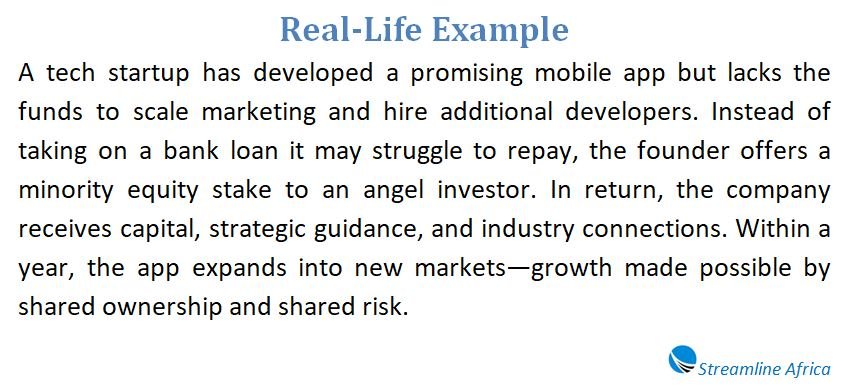
Not all equity investors are the same, and understanding the distinctions between them can help businesses target the right partners. Angel investors are typically high-net-worth individuals who invest their own money in early-stage companies. They are often motivated by both potential financial returns and a personal interest in supporting entrepreneurs. Their investments tend to be smaller than institutional players, but angels frequently provide valuable guidance and introductions to other funding sources.
Venture capitalists, or VCs, represent professional investment firms that pool money from multiple sources to fund startups with high growth potential. Unlike angels, they usually invest larger sums and expect rapid scalability. VCs often seek significant influence over company decisions, including board representation, because their primary goal is maximizing returns for their investors.
Corporate investors are another avenue. These are established companies that invest in startups either to gain financial returns or to align strategically with businesses that complement their operations. A corporate investor may offer not only funds but also distribution channels, technical expertise, or access to broader markets. This type of investment can be particularly powerful if your company’s products or services align closely with the investor’s industry.
Why Early Conversations Matter
Business owners often wait until they desperately need funding before reaching out for advice. However, engaging with advisors and potential investors early on can be far more effective. By having conversations before a funding crunch, entrepreneurs can better understand their options, fine-tune their strategy, and build relationships that might pay off later.
Early discussions also allow time to assess what type of capital is best suited to the business. Not every company is ready for equity investment, and sometimes a traditional loan or hybrid financing solution is more appropriate. By mapping out financing needs in advance, businesses reduce the risk of making hasty decisions that could impact ownership or growth potential down the line.
Identifying the Right Investors
Finding an investor is not simply about who has the money—it’s about who aligns with your goals and vision. A strong investor relationship can serve as a long-term partnership rather than just a financial transaction.
To identify suitable investors, begin with thorough research. Look into investor networks, including angel groups and venture capital firms, but also consider industry-specific funds that specialize in businesses like yours. Networking events, pitch competitions, and industry conferences often provide opportunities to connect with investors who are actively looking for new ventures.
Engaging with multiple funding sources ensures a balanced approach. While some investors may offer capital, others might provide mentorship or access to new customers. This diversity of support can significantly boost your company’s resilience and growth trajectory.
Preparing to Approach Investors
When reaching out to investors, preparation is everything. Investors receive countless pitches, so standing out requires both clarity and professionalism. Start with a one-page overview that highlights your business in a simple yet compelling way. This should capture the essence of your mission, your product or service, your target market, and your growth potential.
Once interest is sparked, provide a more detailed presentation. This typically includes a business plan, financial forecasts, competitive analysis, and a clear outline of how the investment will be used. Be transparent about your company’s strengths and challenges. Investors appreciate honesty and are more likely to trust entrepreneurs who present realistic expectations rather than exaggerated projections.
Beyond business plans, be ready with documentation that backs up your claims. Detailed financial records, market research, and operational plans can help demonstrate that your company is well-organized and capable of delivering on promises. A draft term sheet, even in its early form, signals to investors that you’ve considered the practicalities of the investment.
The Importance of Confidentiality
While seeking investment, you’ll inevitably share sensitive details about your company. From financial performance to intellectual property, this information can be critical to your competitive advantage. Before disclosing too much, it’s essential to have confidentiality agreements in place. These agreements protect your business by ensuring that investors cannot use the information for purposes other than evaluating the opportunity.
Although most professional investors respect confidentiality, formal agreements provide peace of mind and set the tone for a professional relationship. Taking this step reinforces that you are serious about safeguarding your company while also respecting the investor’s need for transparency.
Navigating Investor Due Diligence
Once you’ve captured an investor’s attention, the next step is due diligence. This is an in-depth evaluation where investors thoroughly review your business. They will examine your financial statements, investigate your management team, assess your business model, and evaluate your market position. The purpose is to identify potential risks and confirm that your company is worth the investment.
Preparation for this process can take weeks or even months. Having organized documentation ready to share helps keep things moving smoothly. You should also be prepared to answer tough questions about your strategy, competition, and long-term vision. Investors are looking not only for financial potential but also for evidence that your leadership team can adapt and execute effectively.
Professional Guidance and Expert Support
Securing equity capital is complex, and it’s rarely a journey to take alone. Engaging financial advisors, lawyers, and accountants can make a significant difference in both the preparation and negotiation phases. Professionals can help structure deals, draft agreements, and ensure compliance with regulations, which ultimately strengthens investor confidence.
An advisor can also act as a bridge between you and investors, helping to present your business in the best possible light. Their experience navigating the investor landscape can streamline the process, avoid common mistakes, and improve the chances of closing a favorable deal.
Balancing Equity and Other Funding Options
Equity financing is not the only path to growth. For some businesses, loans or hybrid options such as convertible notes may be more appropriate. Convertible notes, for example, allow companies to borrow money now with the understanding that the loan may later convert into equity under agreed terms. This option provides flexibility for businesses still determining their valuation or future funding needs.
It’s important to weigh the advantages and disadvantages of each financing option. Equity brings in partners who share both risk and reward, but it also requires giving up some ownership and control. Debt provides capital without dilution, but repayment obligations can strain cash flow. A clear understanding of your long-term objectives will guide you toward the financing strategy that best supports sustainable growth.
Building a Long-Term Vision
At the heart of raising capital—whether through equity or loans—is a clear vision for the future. Investors want to know not only what your company is doing now but also where it’s headed. A compelling long-term strategy demonstrates that you’re building for more than just short-term gains.
This vision should be supported by realistic milestones. Whether it’s entering new markets, launching additional products, or expanding operations, investors want to see a roadmap that balances ambition with feasibility. By articulating how the investment will help achieve these goals, you reassure potential partners that their money will be put to work effectively.
Conclusion: Laying the Groundwork for Growth
Raising equity capital is far more than a financial transaction—it’s about building meaningful partnerships that can propel a business forward. The process requires careful planning, transparency, and the willingness to share ownership in exchange for the resources and expertise that investors bring.
From identifying the right investors to preparing for due diligence, every step demands attention to detail and professional execution. By engaging advisors, protecting sensitive information, and aligning financing with long-term goals, entrepreneurs position themselves for success.
Ultimately, the choice between equity, debt, or a combination of both comes down to the unique needs of your business. What remains constant is the importance of preparation, guidance, and a clear vision. With the right strategy, securing the capital you need becomes not just a possibility, but a stepping stone to achieving lasting growth and stability.
Frequently Asked Questions about Equity Capital
Why would a startup choose equity over loans?
Startups often lack collateral or stable revenue, so equity provides funding without repayment pressure while also offering mentorship and networks.
Who are angel investors?
They are individuals who invest their personal money in early-stage businesses, often providing guidance and industry connections alongside capital.

How do venture capitalists differ from angels?
Venture capitalists invest larger sums through firms, usually targeting high-growth businesses and often seeking more influence over company decisions.
What role do corporate investors play?
Corporate investors are established companies that invest strategically, offering not only funding but also resources like distribution channels and expertise.
How should entrepreneurs prepare before meeting investors?
By creating a clear one-page overview, detailed business plan, financial forecasts, and ensuring all supporting documents are organized and professional.
Why is confidentiality important in investor discussions?
Because sharing sensitive financial and operational details requires protection; confidentiality agreements safeguard your business information.
What is investor due diligence?
It’s the process where investors closely examine your business—financials, leadership, operations, and market—to evaluate risks and potential.
Do entrepreneurs need professional support when raising equity?
Yes, advisors, lawyers, and accountants can help structure deals, ensure compliance, and strengthen credibility with investors.
Is equity the only way to fund growth?
No, businesses can also explore loans, hybrid options like convertible notes, or a mix of financing methods depending on their goals.