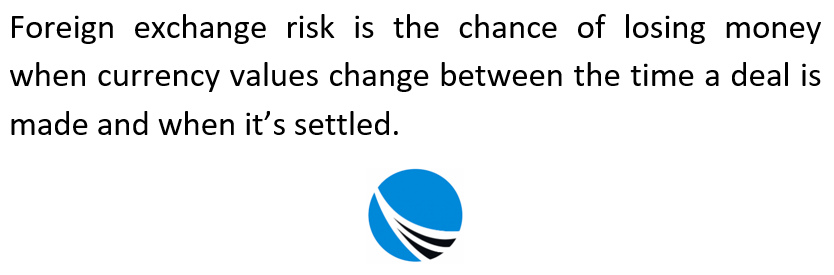
Foreign exchange risk, often called currency risk or FX risk, is one of the most common challenges faced by companies and investors who operate across borders. At its heart, this risk arises whenever money flows between countries using different currencies. A shift in the exchange rate between the time a deal is made and the time it is settled can create a gain or a loss, depending on the direction of the movement.
For firms with subsidiaries abroad, exporters and importers, or investors holding foreign bonds and stocks, foreign exchange risk is an unavoidable part of doing business internationally. While it cannot be eliminated completely, it can be measured, managed, and sometimes even turned into an opportunity.

A Historical Perspective
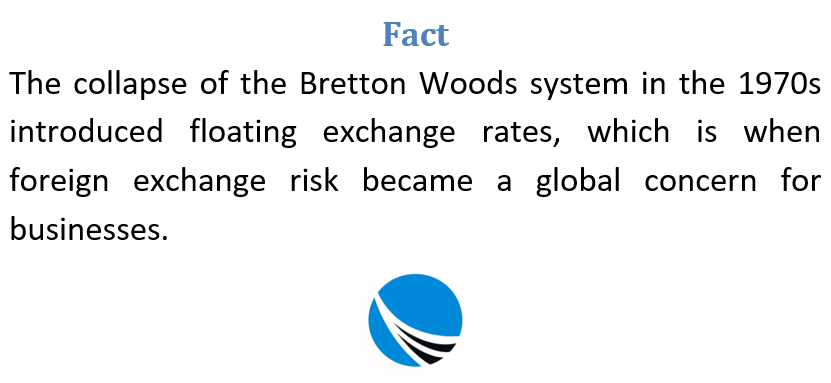
In the decades following World War II, most countries operated under the Bretton Woods system, which pegged currencies to the U.S. dollar, and the dollar itself was tied to gold. Exchange rates were relatively stable, so companies rarely worried about currency risk. That changed in the 1970s when the system collapsed, and countries moved to floating exchange rates. Suddenly, currencies fluctuated daily, introducing volatility and uncertainty into international trade and investment.
Over the years, major financial crises underscored the dangers of ignoring FX risk. The Mexican peso crisis in the 1990s, the Asian financial crisis, and the Russian ruble collapse all demonstrated how quickly exchange-rate movements could wipe out profits or destabilize economies. Since then, companies and financial institutions have developed sophisticated tools and strategies to cope with this type of risk.
Categories of Foreign Exchange Risk
Foreign exchange risk takes multiple forms, depending on how a business or investor is exposed. Four main categories are widely recognized.
Economic Risk
Economic risk, sometimes called forecast risk, is the broadest and hardest to measure. It looks at how a company’s future earnings and overall market value might be affected by long-term changes in exchange rates. This form of risk doesn’t just impact current contracts; it influences competitiveness, demand for goods in foreign markets, and the cost structure of future operations.
For example, if a U.S. firm sets up a factory in Spain and the euro strengthens against the dollar, the company might find it more expensive to repatriate profits. Similarly, if exchange-rate changes make local competitors more cost-effective, the U.S. company could lose market share. Economic risk can also be influenced by government regulations, taxation policies, or political instability in the host country.
Because it deals with the long-term outlook, economic risk can never be entirely eliminated, but it can be reduced through careful diversification and by monitoring macroeconomic conditions in the markets where a company operates.
Contingent Risk
Contingent risk appears in situations where outcomes are uncertain. For instance, a business bidding on a project in a foreign country may not know whether it will secure the contract. If the deal goes through, payments will be received in a foreign currency, but until then, the exposure remains hypothetical.
Although this risk may never materialize if the bid is lost, it still forces companies to think ahead. Businesses often prepare by structuring potential hedges in advance, ready to activate them if the contract becomes reality.
Transaction Risk
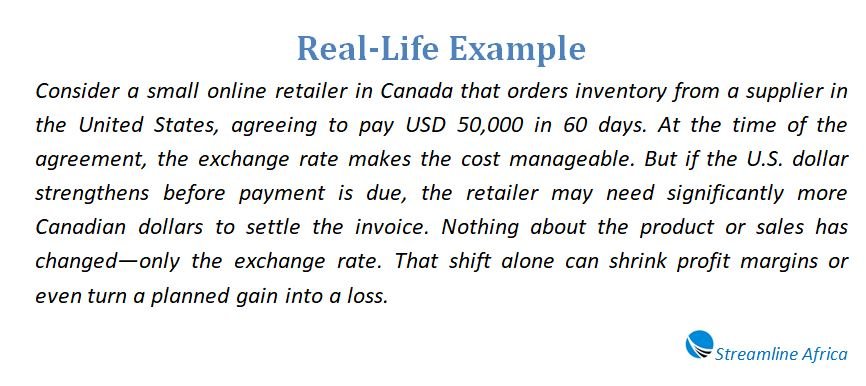
Transaction risk is perhaps the most familiar type of FX risk. It arises whenever there is a time gap between agreeing to a transaction and settling it. For example, if a European importer agrees to pay a U.S. supplier in dollars three months from now, fluctuations in the EUR/USD rate during that period could make the payment more expensive.
Since businesses enter into contracts every day with set prices and delivery dates, transaction risk is one of the most visible threats to profitability. Companies mitigate this risk by using derivatives such as forward contracts, futures, or options to lock in exchange rates before settlement.
Translation Risk
Translation risk relates to accounting and financial reporting. Multinational corporations must consolidate the financial statements of their foreign subsidiaries into their home currency. If a U.S. company owns a subsidiary in Japan, that subsidiary’s revenues and expenses in yen must be translated into dollars for reporting purposes.
Even if no money is physically moved, fluctuations in the exchange rate between the yen and the dollar can alter reported profits. Translation risk doesn’t impact actual cash flows, but it can influence stock prices and investor perceptions, since reported earnings may appear stronger or weaker depending on exchange-rate movements.
Measuring Foreign Exchange Risk
Quantifying FX risk requires looking at how much exchange rates can fluctuate and the probability of those fluctuations. Economists often measure it using statistical methods like variance or standard deviation of currency returns. A higher deviation suggests more volatility and, therefore, higher risk.
However, traditional models are not perfect. Some experts argue that measures like semivariance or average absolute deviation provide a more accurate picture, since they focus on downside risks rather than treating all deviations equally.
Banks and regulators often use Value at Risk (VaR) models to estimate potential losses over a specific time horizon with a given level of confidence. VaR highlights worst-case scenarios, helping institutions determine how much capital they should hold to absorb potential shocks.
Managing Foreign Exchange Risk
While exposure to FX risk is unavoidable, businesses and investors can choose from several tools and strategies to manage it.
Transaction Hedging
The most direct method of controlling transaction risk is through hedging. Companies use financial instruments like forwards, futures, options, and swaps to lock in or protect against adverse currency movements.
- Forward contracts allow firms to fix an exchange rate today for a future transaction, giving certainty about future cash flows.
- Futures contracts are similar but standardized and traded on exchanges, offering transparency but less customization.
- Options give the right, but not the obligation, to exchange currency at a set rate, offering flexibility at the cost of an upfront premium.
- Swaps allow two parties to exchange currencies over a period of time, often used for longer-term financing.
These instruments help businesses plan more confidently, even in volatile markets.
Operational Approaches
Beyond financial hedging, operational techniques can also reduce exposure. Companies may invoice customers in their home currency, shifting risk onto the counterparty. Others may use practices such as leading and lagging, where payments are accelerated or delayed to take advantage of favorable currency movements.
Another approach is netting, where firms offset receivables and payables in the same currency to minimize the need for conversions. Natural hedging, such as matching revenues and costs in the same currency, also helps reduce dependence on derivatives.
Translation Hedging
To deal with translation risk, companies often adopt balance sheet hedging. This involves matching foreign currency assets with liabilities in the same currency so that gains and losses offset each other when exchange rates move. Some firms also use derivatives specifically for accounting exposures, though this can be costly and complex.
Strategic Choices Beyond Hedging
Not all risk management involves financial instruments. Firms can make broader strategic decisions to limit exposure. These include diversifying export markets, spreading production across different countries, or sourcing materials from multiple regions. By not relying too heavily on one currency, businesses reduce the impact of fluctuations in any single exchange rate.
Some companies also differentiate their products or invest in research and development to strengthen their competitiveness. If customers value uniqueness over price, the company becomes less vulnerable to exchange-rate swings.
The Importance of Managing FX Risk
Foreign exchange risk may seem technical, but its consequences are real. For exporters, a sudden drop in the value of the buyer’s currency can turn a profitable contract into a loss. For investors, sharp exchange-rate moves can erode the returns of foreign assets. For multinational corporations, translation risk can distort reported earnings and affect market valuations.
By recognizing the different types of FX risk and applying a mix of financial and operational strategies, businesses can safeguard profitability, protect their balance sheets, and improve investor confidence. In today’s interconnected economy, ignoring foreign exchange risk is not an option.
Final Thoughts
Global trade and investment inevitably involve exposure to fluctuating currencies. From the collapse of fixed exchange-rate systems to modern financial crises, history has shown that FX risk is ever-present and often underestimated. While no strategy can eliminate it entirely, understanding its nature and applying sound management practices can transform currency volatility from a threat into a manageable element of global business.
FAQs about Foreign Exchange Risk
Why did FX risk become more important after the 1970s?
It became critical after the collapse of the Bretton Woods system, when stable fixed rates were replaced by floating exchange rates that fluctuate daily.
What is economic risk in foreign exchange?
Economic risk looks at how long-term exchange-rate changes affect a company’s competitiveness, future earnings, and overall market value.
What is transaction risk?
Transaction risk arises when payments or receipts in a foreign currency lose or gain value because exchange rates shift before settlement.
How does translation risk affect companies?
Translation risk impacts financial reporting, as companies must convert foreign subsidiaries’ statements into their home currency, which can alter reported profits.
How can companies manage FX risk?
They use tools like forwards, futures, options, and swaps, as well as operational strategies such as invoicing in home currency, netting, or natural hedging.
Why is diversification important in managing currency risk?
By spreading operations and investments across different countries and currencies, firms reduce their dependence on one exchange rate and limit potential losses.
Why should businesses take FX risk seriously?
Ignoring it can turn profitable contracts into losses, distort reported earnings, and weaken investor confidence, making risk management essential for stability.