
In today’s fast-changing economy, businesses are constantly looking for ways to grow without burning through excessive resources. Some companies manage this better than others, and the secret often lies in scalability. A scalable business is not just one that grows bigger, but one that grows smarter—expanding its operations and revenues faster than its costs. This ability separates long-term success stories from those that collapse under their own weight.
What Does Scalability Mean?
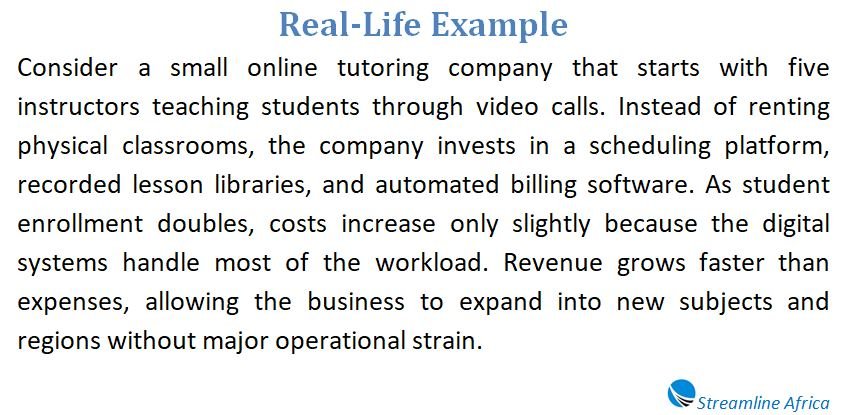
At its core, scalability describes a company’s ability to handle more demand without losing efficiency or profitability. When a business is scalable, higher sales do not automatically mean skyrocketing expenses. Instead, the company adapts its processes, uses resources wisely, and often leverages technology to keep operations lean while serving more customers.
Think of scalability as growth without growing pains. A restaurant, for example, might struggle to serve twice as many customers without doubling its staff or space. On the other hand, a software company can add thousands of new users without significantly increasing its costs. That contrast highlights why scalability is so valuable, especially in a globalized, digital-driven marketplace.
Why Scalability Is Essential for Modern Businesses
For many entrepreneurs, starting a business is the easy part. The real test comes when demand increases. Can the company keep up? Can it grow without quality slipping or costs spiraling out of control? This is where scalability becomes a deciding factor.
Businesses that scale well are more attractive to investors because they promise higher returns without proportional risks. They can also expand into new markets quickly, adapt to industry shifts, and build strong competitive advantages. In short, scalability is what allows a promising startup to transform into an industry leader.
Scaling and Economies of Scale
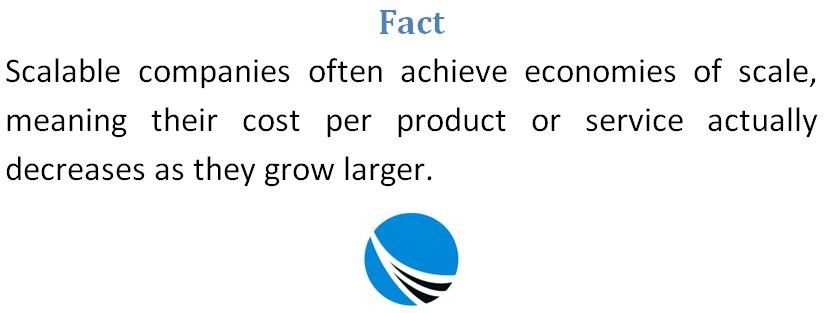
One of the clearest benefits of scalability is access to economies of scale. This concept means that as production increases, the cost per unit decreases. For example, a factory producing 10,000 shoes usually has lower costs per shoe than one producing only 500. By spreading fixed costs over a larger number of units, the company becomes more efficient and profitable.
However, businesses must also avoid diseconomies of scale, which occur when growth actually makes them less efficient. This can happen if management becomes too complex, communication slows down, or resources are overstretched. The art of scaling lies in finding the sweet spot where growth lowers costs without creating chaos.
Technology as a Driver of Scalability
Technology is the backbone of modern scalability. Digital platforms allow companies to reach customers globally, automate processes, and scale their services without major cost increases.
A clear example is the Software-as-a-Service (SaaS) model. Companies like Zoom or Dropbox can add millions of new users with relatively minor infrastructure adjustments compared to traditional businesses. Since there is no need to manufacture physical products or manage inventory, these businesses can expand rapidly.
But technology doesn’t only benefit software companies. Banks use digital marketing to acquire new clients at scale. Retail giants like Walmart and Amazon implement automated warehouses to handle enormous volumes of orders efficiently. Even small businesses can use affordable tools like cloud computing, social media, and e-commerce platforms to reach larger audiences without dramatically raising expenses.
Real-World Examples of Scalable Companies
- Amazon: Starting as a simple online bookstore, Amazon grew into a global retail and technology powerhouse. Its logistics network, cloud computing services, and marketplace platform allowed it to scale in multiple directions while keeping costs under control.
- Netflix: Originally a DVD rental service, Netflix transitioned into streaming, a model that scales perfectly. Once the content is produced or licensed, it can be delivered to millions of users worldwide with minimal additional expense.
- Salesforce: As a pioneer of SaaS, Salesforce exemplifies scalability. Its subscription-based business model means revenues grow steadily while the marginal cost of serving new customers remains low.
These companies demonstrate that scalability is not just about size—it’s about designing business models that can support exponential growth.
Characteristics of a Scalable Business
Certain traits make a business more likely to scale successfully:
- Efficient Processes: Workflows are streamlined so growth does not create bottlenecks.
- Strong Leadership: Executives, investors, and advisors provide vision and strategic direction.
- Consistent Branding: A clear and unified brand message ensures expansion does not dilute identity.
- Technology Integration: Automation, data analytics, and digital platforms support faster growth.
- Effective Measurement Tools: Companies track performance at every level to stay aligned with goals.
Businesses that neglect these factors often stumble. For example, Yahoo’s decline is frequently linked to losing sight of its core value proposition during rapid expansion. Without clarity and discipline, scaling can backfire.
Scaling Beyond Tech
Although tech firms often dominate conversations about scalability, companies in other industries can also scale effectively. Retail chains, for instance, can expand by adopting franchise models, ensuring each location replicates the same efficient systems. Food delivery platforms scale by connecting independent drivers and restaurants rather than owning costly infrastructure.
Healthcare organizations, banks, and even educational institutions are learning to scale using digital tools, strategic partnerships, and innovative service delivery models. The key is building systems that can grow without collapsing under the weight of new demand.
What Does “Scale” Mean in Practice?
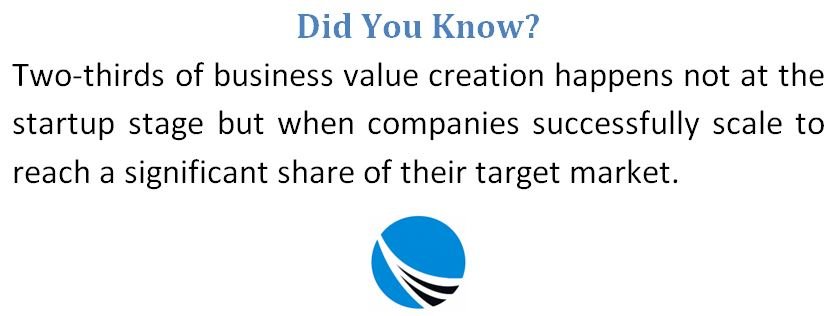
In business terms, scaling up means growing revenues faster than costs. If a company doubles its customer base but only increases expenses by 20%, it is scaling successfully. This is different from simply expanding, which may increase both revenues and costs equally.
Scaling often marks the transition from startup to scale-up—a phase where a business has moved past survival and is now focusing on structured growth. At this stage, the company has validated its product or service, found its market, and is now pushing to capture a larger share.
High-Growth Enterprises and Scalability
The Organisation for Economic Cooperation and Development (OECD) defines a high-growth enterprise as one with annualized growth above 20% over three years, starting with at least 10 employees. These firms, sometimes called “scalers,” are considered engines of economic progress because they create jobs, attract investment, and drive innovation.
The European Union uses a slightly lower benchmark of 10% annual growth, but the principle is the same: high-growth businesses are those that have mastered the art of scalability.
Benefits of Building a Scalable Company
A scalable business model offers several clear advantages:
- Investor Appeal: Venture capitalists and private equity firms prefer businesses that can expand quickly with limited added costs.
- Resilience: Scalable companies are better equipped to handle shifts in demand or unexpected crises.
- Market Reach: By scaling efficiently, companies can expand into new regions and customer segments without overstretching.
- Stronger Profits: The ability to grow revenues faster than expenses naturally boosts profit margins.
- Sustainability: With efficient systems in place, scaling reduces the risk of burnout and operational collapse.
Challenges in Scaling
Of course, scaling is not without obstacles. Rapid growth can expose weaknesses in infrastructure, strain supply chains, or dilute company culture. Leaders must strike a balance between expansion and maintaining quality.
Additionally, companies must ensure that scaling does not lead to ethical or regulatory problems. For example, expanding into new countries often requires navigating complex legal environments. Growing too quickly without considering these factors can be just as dangerous as not growing at all.
The Future of Scalable Companies
As technology evolves, scalability will become even more important. Artificial intelligence, blockchain, and advanced data analytics are already reshaping how businesses grow. These tools will enable companies to personalize services, optimize supply chains, and expand with even greater efficiency.
At the same time, future scalability will also involve social and environmental considerations. Investors and consumers are increasingly drawn to businesses that not only scale profitably but also responsibly—balancing growth with sustainability and ethical practices.
The Bottom Line
Scalability is not just a buzzword—it’s the foundation of long-term business success. Companies that design their operations to handle growth without spiraling costs are positioned to capture new markets, attract investment, and stay resilient in uncertain times.
Whether in technology, retail, finance, or healthcare, scalability ensures that growth is not just about getting bigger but about getting stronger. By mastering scalable systems and strategies, businesses can unlock their true potential and thrive in a world where demand never stops evolving.
Frequently Asked Questions about Scalability
Why is scalability important in business?
It helps companies adapt to rising demand, maintain profitability, and attract investors who value growth potential with lower risk.
How is scalability different from simple business growth?
Growth may increase both costs and revenues equally, while scalability ensures revenues outpace costs, leading to stronger profit margins.
What industries are known for high scalability?
Technology and software companies, especially those using SaaS models, are highly scalable because they can serve millions of users with relatively low additional costs.
Can non-tech businesses also scale effectively?
Yes. Retailers, banks, healthcare providers, and even small businesses can scale by using technology, automation, and efficient business models.
What role does technology play in scalability?
Technology enables automation, global reach, and streamlined processes, reducing the need for extra resources as businesses grow.
What are some examples of scalable companies?
Amazon, Netflix, and Salesforce are prime examples. They’ve designed models that allow rapid expansion while keeping costs controlled.
What challenges come with scaling a business?
Rapid growth can strain resources, weaken company culture, and cause inefficiencies if processes and leadership aren’t prepared.
How do investors view scalable companies?
Investors favor scalable companies because they promise exponential returns, making them attractive targets for venture capital and private equity.
What is the ultimate benefit of scalability?
It allows businesses to achieve sustainable long-term growth, staying profitable while adapting to new opportunities and market demands.