

Leasing has long been a way for companies to access property, machinery, or equipment without paying full purchase prices upfront. However, not every lease is treated the same in accounting. The capitalized lease method recognizes certain lease agreements as though the company had purchased the asset outright. This treatment has ripple effects across financial reporting, influencing depreciation, liabilities, and even investor perceptions.
Unlike traditional operating leases—where payments are treated as simple rental expenses—capitalized leases bring both assets and liabilities onto the balance sheet. This ensures the financial statements capture the long-term impact of the lease and reflect a more complete financial position of the business.

What Makes a Lease “Capitalized”?
A lease is considered capitalized if it meets specific criteria outlined by the Financial Accounting Standards Board (FASB). The intent is to ensure that leases which essentially function like purchases are recorded as such.
Under the FASB framework, a lease should be capitalized if it meets at least one of these conditions:
- Ownership of the asset transfers to the lessee by the end of the lease term.
- The lessee is given the option to purchase the asset at a price significantly below market value.
- The lease spans 70% or more of the asset’s estimated useful life.
- The present value of lease payments equals or exceeds 85% of the asset’s fair market value at inception.
If any of these apply, the lease obligation is recognized as both an asset and a liability, reflecting the dual nature of control and debt.
The Mechanics of Accounting for a Capitalized Lease
When a lease qualifies as capitalized, the company records the leased item as an asset. The value of this asset is calculated based on the lesser of two amounts: its fair market value or the present value of future lease payments.
On the liability side, an equal amount is recorded as a lease obligation. Over time, the asset is depreciated, gradually reducing its book value, while the liability decreases as lease payments are made. Each lease payment is divided into two parts:
- An interest component, reflecting the cost of borrowing.
- A principal component, reducing the outstanding lease obligation.
This approach mimics the way companies account for loans and purchased assets, reinforcing the idea that capitalized leases closely resemble financed purchases.
Why the Distinction Matters
The choice between capitalizing a lease and treating it as an operating lease changes the way a company’s financial health is presented. With capitalized leases, debt increases and additional assets appear on the balance sheet. This can affect ratios that analysts, lenders, and investors use to evaluate stability and performance.
For example, leverage ratios rise because liabilities increase. Meanwhile, asset turnover ratios may shift since total assets expand. Even profitability measures like return on assets (ROA) are influenced, as depreciation and interest expenses replace the flat rent expense of an operating lease.
Impact on Financial Ratios
Ratios such as debt-to-equity, current liabilities to total debt, and interest coverage are particularly sensitive to the presence of capitalized leases.
Consider the current liabilities to total debt ratio: since lease obligations add to long-term debt, this ratio shifts, signaling a higher portion of the company’s resources tied to repayment. Analysts often scrutinize these changes when making stock recommendations or credit assessments, as they directly affect perceptions of financial strength.
Example: Working Through a Capitalized Lease
Imagine a company signs a lease agreement valued at $620,000 over a five-year term with a 9% interest rate. The annual payments amount to $124,000.
In the first year, the interest expense is $55,800 ($620,000 × 0.09). The remainder of the payment, $68,200, reduces the principal balance. After this payment, the outstanding lease liability drops to $551,800.
For reporting purposes, the company recognizes both a depreciation expense on the asset and the interest expense on the liability. Combined, the total lease-related expense equals the annual payment of $124,000, though divided between interest and amortization. Over time, the interest component declines as the principal shrinks, shifting more of each payment toward reducing the obligation.
This structured approach highlights how capitalized leases mimic traditional loan repayments rather than simple rent arrangements.
Capitalized Lease vs. Operating Lease
The biggest difference between the two lies in timing and recognition.
- Operating lease: Payments are recorded as rental expenses when made, with no asset or liability added to the balance sheet.
- Capitalized lease: The leased property appears as an asset, and a liability is recorded for future lease payments. Expenses emerge gradually through depreciation and interest recognition.
From an accounting perspective, the capitalized method provides a fuller picture of financial obligations. However, it also makes a company appear more leveraged, which may not always appeal to investors seeking lower-risk opportunities.
The Evolution of Lease Accounting Standards
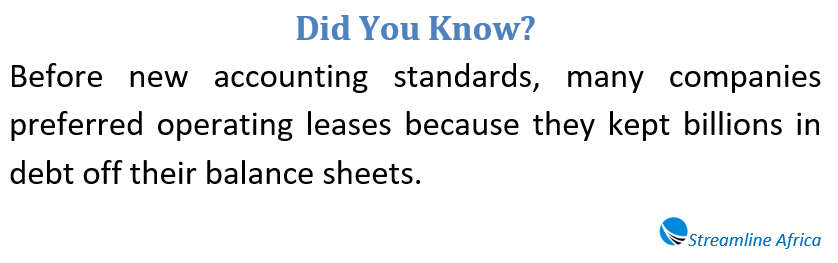
Historically, many businesses preferred operating leases because they kept debt off the balance sheet. This practice, sometimes called “off-balance-sheet financing,” allowed firms to appear less indebted than they truly were. Regulators responded by tightening rules through standards like ASC 842 in the United States and IFRS 16 internationally, which brought more leases under capitalization requirements.
Today, very few long-term leases escape capitalization, making financial statements more transparent and reducing the potential for misrepresentation.
Benefits of Capitalizing Leases
Though it adds complexity, the capitalized lease method offers several benefits:
- Accuracy: Financial statements reflect the real cost of acquiring and using assets.
- Transparency: Investors and lenders see obligations that might otherwise remain hidden.
- Comparability: Companies across industries can be more easily compared when their leases are treated similarly.
This approach aligns accounting with the economic reality that many leases are essentially purchases financed over time.
Challenges in Applying the Method
Despite its advantages, the capitalized lease method introduces difficulties. Determining the present value of lease payments requires accurate discount rates, which can vary. Aligning depreciation schedules with lease terms also adds complexity, especially when dealing with assets that may have residual value after the lease ends.
Additionally, the increase in reported liabilities may affect a company’s ability to secure further financing. Lenders may interpret higher leverage ratios as increased risk, even if the underlying operations remain stable.
Practical Uses in Business Decision-Making
Beyond compliance, capitalized leases can influence management decisions. Understanding the impact of lease obligations on balance sheets and ratios helps executives plan financing strategies, negotiate better terms, and evaluate whether buying assets outright might be more cost-effective.
By modeling both capitalized and operating lease scenarios, managers can assess long-term cash flow implications and make informed choices.
Capitalized Leases in the Eyes of Investors
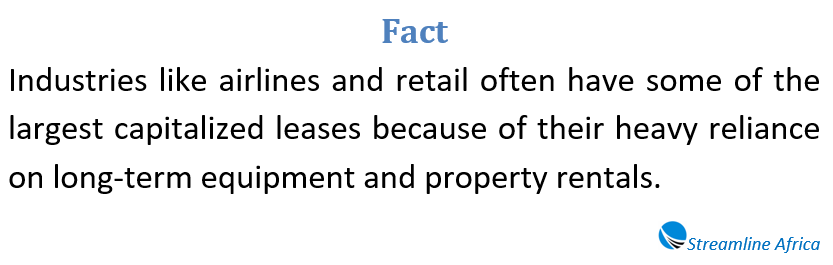
For investors, capitalized leases are a signal of transparency and financial realism. When they see both the leased asset and corresponding liability, they gain a more reliable understanding of the company’s commitments. This can inspire confidence, particularly in industries like airlines, shipping, or retail, where leasing is common.
At the same time, some investors may shy away from firms that look heavily leveraged due to large lease obligations. This dual perception underscores the importance of clear communication from management about why leases were capitalized and how they fit into broader strategy.

Final Take-home
The capitalized lease method transforms certain lease agreements into balance sheet items, treating them as if the company had purchased the assets outright. This recognition impacts liabilities, assets, depreciation, and interest expenses, making financial statements more reflective of true obligations.
While the rules may feel restrictive, they create consistency and fairness across industries. Companies that embrace capitalization benefit from more accurate reporting, though they must manage the challenges of increased liabilities and complex accounting requirements.
Ultimately, capitalized leases demonstrate how accounting standards evolve to mirror economic realities, ensuring that stakeholders—from executives to investors—see the full scope of a company’s financial commitments.
Key Facts
Capitalized leases resemble purchases
Unlike operating leases, capitalized leases are treated as if the company has bought the asset, creating both an asset and liability.
Criteria set by FASB
A lease must be capitalized if it meets conditions such as ownership transfer, bargain purchase options, or long duration.
Assets and liabilities recorded equally
When capitalized, the asset’s value and the lease obligation appear on the balance sheet in matching amounts.
Expenses split over time
Payments are divided into depreciation of the asset and interest on the liability, spreading costs across the lease term.
Financial ratios are affected
Metrics like debt-to-equity, leverage, and return on assets shift once lease obligations are recognized on the balance sheet.
Example illustrates impact
In practice, a lease worth hundreds of thousands with annual payments shows how interest and principal are gradually reduced.
Transparency improves reporting
Capitalization prevents companies from hiding long-term commitments through off-balance-sheet financing.
Standards have evolved globally
Rules like ASC 842 in the U.S. and IFRS 16 internationally ensure most long-term leases are now capitalized.
Benefits outweigh complexity
Though it adds accounting challenges, capitalization enhances accuracy, comparability, and investor confidence.
Investors watch closely
Capitalized leases can reassure investors about transparency, but higher reported debt may also raise concerns about risk.