

The China Investment Corporation emerged at a turning point in China’s economic rise. By the mid-2000s, China had accumulated vast foreign exchange reserves, largely parked in low-yield government securities. Policymakers began asking a practical question: how could this capital be put to work more productively, while still serving national priorities? The answer took shape in 2007 with the creation of a new sovereign investor designed to operate beyond traditional reserve management. From the beginning, CIC was envisioned as a long-term steward of state wealth, willing to tolerate market volatility in pursuit of higher returns and strategic influence.
An Unconventional Funding Architecture
Unlike many sovereign wealth funds funded by oil or mineral revenues, CIC was built through a carefully engineered financial loop inside China’s fiscal system. The Ministry of Finance issued special treasury bonds, used the proceeds to purchase foreign exchange from the central bank, and then injected those reserves into the new corporation. This structure meant CIC began life with debt on its balance sheet, a feature uncommon among its global peers. Over time, the government adjusted this arrangement, converting debt into equity and replacing interest payments with dividend obligations. The result was a cleaner balance sheet and greater operational flexibility, while keeping CIC firmly anchored within state oversight.
Integrating Central Huijin and Building Scale
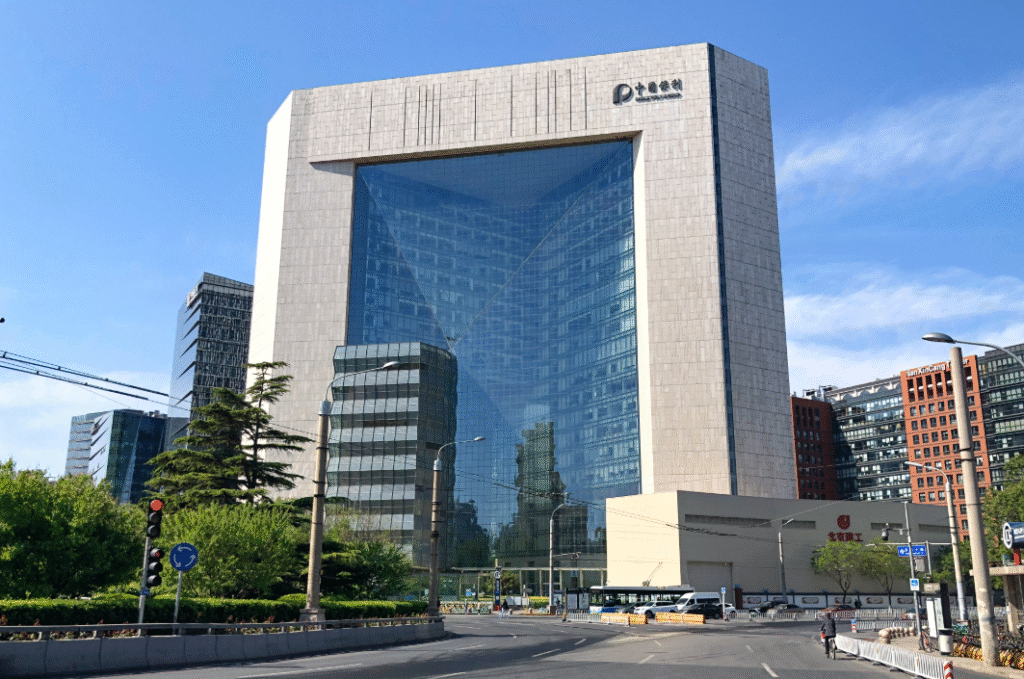
A decisive early move was the absorption of Central Huijin Investment Corporation, which already held significant stakes in major Chinese financial institutions. This subsidiary became, and remains, the backbone of CIC’s domestic financial exposure, accounting for a substantial share of its assets. By folding Central Huijin into the broader sovereign structure, policymakers aligned domestic financial stability with outward-looking investment ambitions. The merger also instantly elevated CIC into the top tier of global institutional investors, giving it influence not only abroad but within China’s own banking system.
Learning the Hard Way in Global Markets
CIC’s first years on the international stage coincided with the global financial crisis. Early investments in Western financial firms were made just before markets collapsed, leading to notable paper losses and intense domestic scrutiny. These experiences forced the organization to mature quickly. Internal reviews highlighted weaknesses in due diligence, risk assessment, and post-investment management. Rather than retreating, CIC recalibrated. It diversified away from concentrated bets, strengthened risk controls, and adopted a more patient, portfolio-driven approach that balanced public markets with private equity, real assets, and long-term thematic investments.
Shifting Strategy Toward Real Assets and Themes
After the crisis, CIC adjusted its investment lens. Natural resources, infrastructure, agriculture, and later technology and logistics became priority areas. These sectors offered inflation protection, long-duration cash flows, and alignment with China’s development needs. Organizationally, CIC moved away from rigid asset-class silos toward divisions shaped by strategy and function. This allowed teams to pursue opportunities across geographies and instruments while maintaining coherence around long-term objectives. The fund’s growing comfort with private markets reflected a willingness to trade liquidity for influence and stability.
Read Also: The Al Noor Global Investment Fund: Meaning, Structure, and Strategic Role
Governance, Discipline, and Internal Reform
Leadership changes brought sharper internal discipline. Under successive chairmen, CIC tightened governance standards, expanded internal audits, and embedded compliance more deeply into daily operations. During periods of nationwide anti-corruption enforcement, the fund conducted extensive internal reviews, disciplining hundreds of staff across the group. While disruptive, these measures reinforced a culture of accountability and signaled to global partners that CIC was serious about institutional credibility. Participation in international forums and adherence to global best-practice principles further strengthened its standing among peer funds.
Aligning Capital with National Initiatives
Over time, CIC’s mandate increasingly reflected China’s broader economic diplomacy. Investments began to dovetail with initiatives focused on cross-border infrastructure, industrial cooperation, and supply-chain resilience. To navigate rising scrutiny of state-linked capital in Western markets, CIC adopted partnership models, co-investing alongside established global institutions. These structures reduced political friction, shared risk, and improved access to regulated markets. Cooperation funds with European and Asian partners exemplified this approach, blending commercial logic with diplomatic sensitivity.
A Global Footprint in Property and Infrastructure
Real estate became one of CIC’s most visible asset classes. The fund assembled large portfolios of office towers, logistics hubs, and business parks in major cities, particularly in the United Kingdom and the United States. Some deals delivered steady income and diversification; others underscored the risks of timing and market cycles. High-profile exits at losses served as reminders that sovereign scale does not guarantee immunity from market forces. Yet the breadth of the portfolio, including transport infrastructure and warehousing, reflected a strategic bet on global trade and urbanization trends.
Engagement with Financial Institutions
CIC’s relationship with global finance has been complex. Early stakes in major investment banks were controversial but symbolized China’s arrival as a capital exporter. Over the years, the fund trimmed positions, exited some partnerships, and entered others, learning to balance influence with prudence. Investments in banks, asset managers, and energy-focused funds broadened CIC’s exposure to financial intermediation and global capital flows. These moves also provided insight into sophisticated risk management practices that informed CIC’s own evolution.
Supporting Innovation and Industrial Capacity
Beyond headline deals, CIC played a quieter role in nurturing China’s technology ecosystem. Early backing of platform companies and later support for advanced manufacturing and semiconductors positioned the fund as a catalyst for industrial upgrading. While financial return remained a core metric, these investments carried broader significance, helping domestic firms scale globally and reducing reliance on external technologies. In this sense, CIC functioned not just as an investor but as a bridge between state ambition and market execution.

Measuring Impact Beyond Returns
CIC’s influence extends beyond its balance sheet. Its participation in a deal often reassures other investors, lowering perceived risk and attracting additional capital. At the same time, the fund’s mixed early performance sparked internal debates about reserve management and contributed to the expansion of alternative sovereign vehicles within China. This competitive ecosystem reshaped how the state deploys capital abroad, blending experimentation with oversight.
Oversight and Political Anchoring
Formally, CIC reports to the State Council, and its leadership appointments reflect close ties to China’s political establishment. This connection ensures alignment with national priorities but also constrains autonomy. Board composition, internal committees, and advisory councils are structured to balance professional expertise with policy guidance. The presence of international advisors offers external perspective, yet ultimate authority remains firmly domestic, reinforcing CIC’s identity as a state instrument operating in global markets.
The Modern CIC: Scale, Caution, and Adaptation
Today, CIC manages assets measured in the trillions of dollars, ranking among the world’s largest sovereign investors. Its portfolio spans continents, asset classes, and economic cycles. The fund is more cautious than in its early years, yet still ambitious. It seeks resilience over speculation, partnerships over solo bets, and long-term positioning over short-term gains. In an era of geopolitical tension and fragmented markets, CIC’s challenge is to remain commercially credible while navigating political headwinds.
Looking Ahead
As global finance becomes more complex and contested, CIC’s role will continue to evolve. Climate transition, supply-chain security, and technological competition are likely to shape future allocations. The fund’s history suggests a capacity for learning and adaptation, forged through early setbacks and institutional reform. Whether CIC can sustain returns while advancing national objectives will remain a subject of global attention, but its presence as a central actor in international capital markets is now firmly established.
Frequently Asked Questions about the China Investment Corporation
Why Did China Create CIC In 2007?
China was holding massive foreign reserves that earned little return. CIC was formed to grow that wealth, diversify risk, and support China’s long-term economic and strategic goals.
How Is CIC Different From Oil-Based Sovereign Wealth Funds?
Unlike oil-funded funds, CIC was capitalized through government bonds and foreign-exchange transfers, making its structure more financial-engineered than resource-based.
What Role Does Central Huijin Play Inside CIC?
Central Huijin is CIC’s core subsidiary managing stakes in major Chinese banks and financial institutions, anchoring CIC’s influence in domestic financial stability.
What Mistakes Did CIC Make Early On?
CIC invested heavily in Western financial institutions just before the 2008 crisis, leading to losses that exposed gaps in due diligence, risk control, and post-investment oversight.
How Did Those Early Losses Change CIC’s Strategy?
The fund shifted toward diversification, private markets, real assets, and long-term themes like infrastructure, agriculture, logistics, and technology.
Why Does CIC Invest So Much In Real Assets?
Real estate, infrastructure, and logistics provide steady cash flows, inflation protection, and long-term relevance to global trade and urban growth.
How Does CIC Handle Political Sensitivities Abroad?
CIC often co-invests with established Western institutions, reducing regulatory resistance and easing concerns around state-linked capital.
Is CIC Focused Only On Financial Returns?
No. While returns matter, CIC also supports China’s national priorities, such as supply-chain security, industrial development, and economic diplomacy.
How Is CIC Governed And Controlled?
CIC ultimately reports to China’s State Council, with leadership closely tied to government institutions while still operating under professional investment frameworks.
What Impact Does CIC Have On Global Markets?
When CIC invests, other institutions often follow, viewing its participation as a signal of stability and long-term commitment.
What Challenges Does CIC Face Going Forward?
Geopolitical tension, tighter investment screening, climate transition, and technological competition all test CIC’s ability to balance profit with policy.