

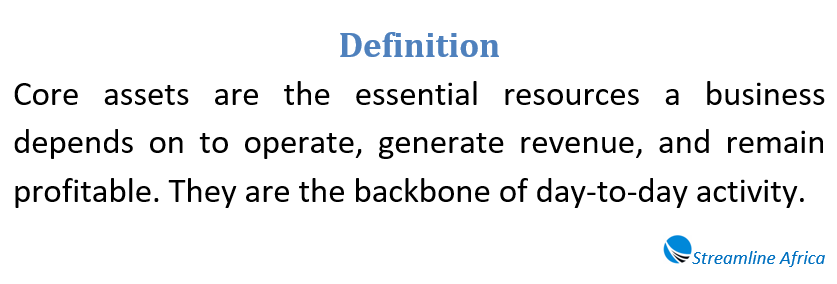
Every business, no matter its size or sector, relies on certain critical resources to stay productive and profitable. These essential resources are known as core assets, and they form the backbone of an organization’s ability to operate consistently and compete effectively. When people discuss what keeps a company running, they are usually referring to these underlying assets that support everything from production to service delivery. Although the idea may seem straightforward, core assets are more diverse than they appear, covering both physical items and intangible resources. Understanding what they are and how they function is vital for anyone involved in business strategy, management, or investment.
Core assets vary widely across industries. A mining company’s essential assets may include specialized excavation machinery, while a consulting firm might consider its proprietary frameworks and expert workforce as its most critical resources. Regardless of industry, these assets define an organization’s ability to generate revenue and maintain long-term stability. Whenever a company begins to struggle and starts selling parts of itself, analysts observe which assets are being offloaded. If a business starts selling what keeps it alive—the very things that generate its revenue—that is often a sign of deep financial distress.
What Core Assets Represent in a Business Context
Core assets can be described as the primary tools and resources an organization relies on to deliver its products or services. These assets are not optional, nor are they interchangeable. They are embedded in the daily functioning of the company and crucial for profit generation. They stand in contrast to non-core assets, which support operations but are not necessary for the company to carry out its main activities.
For instance, a bakery needs ovens, mixers, refrigerators, and trained bakers to produce bread and pastries. These items and skills are the bakery’s core assets. A delivery van or decorative storefront might support operations, but the bakery can still function without them if needed. This difference between what is essential and what is supplementary helps organizations prioritize investments and manage risks, especially during challenging financial periods.
In practical terms, core assets are often highlighted when a company outlines its strategic priorities. They form the foundation of business planning and guide decisions related to expansion, capital investment, and operational efficiency. Without these assets, the company would struggle to deliver on its mission or maintain a competitive position in the market.
How Core Assets Support Everyday Business Operations
The importance of core assets becomes clear when you examine how a company performs its daily tasks. These assets enable production, help ensure quality, and support the systems that keep operations moving. They influence everything from cost structure to productivity and long-term scalability.
Tangible core assets include items such as production facilities, warehouses, transport fleets, distribution networks, or specialized machines. These assets are physically present and must be maintained to remain effective. In industries such as agriculture, construction, or manufacturing, tangible assets often represent the largest chunk of business investment.
Meanwhile, intangible core assets, though not physically visible, can be even more valuable. Trademarks, proprietary software, patents, trade secrets, and unique operating systems give companies a competitive advantage that others cannot easily replicate. For instance, a global tech platform may rely heavily on its software algorithms, user data, and brand reputation. These intangibles are central to its success, even though they cannot be touched or seen.
Both types of assets work together to keep a business stable. They also serve as indicators of long-term health. If a company loses access to its essential resources—whether through neglect, mismanagement, or financial strain—it risks operational collapse. That is why businesses devote significant resources to protecting and upgrading these assets as part of their strategic planning.

Why Selling Core Assets Signals Serious Financial Stress
When a company faces financial challenges, one of the first steps it may take is to generate quick cash. Most businesses prefer to let go of assets that are not fundamental to their day-to-day operations. These non-core assets might include unused land, surplus equipment, a minority share in another company, or outdated inventory. Selling these helps raise funds without interrupting essential activities.
However, when a company begins selling core assets—the equipment, property, or rights that generate its revenue—this is typically a sign of larger structural problems. By selling these, the company weakens its ability to operate normally in the future, effectively shrinking its capacity to recover. This step often precedes larger measures such as restructuring, downsizing, or even declaring bankruptcy.
For investors and analysts, monitoring changes in a company’s core assets is an important part of assessing financial health. A reduction in these assets without a clear strategic justification can point to deeper issues, such as declining profitability, operational inefficiencies, or looming insolvency.
How Core Assets Differ Across Industries
Although every business needs core assets, the exact nature of these assets depends on the industry and business model. Understanding these variations helps explain why companies prioritize different types of investments.
A manufacturing company, for example, depends heavily on specialized production equipment, skilled machine operators, and reliable supply chain networks. Its core assets are mostly tangible, and any disruption to these will halt production immediately.
In contrast, a software development firm considers its programming team, patented algorithms, and proprietary software systems as its main assets. These are intangible yet essential for creating and selling its products or services.
Similarly, a logistics company relies on trucks, storage facilities, routing systems, and experienced drivers. A telecommunications company depends on network infrastructure, fiber-optic lines, routers, and frequency rights. A pharmaceutical firm, on the other hand, relies on intellectual property, research data, and specialized laboratories.
Because the nature of core assets varies so widely, companies must continuously assess whether these assets are still aligned with the organization’s direction, competition, and technological developments.
Core Assets vs. Non-Core Assets
A frequent misconception is that all assets a company owns have equal importance. In reality, businesses divide their resources into core and non-core categories to help prioritize operational and financial decisions.
Core assets are essential for producing income. Without them, the business would struggle to function. Non-core assets support operations, but they are not necessary for the company to survive. These secondary assets may include investments in unrelated companies, unused land, surplus vehicles, outdated machinery, or even certain subsidiaries.
Non-core assets are often the first to be sold when a company needs liquidity. They can also be divested as part of a restructuring plan or a shift in strategic focus. Understanding which assets truly matter is key to protecting the company’s long-term viability.
However, determining which assets are core or non-core is not always straightforward. It depends greatly on the nature of the business and how it competes in its market. A warehouse may be central to one business but unnecessary to another that uses outsourced logistics. Similarly, intellectual property may be peripheral in some industries but remain crucial in those driven by innovation.
Why Core Assets Matter for Long-Term Stability
The long-term success of any organization relies on how well it manages and protects its core assets. These resources drive revenue, support efficiency, and enable growth. Companies that consistently invest in their key assets—whether by upgrading equipment, modernizing digital systems, or strengthening intellectual property—position themselves for resilience in a rapidly changing environment.
Regular evaluation of these assets helps leaders identify gaps, potential risks, and opportunities for improvement. Early detection of deterioration or misalignment ensures timely action, reducing the risk of unexpected failures or financial strain. Whether a company is expanding, restructuring, or stabilizing operations, the strength of its core assets remains a central consideration.
Conclusion
Core assets represent the lifeblood of a business, forming the foundation on which operations, profitability, and competitive advantage are built. While non-core assets may offer flexibility or additional revenue opportunities, they cannot replace the essential tools, structures, and intellectual resources that keep the business functioning daily. When companies begin selling or losing these vital assets, it often reflects deeper struggles threatening long-term sustainability.
Because these assets are so critical, organizations must consistently evaluate their performance, maintain them with care, and ensure they align with evolving strategic goals. By doing so, businesses not only protect their operations but also strengthen their ability to grow, innovate, and thrive in an increasingly competitive world.
FAQs about Core Assets
How do core assets differ from non-core assets?
Core assets are critical for survival, while non-core assets support operations but are not required for daily functioning. Non-core assets can be sold without stopping the business.
Why are core assets important to a company’s long-term stability?
They help maintain productivity, ensure consistent service or product delivery, and support the company’s competitive advantage. Without them, operations break down.
Can core assets be intangible?
Yes. Some of the most valuable core assets—like patents, software, trademarks, or proprietary data—are intangible but vital to business success.
Why do analysts monitor changes in core assets?
Significant changes, especially sales or downsizing of core assets, can signal distress, operational issues, or impending financial trouble.
What happens when a company sells its core assets?
Selling core assets usually indicates severe financial strain. It weakens the business’s ability to operate and can precede restructuring or bankruptcy.
Do all industries have the same core assets?
No. Core assets depend on the business model and sector. Manufacturing relies on machinery, tech on intellectual property, logistics on transport fleets, and so on.
How do core assets influence business strategy?
They shape investment decisions, operational priorities, and long-term planning. Strategic goals must align with the capabilities of core assets.
Can a company survive without its core assets?
Not sustainably. Without them, the business loses its ability to create value, eventually leading to collapse or shutdown.
How do core assets support everyday operations?
They enable production, service delivery, quality control, and consistent workflow. They are deeply embedded in operational systems.
Why do companies sell non-core assets first during financial trouble?
Non-core assets can be liquidated without stopping essential operations, making them a safer option when raising quick cash.
How should companies manage their core assets?
They should regularly evaluate performance, modernize equipment or systems when needed, and ensure their core assets stay aligned with business needs and market changes.