
Companies that operate in industries such as mining, forestry, and energy extraction rely on accounting systems that accurately reflect the declining value of the natural resources they manage. Cost depletion is one such system, designed to allocate the cost of using up finite resources over time. Although it functions in a manner similar to depreciation, it applies specifically to assets drawn from the earth rather than manufactured assets or equipment. Understanding how cost depletion works allows organizations to match expenses with revenues more effectively, create more accurate financial statements, and better forecast taxable income.
What Cost Depletion Represents
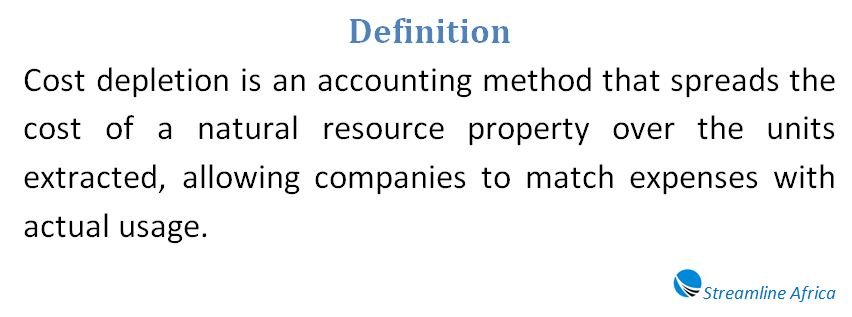
Cost depletion is an accounting method that allocates the investment made in a natural resource property across the units that are extracted from that property. Instead of writing off the entire investment at once, the business systematically charges a portion of that cost each period based on how much of the resource is removed. This approach aligns the expense with the economic benefit derived from extraction, offering a clearer picture of profitability and sustainability.
The concept is rooted in the principle that natural resources have a limited life. When a company buys a tract of land rich in minerals or timber, it is purchasing the right to harvest or extract a finite quantity. Cost depletion ensures that the financial statements reflect this finite nature over the duration of the property’s use.
How the Cost Depletion Formula Works
To calculate cost depletion for a given period, organizations rely on a formula that considers both the total value of the resource and the number of units extracted during the period. The formula is:
Cost depletion expense = (Adjusted property value ÷ Total resource reserves) × Units extracted
The adjusted property value reflects the total investment in acquiring and preparing the resource for extraction. This includes the initial purchase price, any development or exploration expenditures, and the subtraction of any estimated salvage value—the amount expected to be recovered at the end of the property’s life.
The total reserves represent the estimated quantity of the natural resource available at the beginning of the extraction process. Units extracted correspond to the measurable output for the financial period. By dividing the adjusted investment by the total anticipated reserves, the company calculates a per-unit depletion rate, which is then multiplied by actual usage.

Determining the Adjusted Property Value
Before cost depletion can be applied, the company must determine the property’s adjusted value. This calculation is:
Adjusted property value = Initial investment + Development costs − Salvage value
The initial investment includes the cost of obtaining the land or rights to extract the resource. Development costs consist of the expenditures required to prepare the site for production, such as drilling, surveying, or constructing access routes. Salvage value reflects what the company expects to recover when the resource is fully depleted, which could come from selling land improvements, equipment, or residual materials.
This adjusted figure acts as the baseline for allocating the cost over the life of the resource.
How Cost Depletion Influences Financial Reporting
Cost depletion appears as part of the depletion, depreciation, and amortization section of a company’s income statement. This cluster of non-cash expenses records the gradual usage of assets over time. While depreciation relates to manufactured assets like machinery and buildings, depletion addresses natural resources that diminish with each unit extracted.
Because depletion reflects the consumption of scarce natural assets, it can play a significant role in determining operating income, cash flow projections, and tax liabilities. Companies in extraction industries often discuss their depletion calculations and the assumptions supporting them in their management reports, offering investors additional insight into resource longevity and operational efficiency.
An Example of Cost Depletion in Action
Consider a company that purchases rights to a natural gas field for $1.5 billion. It spends another $60 million on development activities to prepare the site. The organization estimates that the salvage value after extraction will be $150 million. The site is believed to contain 500 million units of recoverable gas.
In its first year, the company extracts 8 million units. The adjusted property value is:
$1.5 billion + $60 million − $150 million = $1.41 billion
Next, the company applies the formula:
($1.41 billion ÷ 500 million units) × 8 million units = $22.56 million
This amount becomes the depletion expense for that year. As extraction continues, the total reserves decrease and, over time, the per-unit cost may change if new information becomes available about the reserve quantity.
Why Companies Disclose Depletion Trends
Resource-based companies frequently provide commentary on fluctuations in depletion expenses. These changes can result from revised reserve estimates, successful exploration activities, technology improvements that extend productive lifespan, or shifts in production levels. When reserve quantities increase—perhaps due to new drilling results—the per-unit depletion rate decreases because the adjusted property value is now spread across more units. Conversely, if economic conditions shorten the productive life of the property, depletion costs may rise.
Such disclosures enable analysts and investors to understand whether operational improvements or market factors are influencing the reported figures.
Cost Depletion Versus Percentage Depletion
In addition to cost depletion, businesses may use another method known as percentage depletion. This method calculates depletion by applying a fixed percentage—set by tax authorities—to the gross income generated by resource extraction. The rate varies depending on the type of resource.
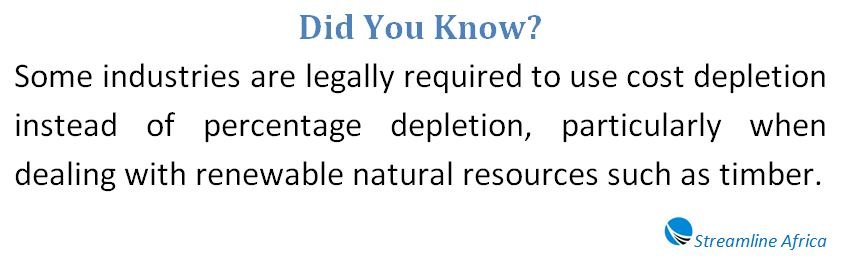
However, percentage depletion functions differently from cost depletion because it does not rely on total reserves or actual investment amounts. In some industries, the tax code mandates the use of cost depletion instead of percentage depletion, particularly for renewable resources like standing timber.
Both methods are designed to reflect resource usage, but they serve different regulatory and tax purposes.
Constraints and Considerations
The primary limitation of cost depletion is that it applies solely to natural resource assets. It cannot be used for equipment, buildings, or other tangible assets, which require depreciation instead. Additionally, cost depletion must be recalculated each reporting period based on actual extraction, making it more dynamic and sometimes more complex than traditional depreciation methods.
Despite these constraints, cost depletion remains an essential tool for companies that depend on resource extraction. It ensures the gradual consumption of natural assets is captured accurately and provides a fair representation of operations for stakeholders and regulators alike.
FAQs about Cost Depletion
Why Do Companies Use Cost Depletion?
Organizations use cost depletion to better reflect the economic reality of extracting finite resources, ensuring expenses align with production output.
How Is Cost Depletion Calculated?
It is calculated by dividing the adjusted property value by total estimated reserves and multiplying the result by the units extracted during the reporting period.
What Makes Up the Adjusted Property Value?
The adjusted value includes the purchase price of the property, development or exploration costs, and any salvage value expected at the end of the asset’s life.
How Does Cost Depletion Appear on Financial Statements?
Cost depletion is reported within the depletion, depreciation, and amortization (DD&A) section of the income statement as a non-cash operating expense.
What Types of Assets Use Cost Depletion?
Only natural resource assets—such as minerals, oil, natural gas, and timber—qualify for cost depletion treatment.
How Does Cost Depletion Differ From Depreciation?
While both allocate cost over time, depreciation applies to tangible man-made assets, whereas depletion applies to natural resources consumed through extraction.
What Factors Influence Annual Depletion Expense?
Production levels, updated reserve estimates, new drilling data, and changing economic conditions can all alter annual depletion calculations.
How Does Cost Depletion Compare to Percentage Depletion?
Cost depletion is based on actual investment and units extracted, while percentage depletion applies an IRS-approved percentage to gross income.
When Must Cost Depletion Be Used Instead of Percentage Depletion?
Certain resources, such as timber, must use cost depletion due to tax regulations that prohibit applying percentage depletion rates.
Why Do Companies Disclose Depletion Changes?
Firms explain depletion trends to help investors understand reserve additions, operational improvements, cost reductions, and shifts in resource longevity.
What Is the Main Limitation of Cost Depletion?
Its primary limitation is that it must be recalculated every reporting period based on extraction activity, making it more complex than fixed depreciation schedules.