

Running a business often means navigating financial uncertainty. If you’ve been denied a business loan, it may feel like a door has slammed shut. But being declined doesn’t mean the end of your funding journey—it’s just a redirection. The key lies in understanding what went wrong, making improvements, and exploring new paths to funding.

Understand the Reason Behind the Denial
The first thing to do is find out why your loan application didn’t make the cut. Lenders are required to provide a reason, either in writing or upon request. It could be due to weak credit, limited time in business, insufficient cash flow, or missing paperwork. If the response is vague, don’t hesitate to reach out for clarity—speak with the loan officer and ask for specific feedback.
Some of the most common reasons lenders turn down small business loan applications include:
- A low personal or business credit score
- Insufficient business collateral
- High debt-to-income ratio
- Inadequate cash reserves to support repayment
- Not enough operational history
These issues aren’t insurmountable. Once you understand the cause, you can start addressing it.
Begin Fixing the Issues
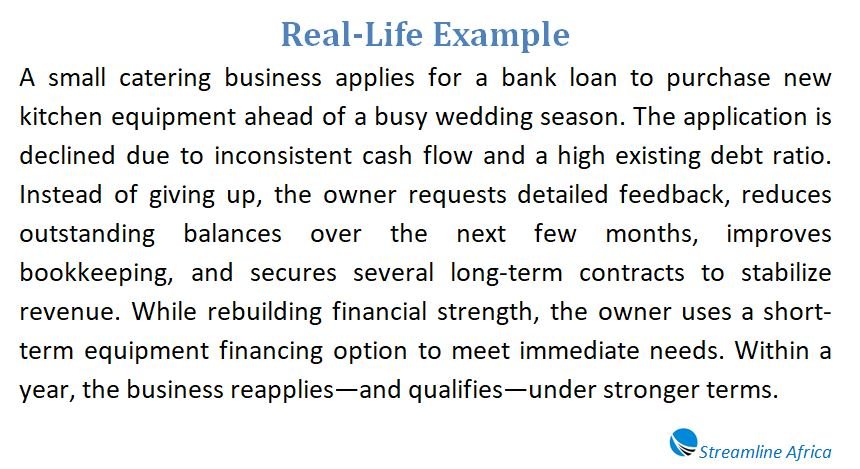
Some loan rejections can be reversed with simple corrections, such as submitting additional documentation or updating financial statements. If the issue is more serious—like high existing debt or a poor credit profile—you’ll need to take proactive steps to repair these areas before reapplying.
Addressing the root problems may require time and discipline. Start by prioritizing debt reduction, improving payment history, or creating more financial transparency through proper bookkeeping.
Make Yourself More Appealing to Lenders
Being rejected now doesn’t mean rejection forever. It just means you need to strengthen your financial profile. Here are two key ways to do that:
Boost Your Credit
Lenders often expect a personal or business credit score of 680 or higher. If yours falls short, take action: pay bills on time, reduce credit card balances, and avoid opening new accounts unnecessarily. These efforts won’t improve your score overnight, but over time, they can make a significant difference.
Improve Cash Flow
Steady, predictable income is essential for securing a loan. Lenders want assurance that your business can cover both its operating expenses and the loan repayment. If your cash flow is inconsistent, try tightening your invoicing process, cutting back on wasteful expenses, or increasing revenue through strategic pricing or marketing initiatives.
Create a Backup Plan for Immediate Needs
Sometimes you can’t afford to wait. If a bank loan was your first option but you still need funds now, consider crafting a temporary solution. This doesn’t mean giving up your goals—it just means approaching them from another angle.
Start by examining why you need the funds. If it’s for expansion, maybe you can scale gradually. If it’s to cover operations, you might find ways to trim expenses or leverage resources already available.
For example:
- Can you use email campaigns or low-cost social media marketing to increase sales?
- Can you partner with another business to co-promote services?
- Are there short-term income streams you can tap into, like offering consulting or hosting workshops?
It’s okay to postpone large-scale goals in favor of smaller wins that keep your business running and your finances healthy.
Explore Non-Traditional Funding Sources
A traditional bank loan is just one of many funding paths. If it’s not an option right now, consider these alternatives:
Angel Investors and Business Partners
Look for individuals willing to invest in your business in exchange for equity or a share in future profits. Strategic partners can also bring capital and operational support.
Personal Savings or Loans from Family
Using your own savings or borrowing from someone you trust might help bridge a financial gap. Just be cautious—mixing business with personal relationships should be handled with clear agreements.
Small Business Grants
Grants don’t have to be repaid and are often available for women-, minority-, or veteran-owned businesses, startups in rural areas, or businesses in underserved sectors. They may be competitive, but the benefits are significant.
Business Credit Cards
While not ideal for large investments, credit cards can be useful for managing short-term needs. They also help build credit—if used responsibly.
Consider Alternative Lending Channels
The digital lending space has grown rapidly, giving small business owners more funding options than ever. These alternatives may offer more flexible qualification criteria than traditional banks.
Online Lenders
Companies like SBG Funding, Crest Capital, and others offer a range of loan types. These lenders often have faster application processes and lower credit requirements, though the interest rates can be higher.
Business Lines of Credit
A business line of credit provides a flexible pool of funds you can draw from as needed. You only pay interest on what you use, making it a smart option for handling unexpected costs or managing cash flow dips.
Short-Term Loans
These loans are usually for smaller amounts and must be repaid within a year. They’re a good fit for immediate needs like buying inventory or covering short-term payroll.
Invoice Factoring
If unpaid invoices are causing cash flow issues, invoice factoring may help. A factoring company buys your invoices, giving you cash upfront and collecting from the customer later. This is a great option if your customers are reliable but slow to pay.
Merchant Cash Advances
This method offers upfront cash in exchange for a portion of your future credit card sales. It’s best suited for businesses with strong daily sales, like retail or food service establishments. Be aware—these advances can get expensive over time.
Microloans
These smaller loans, often up to $50,000, are geared toward startups and small businesses. While banks rarely offer microloans, nonprofit lenders and government programs like SBA microloans are solid options.
Equipment Financing
Need new gear to grow your business? Equipment financing lets you borrow the cost of machinery or tools and pay it back over time. The equipment itself serves as collateral, which can help lower the interest rate and make approval easier.
Crowdfunding
Platforms like Kickstarter or GoFundMe allow you to raise money from the public. If you have a compelling story or innovative product, you might rally support from backers in exchange for rewards or early access.
SBA Loans
The U.S. Small Business Administration backs loans through traditional lenders, reducing the risk for the lender. SBA loans come in various forms:
- 7(a) loans: The most flexible, offering up to $5 million for working capital, refinancing, or equipment.
- Microloans: Smaller amounts aimed at startups and new businesses, often paired with business training.
- 504 loans: Designed for purchasing real estate or major equipment, with longer repayment terms.
Each option has its pros and cons, and while SBA loans have more favorable terms, the application process can be lengthy.
Keep an Eye on Costs
Alternative lenders often charge higher rates or additional fees. Before accepting any offer, read the fine print. Understand the total repayment amount and weigh it against your expected return on investment. While quick money might seem like a lifesaver, it could create financial strain if you’re not careful.
Final Thought: Rejection Isn’t the End
Getting turned down for a business loan can feel like a setback—but it doesn’t mean your business has failed. It’s a moment to reassess, re-strategize, and reroute your funding approach. Many successful business owners have faced the same hurdle and emerged stronger.
Stay resilient, remain flexible, and keep exploring every viable option available. With determination and smart financial moves, you’ll find a path to keep your business thriving—loan or no loan.