
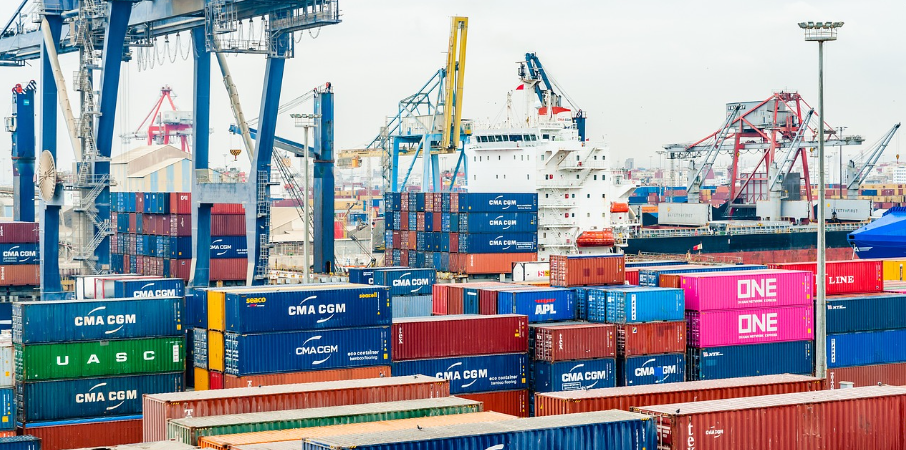
Ghana relies on the Harmonized System (HS) code to identify and categorize goods that cross its borders. This international system ensures consistency in how products are recognized globally. Once an item is classified, customs applies tariffs, which can either be based on the declared value of the shipment—known as ad valorem—or on its measurable characteristics like weight or volume, often referred to as specific duties. The rates are not fixed permanently; they are reviewed from time to time to reflect new policies or economic conditions. Most imports attract a series of charges unless specifically exempted, which typically include the standard customs duty, Value Added Tax (VAT), and several administrative fees. Import duties are calculated using the Cost, Insurance, and Freight (CIF) value, while VAT and other charges are applied to the total of the CIF plus the duty.
Tariff Structure under ECOWAS
Ghana, as a member of the Economic Community of West African States (ECOWAS), uses the bloc’s Common External Tariff (CET). This framework ensures uniformity across member countries while also protecting local industries. Under this arrangement, Ghana places imports into five broad categories. Essential social goods such as pharmaceuticals and health-related products enjoy a zero-duty rate. Essential commodities, raw materials, and machinery face a 5 percent duty. Goods that are used in further production, labeled as intermediate, carry a 10 percent tariff. Finished consumer goods attract a 20 percent rate, while a select group of items—often chosen to safeguard domestic industries—carry the highest band of 35 percent.
Data from 2020 indicates Ghana’s average Most-Favored-Nation (MFN) tariff stood at 12.1 percent, with agricultural imports facing higher rates at about 15.8 percent, compared to 11.5 percent for non-agricultural items. These numbers highlight the government’s balancing act between encouraging imports and protecting strategic sectors.
Value Added Tax on Imports
VAT is an important revenue source for Ghana, and its rate was raised to 15 percent in 2022. The calculation of VAT on imported goods is not straightforward, since it is applied on more than just the CIF value. Instead, customs officers add together the CIF, the import duty, and any other applicable fees, then multiply the total by the VAT rate. This cumulative method means that in practice, the effective tax rate paid by businesses can exceed 23 percent. The Customs Division of the Ghana Revenue Authority administers this system, collecting not only import VAT but also a range of related taxes such as petroleum taxes, excise duties, and export charges.
Other Fees and Levies
Beyond tariffs and VAT, Ghana imposes numerous additional levies on imported goods. These Other Duties and Charges (ODCs) have increased in scope over the past decade, making the import environment more complex. Among them are sector-specific levies like excise duty and the environmental tax introduced in 2013. Regional obligations add another layer, such as the ECOWAS levy and the African Union levy introduced in 2017. In recent years, further charges have been established to support national programs, including the National Health Insurance Levy, the Covid recovery levy, and levies earmarked for education, sanitation, and pollution control.
Energy-sector related charges have also multiplied, covering recovery of sector debts, fund contributions, and special petroleum taxes. Administrative fees, such as the processing fee, destination inspection fees, and ICUMS-related charges, increase the cost further. For some goods, especially plastic packaging materials, the combined effect of these duties can raise the CIF value by as much as 12 percent before VAT is even added. For importers, this means careful financial planning is essential when calculating the total landed cost of their goods.
Navigating a Shifting Landscape
Ghana’s import duty regime is not static. Rates and charges are reviewed, adjusted, or introduced based on government revenue needs, regional commitments, or social policies. Businesses seeking to trade with Ghana must stay up to date with these developments to avoid unexpected costs.
In short, understanding Ghana’s customs system requires more than checking a tariff schedule. Importers must account for layered duties, cumulative VAT calculations, and a host of sector-specific levies. For those who prepare adequately, Ghana offers a clear system—but one that demands careful attention to detail.
Frequently Asked Questions about Import Duties in Ghana
What system does Ghana use to classify imported goods?
Ghana uses the Harmonized System (HS) code, a global standard that helps customs identify and categorize goods consistently.
How are import duties calculated in Ghana?
Duties are based either on the declared value of the shipment (ad valorem) or on physical characteristics like weight or volume (specific duties).
What is the Cost, Insurance, and Freight (CIF) value?
The CIF value includes the cost of the goods, insurance, and freight charges. It forms the baseline for calculating duties and taxes.
What tariff structure does Ghana follow under ECOWAS?
Ghana applies the Common External Tariff (CET) of ECOWAS, which sets five tariff bands ranging from zero duty on essentials to 35 percent on protected goods.
Which goods qualify for zero duty?
Essential social goods like medicines and health-related items enjoy a zero-duty rate to make them affordable and widely available.
How high are Ghana’s average tariff rates?
In 2020, Ghana’s average Most-Favored-Nation (MFN) tariff was 12.1 percent, higher for agricultural goods (15.8%) than non-agricultural (11.5%).
What is the current VAT rate on imports?
Since 2022, the VAT on imports has been set at 15 percent, applied on the CIF value plus duty and other fees.
Why does the effective VAT feel higher than 15 percent?
Because VAT is applied on the combined total of CIF, duties, and other charges, businesses often pay an effective rate above 23 percent.
What are Other Duties and Charges (ODCs)?
ODCs include extra levies like environmental tax, health insurance levy, Covid recovery levy, education levy, and fees such as processing and inspection charges.
How much can these additional charges add up to?
Depending on the type of product, ODCs can increase the CIF value by as much as 12 percent before VAT is even applied.
Who collects these taxes and duties?
The Customs Division of the Ghana Revenue Authority manages the collection of duties, VAT, levies, and related fees.