
In the world of business finance, debt is often viewed with mixed feelings. For some, it’s a strategic tool that fuels growth; for others, it’s a heavy burden that drains resources. In recent years, the financial climate has made borrowing more common among smaller businesses, but also more risky. Economic pressures—from the aftermath of the Covid-19 pandemic to rising inflation and interest rates—have left many companies juggling higher debt levels. According to the Bank of England, one-third of SMEs now owe over ten times their cash reserves, a steep increase from pre-pandemic figures.
While excessive, unmanaged debt can cripple a business, not all borrowing is detrimental. When handled with foresight and discipline, debt can be a lifeline that enables expansion, innovation, and increased profitability. The challenge lies in distinguishing between “good” debt and “bad” debt, and managing each appropriately.
The Concept of Good Debt
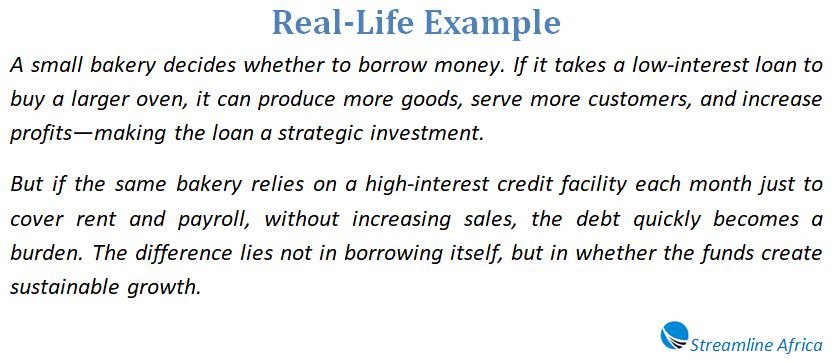
Good debt is borrowing that works in your favor, helping your business grow and generate more revenue than the debt costs. It’s typically planned in advance, tied to a specific purpose, and backed by a clear repayment strategy.
Examples include financing new equipment to increase production capacity, investing in research and development to create competitive products, or using funds to expand into new markets. The key is that the investment funded by this debt produces a return that outweighs the cost of borrowing.
Good debt also depends on the loan’s terms and the lender’s credibility. A low-interest loan from a reputable institution is less risky and easier to manage than short-term, high-interest alternatives. Likewise, structured payment terms aligned with your business’s cash flow can make repayment smoother.

Examples of Good Debt in Action
Practical examples of good debt include long-term business loans with favorable interest rates and manageable repayment schedules. Growth-focused financing, such as export loans or funding for scaling operations, also falls into this category. For instance, borrowing to purchase advanced machinery could allow a manufacturing business to meet larger orders and improve efficiency, ultimately boosting profits.
In some cases, even the debt your customers owe to you can be considered good—provided they make regular payments on time and in line with agreed terms. This consistent incoming cash supports your own debt repayment and operational needs.
Strategies for Managing Good Debt
The benefits of good debt depend heavily on disciplined management. Businesses should develop a detailed financial forecast before borrowing, outlining repayment schedules, how the funds will be used, and the projected growth the debt will generate. Monitoring whether the investment delivers the expected return is just as crucial.
When it comes to customer credit, encouraging timely payments helps keep your cash flow strong. Setting up standing orders or offering small discounts for early payments can be effective incentives.
The Reality of Bad Debt
Bad debt is the kind that drains resources without providing meaningful returns. It often arises from unexpected circumstances, poor financial planning, or overly generous credit terms for customers. In many cases, bad debt is linked to customers who cannot or will not pay, forcing your business to write off the amount owed. This can seriously disrupt cash flow and make it harder to meet your own financial obligations.
For the business itself, bad debt might take the form of high-interest, short-term borrowing undertaken as a desperate measure to cover immediate expenses. Such debt is usually unplanned, expensive to service, and rarely tied to income-generating activity. While it might keep operations running temporarily, it can worsen long-term financial health.
Common Forms of Bad Debt
Bad debt takes many shapes. It could be overextended credit lines to customers who later default, invoices that go unpaid because the customer has become insolvent, or emergency loans that come with steep interest rates and short repayment windows. Even debts you owe that you struggle to repay due to a sudden drop in business liquidity fall into this category.
For example, if a business faces a costly equipment breakdown and turns to an expensive overdraft facility to cover repairs, the resulting debt may add significant financial strain without improving long-term profitability.
Reducing the Risk of Bad Debt
Preventing bad debt begins with proactive financial management. Businesses should maintain realistic budgets, forecast potential cash flow issues, and have contingency plans for emergencies. Using tools such as invoice financing or factoring services can help keep cash flow steady, making it easier to meet repayment obligations on time.
When customer debts are unrecoverable, writing them off promptly ensures they can be treated as tax-deductible losses. This allows you to reclaim related taxes, such as VAT, and helps maintain accurate financial records. In situations where customers are still operating but unwilling to pay, debt collection services or legal action through small claims courts can be used to recover funds.
Finding the Balance
Ultimately, debt is neither inherently good nor bad—it’s the purpose, terms, and management that determine its impact. Borrowing for well-planned investments that generate sustainable returns can strengthen your business. On the other hand, reactive borrowing to patch up cash flow gaps without a repayment plan can undermine your stability.
In today’s economic environment, where borrowing is both more common and more costly, small businesses need to approach debt with caution and strategy. By understanding the difference between good and bad debt, and by managing both effectively, companies can use debt as a stepping stone rather than a stumbling block.
Frequently Asked Questions
How can good debt help a business grow?
It provides capital for investments like new equipment, R&D, or market expansion, which can increase production capacity, sales, and long-term profitability.
What are examples of good debt?
Low-interest business loans, export finance, or customer debts that are repaid on time and in full are considered good debt.
What makes debt turn bad?
Debt becomes bad when it’s unplanned, difficult to repay, tied to high interest rates, or results from customers failing to pay what they owe.
How can a business manage good debt effectively?
By creating a detailed financial forecast, aligning repayment schedules with cash flow, and ensuring the borrowed funds are invested in income-generating activities.
What are some ways to prevent bad debt from customers?
Set clear payment terms, monitor credit limits, and use incentives like discounts for early payments to encourage timely settlements.
What can a business do if a customer’s debt becomes unrecoverable?
Write it off for tax purposes, reclaim related VAT, or use debt collection agencies or legal channels to try and recover the funds.