
In business, fixed assets like machinery, vehicles, or equipment are resources that help generate revenue over multiple years. At some point, these assets will reach a stage where the company no longer needs them, can’t use them, or chooses to upgrade them. When that happens, it’s necessary to remove the item from the company’s accounting records in a way that accurately reflects its value up to the point it is disposed of. Simply throwing an item away, trading it in, or selling it affects not just the balance sheet but also potentially the income statement. To ensure financial reports remain accurate and comply with accounting standards, companies must follow specific steps to record these events properly.
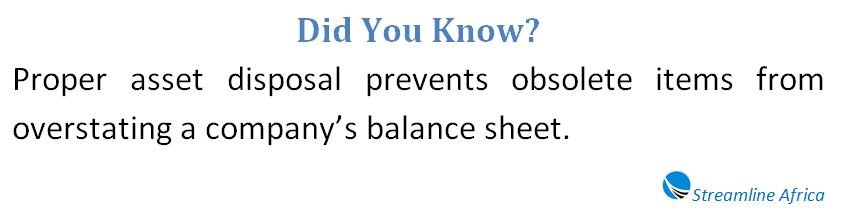
Proper disposal accounting helps show the true financial position of the company. If an asset is sold for more or less than what it’s worth on the books, that difference becomes either a profit or a loss. If an asset is simply discarded and provides no return, the remaining value is recognized as a loss. These transactions ensure that income statements reflect all gains and losses from asset activity, and that balance sheets do not list assets that the business no longer holds.
Determining an Asset’s Value Before Disposal
Before any disposal entry can be recorded, accountants must know an asset’s book value, which is the difference between the original cost and how much of that cost has already been recorded as depreciation. Depreciation spreads out an asset’s cost over the years it benefits the business, so accumulated depreciation represents the total depreciation taken so far. Tracking this allows companies to measure what portion of an asset’s value has been used up over time.
For example, if a piece of equipment originally cost $30,000 and has had $10,000 of depreciation recorded against it, the book value is $20,000. This figure becomes crucial when an asset is sold or disposed of, because it serves as the basis for calculating whether the transaction results in a gain or loss. If the company receives more than $20,000 from selling the asset, it records a gain; if it receives less, it records a loss.

Recording a Sale of an Asset
Selling an asset involves several accounting steps. First, depreciation must be recorded up to the date of the sale to ensure the book value is current. Next, the asset’s original cost is removed from the books, along with the total depreciation recorded so far. The cash received from the sale is then recorded as an increase in assets. Finally, the difference between the sale proceeds and the book value is recorded as either a gain or a loss.
To illustrate, if the asset’s book value at the date of sale is $20,000 and the company sells it for $25,000, the business recognizes a $5,000 gain. This gain reflects that the company got more from the sale than what was left of the asset’s value on its books. Conversely, if the asset is sold for $15,000, the company would record a $5,000 loss, since the sale proceeds fall short of the net value of the asset. By recording these entries correctly, the financial statements accurately display how the sale affected the company’s profitability.
Retiring an Asset That Can No Longer Be Used
Assets are retired when they have reached the end of their useful life and cannot be sold or traded. This often happens when the asset is worn out or obsolete. In these cases, the asset is removed from the company’s books entirely, and no cash or other consideration is received.
If an asset has been fully depreciated, meaning its accumulated depreciation equals its original cost, its book value is zero. Retiring such an asset doesn’t create a gain or a loss — it simply requires removing the cost and accumulated depreciation from the books so it no longer appears on the balance sheet. The entry reverses the original asset account and the accumulated depreciation account, with no impact on the income statement beyond the depreciation that has already been recognized over time.
However, if the asset still has some book value at retirement — perhaps because it was not fully depreciated — this remaining value becomes a loss. Since there were no proceeds from the disposal, the unexpensed value must be recognized as a loss in the company’s income statement. This reflects that the business has effectively lost the economic benefit that was still tied up in the asset.
Exchanging One Asset for Another
Sometimes businesses decide to trade in an old asset for a new one. In this scenario, the old asset still has remaining value and might be credited toward the cost of the replacement. The accounting becomes a bit more complex, because the trade-in value may differ from the asset’s book value.
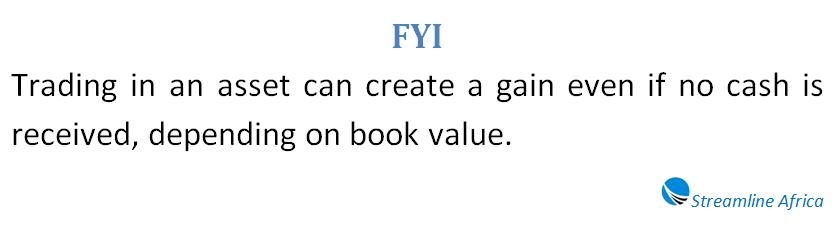
When an exchange occurs, companies still remove the old asset’s cost and accumulated depreciation from the books. The trade-in allowance from the dealer is treated like proceeds from a sale, and any additional cash paid for the new asset is recorded accordingly. If the trade-in allowance exceeds the old asset’s book value, the difference is a gain; if it is less, the difference is a loss. The new asset is recorded at its full cost, which generally includes the trade-in allowance plus any cash paid.
For example, a business might trade in a vehicle with a book value of $5,000 and receive a $6,000 trade-in allowance from the dealer. In this case, the business would record a $1,000 gain on disposal, because the value received for the old asset exceeds its remaining book value. Meanwhile, the new vehicle is recorded at its total cost, taking into account the trade-in.
What Happens After Disposal Entries Are Recorded
Once an asset has been sold, retired, or exchanged, the company’s records no longer include that asset. This update ensures that the balance sheet reflects only assets that continue to provide value and contribute to the company’s operations.
The gain or loss recognized during disposal shows up on the income statement for the period in which the transaction occurred. Recording it accurately ensures that stakeholders understand how the company is managing its resources and whether the business is realizing profits or losses from its asset management decisions. This transparency supports more informed decision-making by investors, managers, and auditors.
Why Accurate Disposal Accounting Matters
Getting disposal entries right is important for several reasons. First, it ensures that the company’s financial records are accurate and comply with accounting rules like Generally Accepted Accounting Principles (GAAP). These principles require that assets be recorded at cost and that gains and losses from their disposal be properly recognized at the time the transaction occurs.
Second, if disposal is not handled correctly — for example, if depreciation is not updated before recording the sale — the resulting gain or loss will be misstated. That misstatement, in turn, skews net income and misrepresents the company’s financial position. Proper accounting treatment makes sure that the financial statements provide a realistic and trustworthy picture of performance.
Lastly, clear disposal accounting helps internal and external users of financial information make better decisions. Investors and creditors assess the company’s profitability and asset utilization, while managers use this information to plan future purchases, budgets, and investments. Inaccurate disposal accounting can lead to poor decision-making and a misunderstanding of a company’s true financial health.
Frequently Asked Questions
What Is Asset Disposal in Accounting?
Asset disposal refers to the process of removing fixed assets, like machinery or vehicles, from a company’s books when they are sold, retired, or exchanged. It ensures financial statements accurately reflect the business’s resources.
Why Do Companies Dispose of Assets?
Companies dispose of assets when they become obsolete, no longer generate value, are worn out, or are replaced with newer assets. Disposal helps optimize operational efficiency and financial reporting.
How Do You Determine an Asset’s Book Value?
Book value is calculated as the original cost of an asset minus accumulated depreciation. This figure indicates the remaining value of an asset before it is sold, retired, or exchanged.
What Happens When an Asset Is Sold?
When sold, the asset’s cost and accumulated depreciation are removed from the books. The cash received is recorded, and any difference between sale proceeds and book value is recognized as a gain or loss.
How Is a Loss Recorded During Disposal?
If the disposal proceeds are less than the asset’s book value, the difference is recorded as a loss on the income statement. This shows that the company did not recover the full remaining value.
How Are Gains Recorded During Disposal?
If an asset is sold or exchanged for more than its book value, the surplus is recorded as a gain. Gains increase the company’s net income for the period.
What Is Asset Retirement?
Asset retirement occurs when an asset reaches the end of its useful life and cannot be sold or traded. The asset is removed from the books, and any remaining book value is recorded as a loss if not fully depreciated.
How Are Exchanges of Assets Handled?
When trading an old asset for a new one, the old asset’s cost and accumulated depreciation are removed. The trade-in value is recorded as proceeds, and any excess or shortfall compared to book value is recorded as a gain or loss.
Why Is Updating Depreciation Important Before Disposal?
Depreciation must be current to accurately determine book value. Without updating, gains or losses from disposal may be misstated, affecting net income and balance sheet accuracy.
How Does Disposal Affect Financial Statements?
Disposal removes the asset from the balance sheet and records any gain or loss on the income statement. This ensures that financial reports reflect the company’s current resources and performance.
What Are the Risks of Incorrect Disposal Accounting?
Misstating disposal entries can lead to inaccurate net income, misleading investors, and poor managerial decisions. Proper accounting is essential for compliance and reliable reporting.
How Does Asset Disposal Support Decision-Making?
Accurate disposal data helps managers plan future purchases, investors assess profitability, and creditors evaluate financial health. It enables informed decisions about operations and investments.