

At Horizon Peak Logistics, a fast-growing distribution company based in Vancouver, operations manager Daniel Okoye noticed a recurring problem. New hires were taking too long to become fully productive, while internal staff struggled to transition into new roles. Training manuals existed, but they weren’t enough. Employees needed something more practical—something that connected theory to real work.
That’s when Daniel introduced job shadowing.
Within months, the company saw faster onboarding, stronger collaboration across departments, and a noticeable boost in employee confidence. What seemed like a simple initiative turned into a powerful learning strategy.
Job shadowing is often overlooked, yet it remains one of the most effective ways to build skills, strengthen teams, and prepare employees for future roles. Understanding how it works—and why it matters—can help organizations unlock untapped potential within their workforce.

Key Insights at a Glance
- Job shadowing allows employees to learn by observing experienced colleagues in real work situations.
- It supports career growth, strengthens teamwork, and helps organizations identify future leaders.
- It plays a crucial role in onboarding, cross-training, and internal mobility.
- A structured approach with clear goals and feedback ensures maximum impact.
Understanding Job Shadowing in Practice
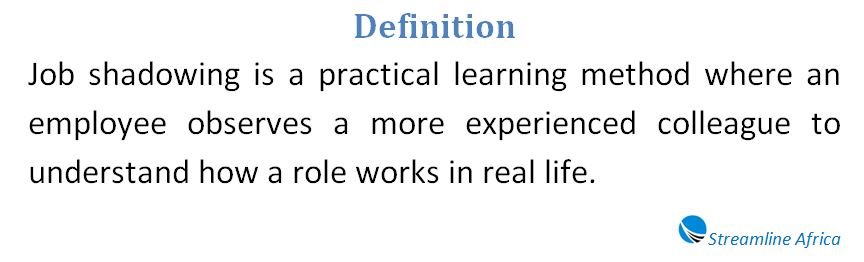
Job shadowing is a hands-on learning method where an employee observes a more experienced colleague during their daily responsibilities. Instead of relying solely on written instructions or classroom-style training, the learner gains direct exposure to how tasks are performed in real time.
At Horizon Peak Logistics, a junior analyst named Sofia Ramirez shadowed a senior supply chain specialist for three days. During that time, she attended planning meetings, observed decision-making processes, and even assisted with data analysis under supervision. By the end of the experience, she had gained insights that no handbook could provide.
The duration of job shadowing can vary widely. Some programs last only a few hours, while others extend over several weeks, depending on the complexity of the role and the goals of the participant.
What makes job shadowing unique is its focus on real-world learning. Employees don’t just hear about responsibilities—they see them unfold, step by step.
Job Shadowing vs. Internships: Clearing the Confusion
Although they may seem similar, job shadowing and internships serve different purposes.
Job shadowing is typically designed for current employees or individuals exploring a role within an organization. It is short-term, observational, and focused on skill exposure rather than full participation.
Internships, on the other hand, are often structured programs aimed at students or early-career individuals. Interns are usually assigned tasks and responsibilities, allowing them to contribute directly to the organization over a longer period.
For example, at a marketing firm in Berlin, an intern might spend three months managing social media campaigns, while a job-shadowing participant may spend two days observing how those campaigns are created and evaluated.
Both approaches are valuable, but job shadowing offers a faster, lower-commitment way to gain insight into a role.
The Real Benefits of Job Shadowing for Organizations
When implemented effectively, job shadowing creates value for both employees and employers.
One of the most immediate benefits is a deeper understanding of roles. Employees gain clarity about what a position actually involves, which helps them transition more smoothly into new responsibilities. At Horizon Peak Logistics, Sofia’s shadowing experience reduced her training time by nearly half.
Another advantage is professional growth. Observing experienced colleagues exposes employees to new techniques, tools, and ways of thinking. This kind of informal learning often leads to skill development that traditional training methods cannot replicate.
Job shadowing also strengthens connections across departments. When employees step outside their usual roles and interact with colleagues from other teams, they develop a broader perspective of the organization. This improved understanding makes collaboration more effective and reduces communication barriers.
In addition, job shadowing fosters stronger workplace relationships. Spending time together in a learning environment builds trust between employees, creating a more supportive and cohesive culture.
From a management perspective, job shadowing can reveal hidden talent. Employees who excel during these experiences often demonstrate readiness for advancement, making it easier for leaders to identify candidates for promotion.
Recognizing the Potential Drawbacks
Despite its advantages, job shadowing is not without challenges.
One of the most common concerns is time. Experienced employees must dedicate part of their schedule to guiding observers, which can temporarily affect productivity. In fast-paced environments, this can be difficult to manage without proper planning.
Another limitation is that job shadowing may not always be compensated, particularly when offered to external participants. This can discourage some individuals from taking part, especially if they need paid opportunities.
There is also no guarantee of success. Simply observing a role does not ensure that the participant will fully understand or retain what they have learned. Without active engagement and follow-up discussions, the experience may fall short of its potential.
Recognizing these challenges allows organizations to design better programs that minimize risks while maximizing benefits.
When Job Shadowing Makes the Most Impact
Timing plays a critical role in the effectiveness of job shadowing.
During the recruitment process, offering candidates a brief shadowing experience can provide a realistic preview of the role. For instance, a healthcare clinic in Melbourne allows shortlisted candidates to observe a nurse for 20 minutes before final interviews. This helps both the employer and candidate make more informed decisions.
In onboarding, job shadowing accelerates learning. New hires who observe experienced colleagues early on tend to adapt more quickly and feel more confident in their roles.
Job shadowing is also highly effective for cross-training. In a manufacturing company in São Paulo, machine operators regularly shadow maintenance technicians to understand basic troubleshooting. This flexibility helps the company maintain productivity during staff shortages.
For career development, job shadowing enables employees to explore new paths within the organization. It allows them to test their interest in different roles before committing to a transition, reducing the risk of mismatched career moves.
Building an Effective Job Shadowing Program
Creating a successful job shadowing program requires careful planning and structure.
The first step is selecting the right mentors. Not every high-performing employee is suited to teaching others. Organizations should identify individuals who are not only skilled but also willing to guide and support learners.
Next, it is important to define clear objectives. Before the shadowing begins, both the observer and the mentor should understand what the experience aims to achieve. This could include learning specific tasks, understanding workflows, or gaining exposure to decision-making processes.
A well-organized schedule is equally important. Observers should have access to meaningful activities without overwhelming the mentor. For example, they might attend key meetings, observe critical tasks, and participate in selected activities where appropriate.
Encouraging active participation enhances the learning experience. Observers should be motivated to ask questions, take notes, and reflect on what they see. This transforms passive observation into active learning.
Finally, feedback is essential. After the shadowing period, both the observer and the mentor should share their perspectives. This helps identify strengths, address gaps, and improve future programs.
Practical Tips for a Successful Experience
Organizations can take several steps to ensure their job shadowing initiatives deliver meaningful results.
Matching participants carefully is crucial. Aligning the observer’s interests with the mentor’s expertise increases engagement and relevance.
Providing ongoing support creates a more comfortable learning environment. Participants should know who to contact if they have questions or encounter challenges.
Offering incentives can motivate mentors to participate. Recognition, rewards, or career development opportunities can encourage experienced employees to invest time in training others.
Creating a culture of openness also plays a significant role. When employees feel comfortable sharing knowledge and collaborating, job shadowing becomes more effective and enjoyable.
Setting clear expectations from the beginning helps avoid confusion. Both parties should understand their roles, responsibilities, and the overall purpose of the experience.
Frequently Asked Questions About Job Shadowing
How long should a job shadowing experience last?
The length of job shadowing varies depending on the role and objectives. In most cases, it ranges from a single day to one week. More complex roles may require longer periods to provide meaningful exposure.
What activities are involved in job shadowing?
Participants typically observe daily tasks, attend meetings, and watch how decisions are made. In some cases, they may also perform simple tasks under supervision to gain practical experience.
How can participants prepare effectively?
Preparation starts with setting clear goals. Participants should identify what they want to learn, prepare questions in advance, and ensure they are available for scheduled sessions. Being ready to take notes and reflect on the experience is equally important.
Can job shadowing lead to career advancement?
Yes, it often does. Employees who demonstrate initiative and adaptability during job shadowing are more likely to be considered for new opportunities or promotions.
Moving Forward: Turning Insight into Action
Back at Horizon Peak Logistics, Daniel’s decision to introduce job shadowing transformed how employees learned and grew within the company. What began as a simple experiment evolved into a structured program that continues to benefit both individuals and the organization.
Job shadowing is more than just observing someone at work. It is a strategic tool that connects learning with real-world experience, helping employees develop skills that truly matter.
For businesses looking to improve onboarding, enhance collaboration, and build a stronger workforce, job shadowing offers a practical and cost-effective solution. By creating a clear process and fostering a supportive environment, organizations can turn everyday work into powerful learning opportunities.
The next step is simple: start small, refine the process, and build a culture where learning is part of the daily experience.
Frequently Asked Questions about Job Shadowing
How is job shadowing different from traditional training?
Unlike classroom or manual-based training, job shadowing immerses employees in real work situations. Instead of just reading instructions, they see tasks being performed and understand how decisions are made.
Who benefits the most from job shadowing?
Both employees and employers benefit. Employees gain skills and clarity, while organizations develop stronger teams, improve productivity, and identify future leaders.
Can job shadowing help with onboarding new hires?
Yes, it is especially effective during onboarding. New hires can quickly adapt by observing experienced team members, which reduces the time it takes to become fully productive.
How long does a job shadowing program usually last?
Most job shadowing experiences last between a day and a week, depending on the complexity of the role and the learning objectives.
Is job shadowing only for new employees?
No, it is also valuable for existing employees who want to learn new skills, explore different roles, or prepare for promotions within the organization.
What skills can employees gain from job shadowing?
Employees can develop technical skills, communication abilities, problem-solving techniques, and a deeper understanding of workplace dynamics.
Are there any challenges with job shadowing?
Yes, it can require time and planning. Without proper structure or engagement, participants may not fully benefit from the experience.
When is the best time to introduce job shadowing?
It works well during recruitment, onboarding, cross-training, and career development stages, making it a flexible tool for different situations.
How can companies make job shadowing more effective?
Organizations should set clear goals, match participants carefully, create structured schedules, and gather feedback after the experience.
Does job shadowing improve teamwork?
Absolutely. It encourages collaboration across departments and helps employees understand each other’s roles, leading to stronger workplace relationships.
Can job shadowing lead to career growth?
Yes, it often opens doors for advancement by helping employees build new skills and demonstrate their readiness for higher responsibilities.