

Every organization, whether a small startup or a multinational corporation, must keep accurate financial records. Accountants do this by grouping transactions into different categories that reveal both short-term performance and long-term financial stability. Two of the most important categories are temporary accounts and permanent accounts.
Although both types exist within the same accounting system, they serve very different purposes. One captures what happened during a specific period, such as a month or year. The other shows the organization’s ongoing financial position over time. Understanding the distinction is essential for interpreting financial statements, making business decisions, and ensuring compliance with reporting standards.
What Temporary Accounts Represent
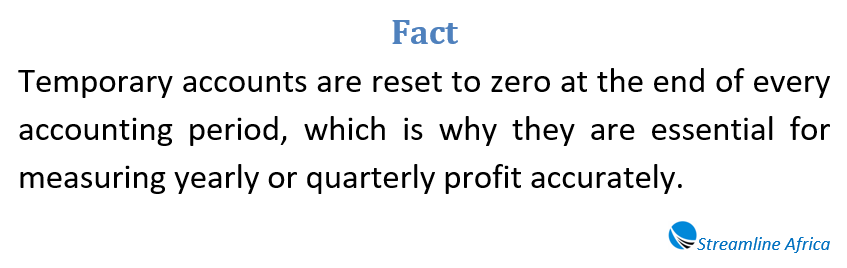
Temporary accounts are designed to measure financial performance over a defined time frame. They record activities that occur during a single accounting period, such as revenues earned and expenses incurred. Once that period ends, the balances in these accounts are cleared so that the next period starts fresh.
These accounts are often referred to as nominal accounts because they summarize operating results rather than long-term financial status. Their purpose is to help determine whether the business made a profit or loss during that specific interval.
Common temporary accounts include revenue accounts that capture sales or service income, expense accounts that record costs like salaries or utilities, and withdrawal accounts that track distributions to owners. By isolating these transactions within one period, businesses can accurately evaluate performance without mixing data from different years or quarters.
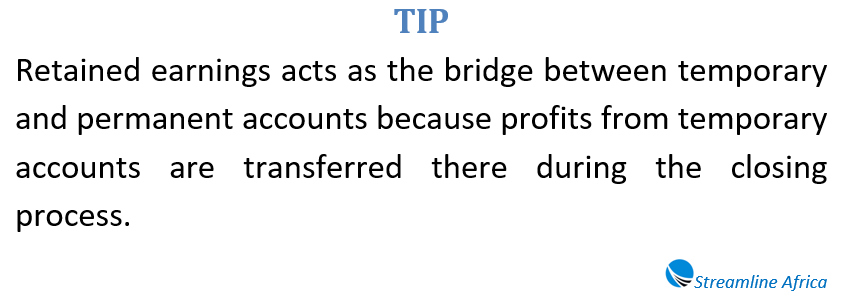
At the end of the accounting cycle, temporary accounts undergo a process known as closing. Their balances are transferred into a permanent equity account, typically retained earnings. After this transfer, the temporary accounts return to zero, ready to record activity for the new period.
What Permanent Accounts Show
Permanent accounts, sometimes called real accounts, tell a different story. Instead of focusing on performance during a specific period, they reflect the cumulative financial position of the business. These accounts remain open indefinitely and carry their balances forward from one accounting period to the next.
Permanent accounts appear on the balance sheet because they represent what the organization owns, what it owes, and the residual interest of the owners. They do not reset each year because these items continue to exist beyond a single reporting period.
Typical permanent accounts include assets such as cash, equipment, and inventory; liabilities such as loans or accounts payable; and equity accounts like share capital and retained earnings. Because these balances accumulate over time, they provide insight into the organization’s overall financial strength and stability.
Unlike temporary accounts, permanent accounts are never closed as part of the routine accounting cycle. Their ending balances simply become the beginning balances for the next period, creating a continuous record of the business’s financial history.
Why Accountants Use Both Types
Financial reporting requires both perspectives: performance and position. Temporary accounts answer the question, “How did we do this period?” Permanent accounts answer, “Where do we stand right now?”
For example, a company may report high sales revenue during a year, which appears in temporary accounts. However, if it also took on significant debt or used up cash reserves, the permanent accounts will reveal those changes in financial position. Looking at only one type would provide an incomplete picture.
Together, the two categories allow stakeholders to evaluate profitability, liquidity, solvency, and long-term viability. Investors, lenders, and managers rely on this comprehensive view when making decisions.
A Fresh Scenario: Sunrise Health Clinic
Consider Sunrise Health Clinic, a privately owned medical facility in Nairobi. During the year, the clinic earns consultation fees, pays staff salaries, purchases medical supplies, and covers utility bills.
All income from patient visits is recorded in revenue accounts, while wages, rent, and supplies appear in expense accounts. These are temporary accounts because they relate specifically to the current year’s operations.
Meanwhile, the clinic’s bank balance, medical equipment, outstanding loans, and owner’s equity are recorded in permanent accounts. These balances continue from one year to the next, showing the clinic’s ongoing financial condition.
At the end of the year, Sunrise Health Clinic closes its temporary accounts. The net profit is transferred to retained earnings, a permanent equity account. When the new year begins, revenue and expense accounts start again at zero, while assets and liabilities retain their previous balances.

The Closing Process Explained
Closing temporary accounts is a systematic procedure performed at the end of an accounting period. It ensures that financial results are isolated to the period in which they occurred.
First, revenue accounts are closed by transferring their balances to a summary account. Next, expense accounts are closed in a similar way. The summary account then reflects the net profit or loss for the period.
Finally, this net result is transferred to retained earnings or the owner’s capital account. Once these steps are completed, all temporary accounts show a zero balance.
This process prevents confusion between periods. Without closing entries, a company’s financial results would accumulate indefinitely, making it impossible to determine performance for individual years or quarters.
Key Differences in Purpose
One of the most important distinctions lies in what each account type measures.
Temporary accounts focus on operational performance. They show whether the business generated income, incurred costs, or distributed profits during a defined period. Their usefulness lies in analyzing trends, budgeting, and evaluating management effectiveness.
Permanent accounts, on the other hand, track financial structure. They reveal the resources available to the organization, its obligations, and the owners’ stake. These accounts help assess solvency, liquidity, and long-term sustainability.
In short, temporary accounts answer performance questions, while permanent accounts answer position questions.
Differences in Financial Statements
The two account types also appear in different financial reports.
Temporary accounts primarily feed into the income statement, which summarizes revenues and expenses to calculate net income for the period. This statement covers a span of time, such as a quarter or year.
Permanent accounts form the balance sheet, which presents assets, liabilities, and equity at a specific moment. It provides a snapshot rather than a timeline.
Because these statements serve different purposes, both are necessary for a complete understanding of financial health.
Duration of Account Balances
Another major difference involves how long balances remain.
Temporary account balances exist only for a single accounting period. Once that period ends, they are reset to zero through closing entries. This ensures that each period’s results are measured independently.
Permanent account balances, by contrast, accumulate continuously. They are carried forward into future periods, creating a running total of financial activity.
This distinction reflects the underlying nature of the transactions recorded. Revenues and expenses belong to specific periods, while assets and liabilities persist beyond them.
Impact on Decision-Making
Managers rely on temporary accounts to evaluate operational performance. If expenses rise faster than revenue, corrective action may be needed. If profits increase, the business may expand or invest in new opportunities.
Permanent accounts guide strategic decisions about financing, investments, and risk management. For instance, a high level of debt relative to assets could signal financial vulnerability, even if short-term profits are strong.
By analyzing both account types together, decision-makers gain a balanced understanding of performance and stability.
Avoiding Common Misunderstandings
Students and new professionals sometimes assume that temporary accounts are less important because they reset to zero. In reality, they are crucial for measuring profitability and operational efficiency.
Another misconception is that permanent accounts never change. While they do not reset, they are continuously updated as transactions occur. Buying equipment increases asset balances, repaying a loan reduces liabilities, and earning profits increases equity.
Misclassifying transactions between these categories can distort financial reports. For example, treating a long-term asset purchase as an expense would understate profits and misrepresent the company’s financial position.
A Second Example: Coastal Coffee Roasters
Imagine Coastal Coffee Roasters, a growing business in Mombasa. During a busy tourist season, sales surge, and the company records high revenue. At the same time, it spends heavily on marketing and temporary staff.
These revenues and expenses appear in temporary accounts, showing strong seasonal performance. However, the company also takes a bank loan to expand its roasting facility. That loan is recorded in a permanent liability account.
By year-end, Coastal Coffee reports healthy profits, but its balance sheet reveals increased debt. Investors examining both account types can see that the company is profitable but also taking on financial risk to support expansion.
Why the Distinction Matters
Understanding temporary and permanent accounts is not just an academic exercise. It is essential for accurate bookkeeping, reliable financial statements, and informed decision-making.
Temporary accounts help isolate performance by period, allowing comparisons across months or years. Permanent accounts provide continuity, showing how the organization’s resources and obligations evolve over time.
Together, they form the backbone of the double-entry accounting system. Each transaction ultimately affects both performance and position, even if it initially appears in only one type of account.
Conclusion
Temporary and permanent accounts serve complementary roles in financial reporting. Temporary accounts capture the flow of revenues, expenses, and distributions during a specific period and are reset at the end of that cycle. Permanent accounts maintain a continuous record of assets, liabilities, and equity, carrying balances forward indefinitely.
By using both types, accountants can present a complete picture of an organization’s financial story—how it performed during the period and where it stands overall. This dual perspective enables stakeholders to evaluate profitability, stability, and long-term prospects with confidence.
In any well-run business, mastering the relationship between these accounts is fundamental. It ensures that financial statements are clear, accurate, and meaningful, allowing leaders to make sound decisions and plan effectively for the future.