

As businesses evolve, financial management becomes increasingly complex. Many growing companies reach a point where they need advanced financial strategy but cannot justify the cost of a full-time Chief Financial Officer. This is where a fractional CFO comes in—a flexible and cost-efficient alternative that delivers executive-level expertise without the full-time commitment.
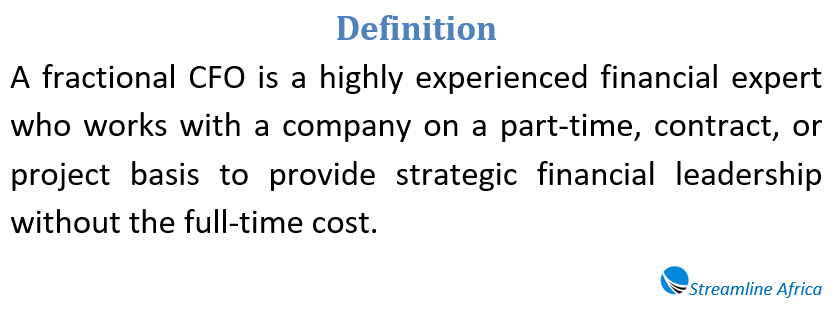
A fractional CFO is an experienced financial leader who works with organizations on a part-time, contract, or project basis. Instead of managing every aspect of finance daily, they step in to handle strategic financial needs, guide decision-making, and implement systems that strengthen long-term stability. Their role is particularly valuable for startups, fast-growing firms, and businesses navigating financial transitions such as audits, fundraising, or mergers.
What a Fractional CFO Brings to a Business
Fractional CFOs offer the same strategic insight and leadership as their full-time counterparts but operate under a flexible model. Their primary mission is to help businesses gain clarity, control, and confidence in their financial direction. Whether addressing short-term issues or building long-term strategy, they ensure that the company’s financial decisions align with growth objectives.
Their responsibilities typically include financial planning, budgeting, forecasting, capital management, and performance analysis. However, their greatest value often lies in solving specific financial challenges that internal teams may not have the time or expertise to tackle.
For example, a fractional CFO can help a company manage cash flow problems, optimize cost structures, analyze pricing strategies, or establish better reporting systems. They can also work alongside existing CFOs or finance teams on high-impact projects such as raising funds, preparing for audits, or restructuring financial operations.

Providing Financial Clarity and Forward Planning
While bookkeepers and accountants focus on recording past and current transactions, a CFO’s strength lies in looking ahead. A fractional CFO helps build a roadmap for the company’s financial future, translating data into actionable insight.
They develop short-, mid-, and long-term forecasts—often broken down into 90-day, one-year, and five-year views—so management can anticipate capital needs, cash flow gaps, and growth opportunities. These projections serve as the foundation for key decisions such as expansion, staffing, or investment.
Having a fractional CFO allows a company to better navigate uncertain periods, plan for future funding, and avoid reactive financial decisions. Their strategic forecasts also make it easier to determine when to secure loans or investments, ensuring that business growth happens sustainably rather than by chance.
Supporting Business Growth and Scaling
As businesses grow, financial systems often struggle to keep up with increasing complexity. A fractional CFO helps bridge that gap by creating scalable structures that support expansion without compromising control.
Rapid growth introduces new challenges—managing multiple product lines, opening branches in new markets, or dealing with regulatory changes. Without robust financial systems, these transitions can lead to declining profit margins, inefficiencies, and operational bottlenecks.
Fractional CFOs specialize in diagnosing these weak spots and recommending the right solutions. They might redesign reporting systems, evaluate software platforms, or renegotiate vendor contracts. In doing so, they enhance financial visibility, reduce waste, and enable better decision-making.
They can also guide talent development within the finance team, identifying training needs and helping hire skilled professionals. The result is a more capable internal structure that can sustain growth long after the CFO’s engagement ends.
Achieving Strategic Financial Goals
Sometimes, companies bring in a fractional CFO for a specific milestone—such as raising capital, entering new markets, or preparing for a merger or acquisition. In these situations, having a seasoned expert can make the difference between a smooth process and a costly mistake.
A fractional CFO helps refine financial statements, produce investor-ready forecasts, and ensure compliance with regulatory standards. They can represent the company in board meetings, review term sheets, and assist during due diligence. Their external perspective also adds credibility, which can be crucial when negotiating with investors or potential buyers.
For startups, a fractional CFO is often the key to securing early-stage funding. For mature businesses, they provide the strategic insight needed to navigate restructuring or expansion. In either case, they act as both advisor and executor—ensuring that financial goals are met with precision and foresight.
Benefits of Hiring a Fractional CFO
One of the most significant advantages of hiring a fractional CFO is cost efficiency. Companies gain access to top-tier financial expertise without paying the full salary, bonuses, and benefits of an in-house executive. The pay-as-you-need structure allows organizations to scale services up or down based on their financial situation and goals.
The flexibility of the arrangement is another major perk. Fractional CFOs can adapt their involvement—offering part-time advisory services, overseeing specific projects, or serving on a retainer basis. This flexibility ensures that businesses of any size can afford strategic financial leadership.
Additionally, their breadth of experience is invaluable. Many fractional CFOs have worked across multiple industries and understand how to navigate varied market conditions. This cross-sector insight helps them introduce best practices, innovative tools, and proven strategies tailored to each client’s unique situation.
Beyond solving immediate issues, a fractional CFO contributes to long-term success by helping businesses create sustainable financial systems, reduce risks, and improve profitability. Their influence often extends beyond numbers—they shape company culture around financial discipline and transparency.

When to Consider Hiring One
Knowing when to bring in a fractional CFO depends on a company’s stage and circumstances. Businesses often seek their expertise when financial operations begin to outgrow the existing team’s capacity.
If a company is implementing new systems, such as enterprise resource planning (ERP) or accounting software, a fractional CFO can oversee integration, assess inefficiencies, and ensure alignment with strategic goals.
In periods of rapid growth, where cash flow, expenses, and revenue streams are expanding faster than management can track, a fractional CFO provides stability and structure. They help leaders plan ahead rather than react to growing pains.
Finally, if financial problems—like persistent cash shortages or unclear profitability—start surfacing, it’s a signal to engage professional help. A fractional CFO can quickly diagnose the root causes and implement data-driven solutions.
Why Fractional CFOs Are the Future of Finance
The modern business landscape demands agility. Traditional financial structures, where only large corporations could afford CFO-level expertise, are fading fast. Fractional CFOs have emerged as a powerful alternative, giving small and mid-sized companies the same strategic advantage once reserved for industry giants.
By blending flexibility with deep expertise, they empower businesses to make smarter decisions, optimize resources, and achieve sustainable growth. Whether it’s guiding startups through their first funding round or helping established firms navigate expansion, fractional CFOs are redefining what financial leadership looks like in the modern era.
Frequently Asked Questions
How is a fractional CFO different from a full-time CFO?
Unlike a full-time CFO who manages finances daily, a fractional CFO focuses on specific goals—such as improving cash flow, raising capital, or building long-term strategies—on a flexible schedule.
Why do businesses hire fractional CFOs?
Companies bring in fractional CFOs to solve complex financial challenges, guide growth, implement systems, or prepare for major transitions like mergers, audits, or fundraising.
What are the main benefits of hiring a fractional CFO?
The biggest advantages include cost savings, flexibility, access to deep expertise, and strategic planning that enhances both short-term performance and long-term profitability.
When should a business consider hiring a fractional CFO?
Businesses should consider one when facing rapid growth, system inefficiencies, or financial challenges that exceed the capacity of their current team.
How does a fractional CFO help with growth and scalability?
They streamline financial systems, improve reporting and forecasting, identify profit leaks, and ensure the company’s structure supports sustainable expansion.
Can a fractional CFO assist with raising capital?
Yes. They help prepare financial statements, create forecasts, strengthen investor confidence, and manage due diligence during funding or acquisition processes.
How does a fractional CFO improve financial visibility?
By developing detailed forecasts, analyzing performance data, and creating actionable insights, they help leaders make smarter, future-focused financial decisions.
Is hiring a fractional CFO cost-effective?
Absolutely. Companies gain executive-level expertise and long-term financial direction without paying for a full-time executive’s salary, benefits, or bonuses.