
For many small business owners, daily responsibilities often take priority over long-term strategic tools like valuations. It is easy to assume that determining the value of a business only becomes important when planning to sell or when investors come knocking. Yet a business valuation is far more than a formality—it is a strategic lens through which owners can understand their company’s true condition, potential, and vulnerabilities.
While valuations offer clarity, they can also present challenges that owners must anticipate. Understanding both sides helps ensure the process becomes a valuable guide rather than a confusing obligation.
Why Knowing Your Business Value Matters
A Snapshot of Your Company’s Overall Health
A valuation offers something many businesses rarely get: an objective health assessment. Instead of relying on instinct or day-to-day impressions, a valuation provides a structured breakdown of financial performance, operational efficiency, market relevance, and potential risks. It blends past data with present realities to give you an honest picture of how the business is truly doing.
This clarity can be eye-opening. For instance, a valuation might reveal that most of your revenue comes from a single client, creating a dependency that could destabilize the business if circumstances change. It may also highlight operational habits that have become norms but are silently eroding profitability. These insights can motivate owners to diversify, tighten processes, or rethink how resources are allocated.
Valuations also help pinpoint the parts of your business that are performing exceptionally well. Knowing what drives strength allows you to amplify those areas, giving you a competitive advantage and a clearer direction.
A Guide for Smarter Long-Term Planning
Strategic planning is difficult without reliable information. Many owners expand, cut costs, or pivot based on assumptions, but a valuation gives you the data foundation needed to make confident decisions. By revealing strengths and weaknesses, it becomes easier to decide whether to enter new markets, adjust pricing, refine product lines, or restructure operations.
A valuation can also help you stay grounded during times of growth. If numbers show expansion is sustainable, you can take bigger steps with less fear. If weaknesses appear, you have the chance to refine your strategy before committing resources.

A Stronger Case When Seeking Funding
Investors, lenders, and partners rely on facts—not enthusiasm—to determine whether a business is worth backing. When a business owner can present a current, professionally developed valuation, it signals transparency and preparedness. Without it, funding discussions tend to stall because investors cannot confidently assess risk or long-term potential.
Having a valuation on hand also strengthens your negotiating power. It helps you stand firm during deal discussions because you can point to data rather than estimates. This reduces the likelihood of underselling your company or accepting unfavorable terms simply because you lacked a clear picture of its worth.
A Foundation for a Future Exit
Even if selling your business feels distant, preparing early is crucial. A valuation helps you understand how the market would perceive your business today and what you can do to increase its value over time. For example, if the valuation uncovers operational gaps or dependency on the owner, these issues can be improved long before buyers enter the picture.
Owners who wait until the last moment to assess their business often discover value-reducing issues too late to fix. Regular valuations keep the business exit-ready, even if selling is not an immediate goal.
Common Challenges in the Valuation Process
Despite their benefits, valuations are not always straightforward. Small businesses, in particular, face unique obstacles that can affect accuracy and cause confusion.
Limited Financial Documentation
Smaller businesses often lack formal financial reporting systems, and this can complicate the valuation process. In some cases, personal and business expenses overlap, or records are incomplete. When financial history is unclear, professionals must make estimates or adjustments that can widen the range of possible values.
This does not mean a valuation cannot be completed. Rather, it means the process requires more analysis, and the results may reflect the uncertainty created by missing or inconsistent data. Cleaner financial documentation always leads to a more precise understanding of value.
Changing Market Conditions
A business valuation reflects value at a single moment in time. It does not serve as a long-term label. Market conditions such as interest rate shifts, supply chain disruptions, or industry downturns can significantly influence valuation results. Buyers make decisions based on the environment they are operating in, not the environment of years past.
For this reason, a valuation should be updated regularly—especially during periods of economic volatility or after major internal milestones like expansion, leadership changes, or significant revenue shifts. Keeping this information current ensures that owners always know where they stand in relation to the market.
Confusing Value with Sale Price
One of the most common misconceptions is believing that the value stated in a valuation will automatically match the eventual sale price. A business may look profitable on paper but still be unattractive to buyers due to structural issues. If the business requires the owner’s daily involvement to function or relies heavily on a limited number of clients, buyers often factor those risks into their offers.
A valuation highlights these risks so owners can address them before a sale becomes imminent. Strengthening internal systems, documenting processes, and developing a stable customer mix all help bridge the gap between valuation and actual sale price.
How Small Business Owners Can Get More from a Valuation
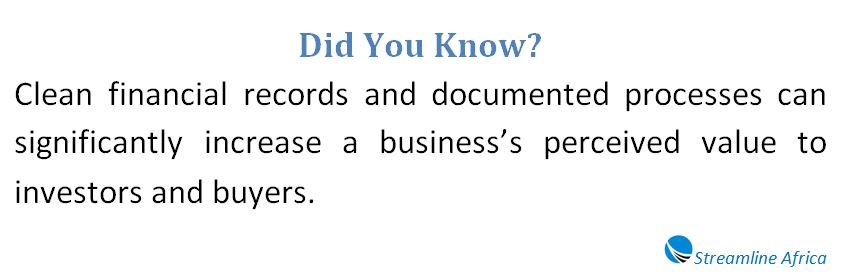
The most accurate valuations come from businesses that maintain consistent records, defined processes, and stable management structures. Owners can make the process smoother and more meaningful by:
- keeping detailed financial statements
- separating personal and business transactions
- documenting internal procedures
- reducing dependency on the owner in day-to-day operations
These steps do more than support a valuation—they also strengthen the business itself. A well-documented, systematic operation tends to be more efficient, scalable, and appealing to investors or buyers.
Key Takeaway
A business valuation is more than a document—it is an essential tool for better decision-making. It equips owners with the insights they need to grow, adapt, and protect their companies. While the process has its complexities, the information gained helps you operate with intention rather than guesswork.
Whether you are planning for expansion, preparing for eventual succession, or simply wanting to understand your company’s position, a valuation offers the clarity required to move confidently toward long-term success.