Every organization, regardless of size, must keep a close watch on its internal processes to detect errors, irregularities, or fraudulent activity. Detective controls play a key role in this. They are mechanisms designed to identify issues that have already taken place so that corrective measures can be implemented promptly. While preventive controls stop problems from happening, detective controls uncover them after the fact, ensuring that no oversight goes unnoticed.
These controls are a vital part of a company’s internal control framework, safeguarding financial integrity, legal compliance, and operational efficiency. When designed and used effectively, they help companies identify and address small errors before they grow into large, costly issues.
What Are Detective Controls?
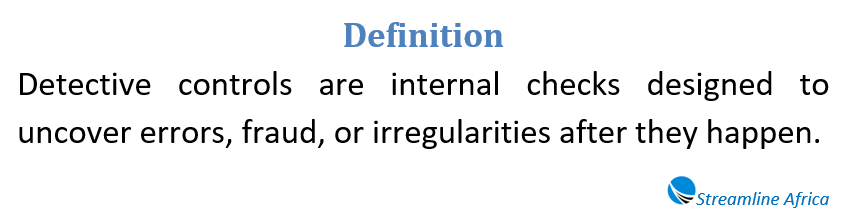
A detective control is a management or accounting mechanism aimed at identifying errors, discrepancies, or misconduct that may have occurred in a company’s operations. They are not meant to stop a mistake from happening but to catch it after it occurs, allowing management to take immediate corrective action.
Detective controls function as a company’s “safety net,” ensuring that preventive systems are working as intended. For instance, a physical count of inventory at the end of the month ensures that the recorded stock aligns with what is physically present. Any difference between the two indicates an error or possible fraud.
These controls serve several functions, including verifying financial accuracy, detecting theft or fraud, improving accountability, and reinforcing transparency. For smaller businesses, direct supervision by management may act as an informal detective control, whereas large corporations often depend on structured audits and digital monitoring systems.

How Detective Controls Operate in Practice
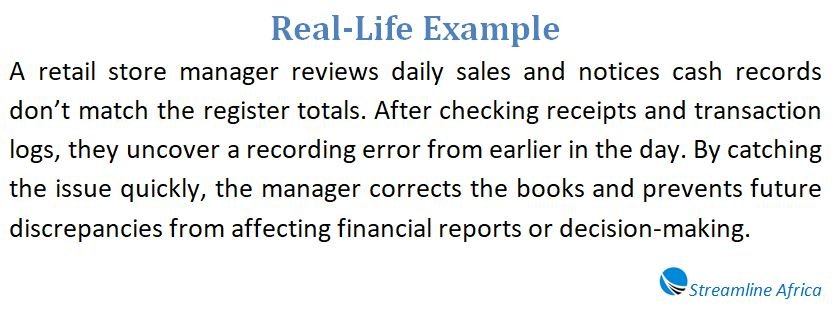
Detective controls are most effective when integrated into day-to-day business operations. They rely on reviewing, verifying, and comparing data to identify inconsistencies. This could include cross-checking accounts, reconciling records, or analyzing performance reports.
In a finance department, detective controls can help ensure that every transaction recorded in the books actually occurred and was properly authorized. By detecting errors early, they prevent financial misstatements, budget deviations, or compliance violations from snowballing into serious risks.
Common forms of detective controls include:
- Inventory checks: Physically counting stock to confirm that quantities match recorded figures.
- Reconciliation: Comparing two sets of data, such as bank statements and accounting records, to identify discrepancies.
- Performance analysis: Reviewing financial statements, budgets, or KPIs to highlight variances from expected results.
- Audit trails: Maintaining logs of transactions to trace activities and verify authenticity.
Such activities often require collaboration between managers, accountants, and auditors to ensure full coverage and accuracy.
Detective Controls vs. Preventive Controls
While both preventive and detective controls fall under the umbrella of internal control systems, they differ in purpose and timing. Preventive controls are proactive—they stop problems from occurring. Detective controls are reactive—they identify and analyze issues that have already happened.
For example, preventive controls include setting approval limits for purchases or implementing secure login systems to block unauthorized access. Detective controls, on the other hand, include reviewing expense reports to identify unapproved transactions or checking access logs to detect suspicious activity.
Preventive controls can save a company from potential losses by stopping errors early, but no system is foolproof. That’s why detective controls are indispensable. They ensure that if something slips through, it will not remain unnoticed for long. A well-designed internal control environment combines both approaches, creating a balanced defense mechanism that prevents, detects, and corrects issues efficiently.
The Role of Detective Controls in Financial Oversight
Detective controls are fundamental to financial accuracy and regulatory compliance. They help organizations confirm that reported figures reflect real transactions and legitimate activities. Financial departments depend on these controls to detect misstatements, omitted entries, or fraudulent adjustments.
For example, reconciling accounts receivable ensures that customer payments align with issued invoices. Similarly, reviewing expense claims ensures that all reimbursements are valid and supported by receipts. By continuously monitoring and verifying data, organizations can maintain confidence in their financial reporting and decision-making processes.
When errors are found, detective controls prompt corrective action—adjusting records, retraining employees, or tightening existing preventive measures. This cycle of detection and correction promotes continuous improvement and reduces operational risks over time.
Legal and Regulatory Importance of Detective Controls
The importance of detective controls grew significantly after the early 2000s corporate scandals involving companies like Enron and WorldCom. These events exposed how weak internal control systems could mislead investors and distort financial statements. In response, the United States introduced the Sarbanes-Oxley Act (SOX) of 2002, which mandated stricter financial oversight.
Under SOX, companies are required to establish, evaluate, and maintain effective internal controls over financial reporting. Executives are personally accountable for the accuracy of financial statements, and external auditors must assess the reliability of these systems. Detective controls became a cornerstone of compliance efforts because they verify that preventive systems are working and help reveal any wrongdoing or inefficiencies that might otherwise go unnoticed.
In practice, SOX reinforced the need for ongoing evaluation. Companies must regularly test their controls, document their findings, and ensure transparency in reporting. For investors and regulators, detective controls serve as assurance that financial disclosures are accurate and trustworthy.
When Detective Controls Are Most Useful
Detective controls are most valuable when an issue has already occurred or when data discrepancies are suspected. They are essential during:
- Post-transaction reviews: Identifying irregularities in processed payments or purchases.
- Error investigation: Determining the cause of accounting mismatches or missing entries.
- Compliance checks: Ensuring that internal policies and external regulations have been followed.
- Fraud detection: Spotting patterns of misuse, duplicate billing, or unauthorized spending.
They also prove vital after system upgrades or procedural changes, where errors may unintentionally occur due to human or technical factors. Detective controls help organizations catch these mistakes before they escalate into major financial or legal challenges.
Who Oversees Detective Controls?
Responsibility for internal controls ultimately lies with management. Leaders are expected to design, implement, and maintain these mechanisms to ensure accuracy and compliance. This includes assigning clear accountability to employees, providing training, and ensuring access to necessary tools.
Management also works closely with auditors—both internal and external—who assess whether detective controls are effective. These audits provide independent verification, ensuring that management’s oversight remains transparent and unbiased. While the finance team usually handles the day-to-day execution, senior executives bear legal and ethical responsibility for their adequacy.
The Purpose Behind Detective Controls
The main goal of detective controls is to uncover and correct errors before they cause lasting harm. If mistakes go unnoticed, they can lead to financial misrepresentation, reputational damage, regulatory penalties, or even legal action. Detective controls act as a warning system, alerting management to irregularities in time to respond appropriately.
For example, if a company discovers through its detective review that its reported inventory levels are overstated, immediate correction prevents misleading shareholders or misallocating resources. Thus, these controls don’t just fix numbers—they preserve integrity, trust, and organizational reputation.
Manual vs. Automated Detective Controls
Detective controls can be manual or automated, depending on a company’s size and resources.
Manual controls involve human review, such as a manager checking daily sales reports for anomalies or an accountant verifying cash receipts. These controls provide flexibility and personal judgment but are time-consuming and prone to human error.
Automated controls use technology to monitor transactions, flag unusual activity, and generate reports in real-time. They offer consistency, scalability, and speed—essential for larger organizations handling vast volumes of data. Many modern businesses combine both approaches, using automation for efficiency and human oversight for contextual analysis.
Real-World Examples of Detective Controls
Here are a few scenarios that illustrate detective controls in action:
- Bank reconciliation: Comparing company bank statements with internal ledgers to identify missing or duplicate transactions.
- Inventory audits: Conducting physical stock counts to verify that records match actual goods on hand.
- Expense verification: Reviewing employee expense claims for accuracy and legitimacy.
- Access logs: Monitoring system entry logs to identify unauthorized attempts or unusual login times.
- Budget performance reviews: Comparing actual results with budgeted figures to spot overspending or inefficiencies.
These practices reinforce accountability and transparency while helping organizations quickly identify and fix problems.
Why Detective Controls Matter for Business Success
Detective controls are not just compliance tools—they’re strategic assets. They help organizations maintain financial discipline, build investor confidence, and strengthen internal governance. Detecting problems early reduces the cost of correction, safeguards company assets, and supports better decision-making.
Without detective controls, even minor issues can go unnoticed and accumulate into significant financial discrepancies. Companies with strong control systems tend to demonstrate higher credibility, lower fraud risk, and more efficient operations.
Final Take-away
Detective controls form the backbone of a company’s defense against errors and fraud. They operate after the fact but serve a critical purpose—identifying weaknesses in systems, correcting inaccuracies, and ensuring the organization’s processes remain sound. When combined with preventive controls, they create a balanced internal control framework that prevents future problems and swiftly resolves past ones.
In today’s business environment, where data accuracy and compliance are paramount, detective controls are indispensable. They not only protect company assets but also uphold the transparency, accountability, and integrity that every successful organization depends on.
Detective Controls – FAQs
Why should a business owner care about detective controls?
Because they protect the company’s finances, reputation, and compliance. They ensure that mistakes, theft, or fraud are discovered before they cause serious financial or legal consequences.
How do detective controls differ from preventive controls?
Preventive controls stop problems before they happen—like approval systems or security passwords. Detective controls find issues after they occur—like reconciliations, audits, or inventory counts. Both are essential for balanced risk management.
What are some simple examples of detective controls?
Examples include reconciling bank statements, reviewing expense reports, conducting inventory counts, and monitoring system access logs. These activities highlight inconsistencies that require attention.
Can small businesses use detective controls effectively?
Absolutely. Even small companies can benefit through simple measures like owner reviews, cross-checking receipts, or monthly cash reconciliations. Direct oversight often serves as a strong detective control.
What happens if a business skips detective controls?
Without them, errors or fraud may go undetected for months or years. This can lead to financial losses, inaccurate reporting, loss of investor trust, or even legal penalties.
How often should detective controls be performed?
Frequency depends on the size and complexity of operations. Regular checks—such as monthly reconciliations or quarterly audits—help maintain accuracy and prevent small problems from growing.
Who should oversee detective controls?
While accountants and auditors perform the checks, ultimate responsibility lies with business owners and senior managers. They must ensure systems are implemented, monitored, and reviewed consistently.
Are detective controls required by law?
For public companies, yes—regulations like the Sarbanes-Oxley Act require strong internal controls. For smaller private businesses, they’re not legally required but are still essential for financial integrity and risk management.
How can technology improve detective controls?
Automation tools can flag unusual transactions, generate alerts for mismatched data, and speed up reconciliations. This allows owners to identify issues faster and make informed decisions.
What should a business owner do after an error is detected?
Act quickly. Investigate the cause, correct the records, and adjust systems or staff training to prevent recurrence. Timely response limits losses and protects credibility.
Why are detective controls vital for long-term success?
They help businesses build trust, maintain accuracy, and strengthen accountability. By catching issues early and fixing them efficiently, owners protect both their bottom line and their brand reputation.