

Economic stability and household financial well-being are strongly influenced by changes in the cost of goods and services. One of the most widely recognized tools for tracking these changes is the Consumer Price Index, often shortened to CPI. This economic indicator plays a central role in understanding inflation, guiding policy decisions, and helping individuals and businesses plan for the future. By examining how prices evolve over time, CPI provides insight into whether the purchasing power of money is strengthening or weakening, making it an essential concept in both economics and everyday financial awareness.
Defining the Consumer Price Index
The Consumer Price Index is a statistical measure designed to track the average change in prices that households pay for everyday goods and services over time. It serves as an indicator of inflation by observing the cost of a representative group of items that consumers typically purchase. Economists and government agencies rely on CPI to monitor shifts in consumer expenses and evaluate how price movements affect living standards.
At its core, CPI captures how the overall price level in an economy changes. Instead of focusing on a single product, it monitors a broad range of items such as food, transportation, healthcare, and housing. When the CPI rises, it generally means the cost of living has increased because households must spend more to maintain the same lifestyle. Conversely, when the CPI falls or grows slowly, it may indicate price stability or reduced inflationary pressure.
Beyond measuring price changes, CPI also helps economists understand how consumer purchasing power fluctuates. As prices increase faster than income, households can afford fewer goods and services, reducing their standard of living. Therefore, CPI is often used as a benchmark for wage adjustments, pension increases, and social benefit payments.
How CPI Reflects Inflation and Cost of Living
Inflation refers to the sustained increase in the general price level of goods and services within an economy. CPI is one of the primary tools used to measure inflation because it tracks price changes in items people purchase regularly. By observing the percentage change in CPI from one period to another, economists can determine whether inflation is rising, falling, or remaining stable.
When CPI increases over time, it suggests that consumers are paying more for everyday items, indicating inflation. On the other hand, if CPI decreases, it may signal deflation, where prices decline across the economy. Stable CPI growth often reflects balanced economic conditions, where price changes are manageable for both consumers and businesses.
The index also provides insight into the cost of living, which refers to the amount of money required to maintain a particular lifestyle. Since CPI monitors essential expenses like rent, groceries, and transportation, it serves as a reliable approximation of how expensive it is to live in a specific region or country. Governments frequently use CPI data to evaluate economic health and implement policies aimed at stabilizing prices.

The Concept of the Market Basket
A central feature of CPI is the use of a market basket, which represents a collection of goods and services commonly purchased by households. This basket is designed to reflect real consumer spending patterns and includes products such as food items, clothing, housing costs, medical services, and entertainment expenses.
The market basket acts as a benchmark for measuring price changes. Instead of tracking every available product, economists select representative items that reflect typical household consumption. By comparing the cost of this basket across different periods, they can determine how overall prices have shifted.
The basket is not static and evolves over time. As consumer preferences change or new products become popular, statistical agencies update the basket to ensure it accurately represents modern spending habits. This process ensures CPI remains relevant and reflective of current economic realities.
Categories Included in CPI Calculations
The goods and services included in CPI are organized into broad categories to capture diverse areas of household spending. These categories typically include food and beverages, housing, clothing, transportation, medical care, recreation, education, and various other goods and services.
Housing expenses often account for a significant portion of the CPI because shelter is a major component of household budgets. Similarly, transportation costs, including fuel and vehicle maintenance, play a vital role in influencing CPI movements. Healthcare and education costs also contribute to the index, reflecting essential services required for maintaining quality of life.
Each category contains numerous subcategories and individual items. For example, food includes groceries and restaurant meals, while transportation encompasses fuel prices, public transport fares, and vehicle purchases. By combining these diverse elements, CPI offers a comprehensive view of consumer spending patterns.
The Role of Weighting in CPI
Not all goods and services contribute equally to CPI calculations. Some items carry greater significance because households spend a larger share of their income on them. To reflect this reality, each item in the CPI basket is assigned a weight based on its importance in overall consumer spending.
For instance, housing expenses typically receive a higher weight because they represent a substantial portion of household expenditure. In contrast, smaller expenses like personal care products may have lower weights. By applying these weights, economists ensure the CPI accurately represents real spending behavior.
Weighting is determined using household expenditure surveys that analyze how consumers allocate their income across different categories. These surveys help statistical agencies adjust the CPI structure periodically, ensuring it reflects evolving consumption patterns. Changes in spending habits, such as increased reliance on digital services, may lead to adjustments in weighting over time.
Steps Involved in Calculating CPI
The calculation of CPI involves several systematic steps that ensure accuracy and reliability. The first step is selecting the market basket, which involves identifying goods and services representative of typical consumer spending. Once the basket is established, statistical agencies collect price data for each item from multiple locations and retailers.
After collecting price data, economists assign weights to each item based on household spending patterns. These weights reflect how much influence each item has on the overall index. The weighted price changes are then combined to produce the final CPI figure.
CPI is usually expressed as an index number relative to a base year. The base year serves as a reference point, with its index value typically set at 100. Changes in CPI values over time show how prices have increased or decreased compared to the base year. For example, if the CPI rises from 100 to 110, it indicates that the average price level has increased by 10 percent since the base year.
Importance of CPI in Economic Decision-Making
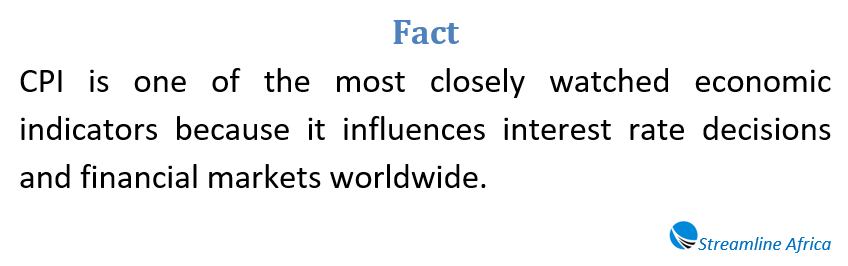
CPI plays a crucial role in guiding economic policies and financial planning. Governments and central banks rely on CPI data to develop monetary policies aimed at controlling inflation. When CPI indicates rising inflation, policymakers may increase interest rates to reduce spending and stabilize prices. Conversely, if inflation is low, authorities may reduce interest rates to stimulate economic activity.
Businesses also use CPI data to adjust pricing strategies and forecast demand. Understanding inflation trends helps companies determine production costs and set competitive prices. Employees and labor unions rely on CPI when negotiating wages, ensuring salary increases keep pace with rising living costs.
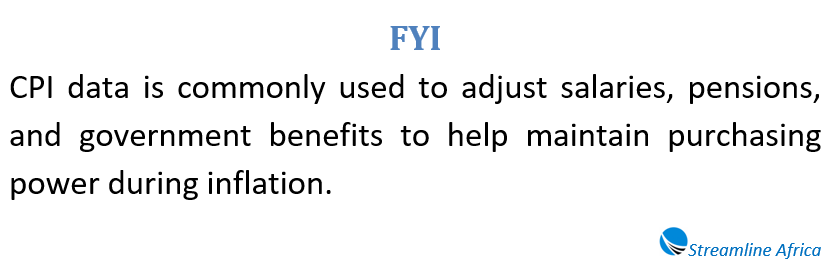
Additionally, CPI is used to adjust social welfare benefits, pensions, and tax brackets. By linking these financial adjustments to CPI, governments aim to protect individuals from losing purchasing power due to inflation.
Limitations and Criticisms of CPI
Despite its widespread use, CPI has certain limitations that economists often discuss. One key criticism is that CPI may not perfectly reflect individual spending habits. Since the index represents an average household, it cannot account for differences in lifestyle, location, or income levels. Some households may experience higher or lower inflation depending on their spending patterns.
Another limitation is that CPI relies on a fixed basket of goods, which may not fully capture consumer behavior changes. When prices increase significantly for certain items, consumers often substitute them with cheaper alternatives. However, a fixed basket may not immediately reflect these substitutions, potentially overstating inflation.
CPI also excludes certain investment items such as stocks and real estate because they are considered savings rather than consumption expenses. While this approach maintains focus on daily living costs, it may overlook price changes that significantly influence overall financial well-being.
Differences Between CPI and Other Inflation Measures
While CPI is widely used, it is not the only measure of inflation. Other indicators, such as the Producer Price Index and the Gross Domestic Product deflator, provide alternative perspectives on price changes. CPI focuses on prices paid by consumers, while the Producer Price Index measures price changes experienced by producers during earlier stages of production.
Another inflation indicator, the Personal Consumption Expenditures index, measures price changes across a broader range of consumer spending, including expenses paid by third parties such as employers and government programs. These alternative indicators help economists analyze inflation from different angles, providing a more comprehensive understanding of economic trends.
Real-World Applications of CPI
CPI influences numerous aspects of daily life and economic policy. Governments use CPI to adjust minimum wages, pension payments, and public sector salaries. Businesses rely on CPI trends when negotiating contracts and planning long-term investments. Financial institutions use CPI data to set interest rates and evaluate economic stability.
For individuals, CPI helps in budgeting and financial planning. Understanding inflation trends allows households to anticipate rising expenses and make informed decisions about saving and spending. CPI data also assists investors in evaluating the real return on investments by comparing earnings against inflation rates.
The Evolution of CPI Over Time
As economies evolve, CPI methodologies also undergo refinement. Statistical agencies regularly update the market basket, incorporate new technologies for price data collection, and adjust weighting systems to reflect modern consumption patterns. These improvements help ensure CPI remains a reliable indicator of inflation and cost of living changes.
Technological advancements have enhanced CPI accuracy by enabling real-time data collection and analysis. Online retail platforms, digital payment systems, and scanner data provide detailed information about consumer purchases, allowing economists to refine CPI calculations and improve inflation measurement.
Conclusion
The Consumer Price Index remains one of the most significant economic indicators for understanding inflation and living costs. By tracking changes in the prices of everyday goods and services, CPI provides valuable insights into economic conditions, purchasing power, and household financial stability. Its structured methodology, including the use of a market basket, weighted calculations, and periodic updates, ensures that it reflects real consumer spending patterns.
Although CPI has certain limitations, its influence on policy decisions, wage adjustments, and economic planning makes it indispensable. For governments, businesses, and individuals alike, CPI serves as a guide for navigating changing economic environments. By understanding how CPI works and what it measures, people can better interpret inflation trends and make informed financial decisions in an ever-changing economy.
Consumer Price Index – Frequently Asked Questions
What Is the Consumer Price Index (CPI)?
The Consumer Price Index is an economic indicator that tracks how the average prices of goods and services purchased by households change over time. It reflects everyday living expenses such as food, housing, healthcare, and transportation, helping economists and policymakers understand inflation and its impact on consumers.
Why Is CPI Important in Everyday Life?
CPI is widely used to measure inflation and determine how much the cost of living is rising or falling. Governments and organizations rely on it when adjusting wages, pensions, and benefits to ensure that income keeps pace with price increases and protects purchasing power.
How Does CPI Measure Inflation?
CPI calculates inflation by comparing the price of a fixed basket of commonly purchased goods and services across different periods. When the average cost of this basket rises, inflation is occurring; when it falls, prices are stabilizing or decreasing.
What Is a Market Basket in CPI?
A market basket is a selected collection of goods and services that represent typical household purchases. Economists track price changes within this basket to determine overall price trends and reflect consumer spending habits realistically.
Why Do Some Items Carry More Weight in CPI?
Each item in the CPI basket is assigned a weight based on how much households spend on it. For example, housing costs often receive greater importance because they represent a large share of household budgets, while smaller expenses receive less influence in the index calculation.
How Is CPI Calculated Step by Step?
Statistical agencies first select goods and services for the basket, collect price data regularly, and apply spending weights to reflect consumer behavior. The weighted price changes are then combined to produce an index number that shows how prices have changed compared to a base period.
What Are the Main Categories Included in CPI?
CPI generally covers essential spending areas such as food, housing, transportation, healthcare, recreation, and education. By combining these categories, CPI provides a comprehensive picture of changes in daily living expenses.
Does CPI Have Any Limitations?
Yes, CPI represents an average household and may not reflect the exact spending patterns of every individual. It also uses a fixed basket approach, which may not fully capture how consumers switch to cheaper alternatives when prices rise sharply.
How Is CPI Different from Other Inflation Measures?
CPI focuses on out-of-pocket spending by consumers, while measures such as the Personal Consumption Expenditures index include expenses paid on behalf of households and may adjust spending weights more frequently. These differences can lead to slightly different inflation readings.