
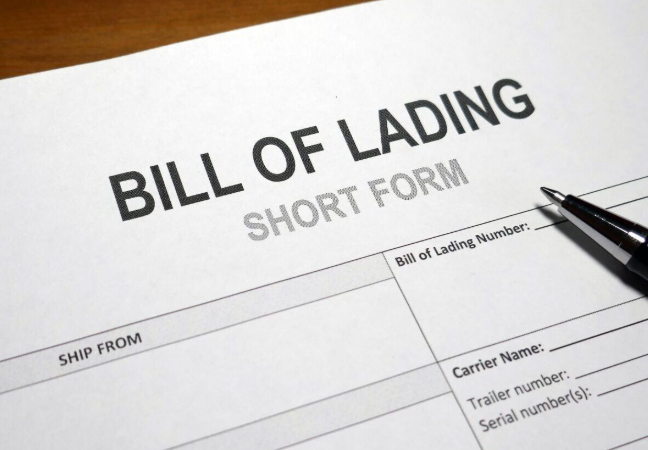
A bill of lading is one of the most vital documents in international trade and shipping. It serves as a bridge between the shipper, the carrier, and the consignee, confirming that goods have been received and outlining the terms under which they’ll be transported. More than just paperwork, it’s a legally binding document that represents ownership and acts as evidence of the contract between all involved parties.
Originally developed for maritime trade, the bill of lading has evolved to cover land, air, and multimodal shipments. Today, whether cargo moves across the ocean, by truck, or by rail, this document ensures transparency, accountability, and traceability throughout the journey.
The Core Purpose of a Bill of Lading
A bill of lading performs three critical functions. First, it serves as a receipt, confirming that the carrier has received the goods in good condition and in the quantity listed. Second, it provides evidence of the contract of carriage, outlining key terms such as the port of loading, destination, freight charges, and liabilities. Finally, it acts as a document of title, meaning it represents ownership of the goods and allows the rightful holder to claim them at the destination.
Without it, the transfer of goods across borders would be chaotic. It enables trade finance processes like letters of credit, facilitates customs clearance, and prevents unauthorized access to shipments. Essentially, whoever holds the original bill of lading controls the cargo.

A Glimpse Into History
Although the concept of documenting shipped goods can be traced back to ancient times, the modern bill of lading emerged during the medieval period, when merchants needed a verifiable proof of ownership and receipt for cargo. As global trade expanded, especially during the age of mercantilism, the bill of lading became indispensable. It offered merchants confidence that goods loaded onto ships in one port would arrive safely and could be traded, sold, or financed even before reaching their destination.
Its name comes from the Old English word hladan, meaning “to load.” In essence, “bill of lading” literally means a document acknowledging the loading of goods. Over centuries, as maritime law matured, the bill of lading was refined to serve legal, financial, and commercial purposes.
How the Bill of Lading Works in Practice
A typical transaction follows three steps. First, the shipper delivers the goods to a carrier and receives a bill of lading as proof of shipment. Second, the shipper sends this document—often through a bank—to the buyer’s financial institution as part of payment arrangements. Finally, the buyer presents the bill of lading to the carrier to claim the goods once they arrive.
In this process, the document ensures that the buyer cannot take delivery without fulfilling payment obligations, while the seller cannot collect payment without proving shipment. This delicate balance of control and accountability underpins global trade.
Types of Bills of Lading
Different trade conditions require different types of bills of lading, each offering unique legal and operational implications.
Straight Bill of Lading
This is a nonnegotiable document issued when the goods are consigned directly to a specific buyer. It cannot be transferred to another party, making it ideal for transactions where payment has already been made or where ownership transfer during transit isn’t required. The carrier is obligated to release the cargo only to the named consignee, ensuring secure delivery.
Order Bill of Lading
An order bill is negotiable and can be transferred to another party through endorsement. It typically includes the phrase “to the order of [name]” and allows ownership to be passed along while the goods are still in transit. This flexibility makes it common in international trade, especially when goods are sold multiple times before arrival or used as collateral under letters of credit.
Bearer Bill of Lading
The bearer bill is the most flexible and risky form. Whoever physically possesses the document owns the goods. It offers anonymity and ease of transfer but also poses significant security risks if lost or stolen. Because of these vulnerabilities, it’s rarely used in modern trade except in special cases requiring quick or confidential transfer of ownership.
Received-for-Shipment and On-Board Bills
A received-for-shipment bill confirms that the carrier has accepted the goods but hasn’t yet loaded them onto the vessel. Once loading occurs, it can be converted into an on-board bill, which certifies that the goods are physically on the ship. The latter carries more weight in documentary credit transactions and is often required under letters of credit.
Charter Party Bill of Lading
Used when an entire ship or large portion of its capacity is chartered, this type references the charter contract’s terms. It is often used by bulk cargo traders like mining or oil companies and can combine multiple transport modes under one document, simplifying logistics for large shipments.
Read Also: Cost, Insurance, and Freight (CIF): A Smart Trader’s Guide to Safer Shipping
Legal Role and Contractual Evidence
The bill of lading acts as tangible proof of the contract of carriage between the shipper and the carrier. Even though the contract itself might have been agreed upon earlier—perhaps by email or over the phone—the bill of lading formalizes those terms and provides admissible evidence in case of disputes.
When the document is transferred to a third party, such as a bank or buyer, it becomes conclusive evidence of the cargo’s existence and condition. For instance, a “clean” bill of lading means the goods were shipped in perfect order, while a “claused” or “dirty” one notes discrepancies like damaged packaging or missing items. Banks usually reject dirty bills unless the buyer accepts a discounted price or amended terms.
As a Document of Title
A crucial legal function of the bill of lading is that it operates as a document of title. This means the holder of the original bill—often the buyer or their financial representative—has legal ownership of the goods described in it. The carrier cannot release the cargo to anyone else without this document.
However, this title is limited by the “nemo dat” rule, meaning no one can transfer ownership rights they do not legally possess. If the original owner’s claim is invalid—say, due to fraud or unpaid debts—the bill cannot magically confer legitimate ownership to another party.
The Shift to Sea Waybills and Electronic Systems
While the bill of lading has long been the cornerstone of maritime trade, global logistics now rely increasingly on sea waybills and electronic documentation. A sea waybill, unlike a bill of lading, is nonnegotiable and does not transfer ownership. It merely entitles the named consignee to take possession of the goods.
The use of sea waybills reduces administrative delays because goods can be released upon arrival without waiting for original paper documents to catch up. With globalization pushing for faster turnaround times, digital systems have become essential. Electronic Data Interchange (EDI) platforms now allow carriers, banks, and shippers to share verified digital copies securely and instantaneously.
Electronic Bills of Lading (eBOLs)
The digital transformation of trade documentation has led to the emergence of electronic bills of lading (eBOLs), which mirror the legal and operational status of their paper equivalents. These digital documents perform the same three roles—receipt, contract evidence, and title—but with greater efficiency and lower risk of loss or forgery.
International frameworks such as the UNCITRAL Model Law on Electronic Transferable Records provide legal recognition for eBOLs, adopted in countries like Singapore, Bahrain, and Germany. The United Kingdom also legalized their use in 2023 through the Electronic Trade Documents Act, marking a milestone in modernizing trade processes.
Despite these advancements, adoption remains slow. In 2022, less than 3% of the estimated 45 million bills of lading worldwide were issued electronically. Analysts suggest that digitizing this one document could save the industry billions of dollars annually by reducing processing time, fraud risk, and administrative overhead.
Real-World Examples
Imagine a Chinese electronics company shipping hundreds of televisions and smartphones to an American retailer. The carrier issues a bill of lading specifying the cargo’s details, ship name, and destination. This document ensures the goods are traceable, confirms the contract’s existence, and authorizes the buyer to collect the shipment upon arrival.
Or consider a multinational mining firm exporting bulk ore from South America to Europe. Using a charter-party bill of lading, the company outlines precise terms for vessel use, loading, and freight payment. This single document covers multiple transport legs—sea, rail, and road—simplifying coordination across borders.
Even domestically, bills of lading are vital. A restaurant chain receiving daily deliveries of perishables from suppliers uses a bill of lading to verify that the right items and quantities have arrived before approving payments.
Best Practices for Managing Bills of Lading
Managing these documents effectively can prevent financial losses and delays. Every bill of lading should be carefully reviewed to confirm the accuracy of product descriptions, quantities, and signatures from both carrier and shipper.
Companies should maintain clear audit trails, regularly match freight bills with bills of lading to prevent discrepancies, and store these documents for at least five years for potential audits. Staff training is essential—employees must understand the document’s legal significance and the severe implications of errors or fraud.
Where possible, businesses should adopt digital bills of lading with secure verification systems and dual authorization features. These digital solutions offer traceability, reduce fraud risks, and allow faster release of goods.
Conclusion
The bill of lading stands as one of the oldest yet most indispensable instruments in global commerce. It represents trust between trading partners, ensures goods reach their rightful owner, and provides a legal backbone for financial transactions.
As trade continues to modernize, the shift toward electronic versions promises faster, safer, and more sustainable logistics. But whether on paper or in pixels, the bill of lading remains the lifeblood of international shipping—proof that commerce still depends on a single piece of documentation linking oceans, continents, and people in trade.
Frequently Asked Questions about Bill of Lading
Why is a bill of lading important in trade?
It protects both buyer and seller by confirming that the goods have been shipped as agreed. It’s also required for payment under trade finance arrangements and helps resolve disputes over damaged or missing cargo.
Who issues a bill of lading?
The carrier or their authorized agent issues the bill of lading once the goods are received for shipment. This confirms the cargo’s details and condition before transport begins.
What are the three main functions of a bill of lading?
It functions as a receipt for goods, evidence of the contract between shipper and carrier, and a document of title granting ownership rights to the holder.
How does a bill of lading support payment in international trade?
Buyers and sellers often exchange the bill of lading through their banks. The seller’s bank receives payment only after confirming shipment, while the buyer’s bank releases the document once payment obligations are met.

What is the difference between a clean and dirty bill of lading?
A clean bill means the goods were loaded in perfect condition with no discrepancies. A dirty or claused bill indicates damage, missing items, or differences from the contract, which can delay or reduce payment.
What are the main types of bills of lading?
The key types include straight (non-transferable), order (transferable by endorsement), bearer (transferable by possession), received-for-shipment, on-board, and charter-party bills, each suited to different trade needs.
What is a sea waybill, and how does it differ from a bill of lading?
A sea waybill serves as proof of shipment but doesn’t transfer ownership of goods. It’s nonnegotiable and allows the consignee to collect cargo without presenting an original document, making it faster but less flexible.
How does an electronic bill of lading work?
An electronic bill of lading (eBOL) replaces paper with a digital document that carries the same legal authority. It allows for secure, instant sharing between shippers, banks, and carriers while reducing fraud and paperwork delays.
What legal frameworks govern bills of lading?
International trade is guided by conventions such as the Hague-Visby Rules, Hamburg Rules, and Rotterdam Rules, which define carrier responsibilities and shipper rights. Many countries also have national laws like the UK’s Carriage of Goods by Sea Act.
What should businesses check before signing a bill of lading?
They should verify shipment details—quantities, weights, condition, and consignee information—and ensure all parties sign correctly. Mistakes or omissions can lead to disputes or loss of claim rights.
How is the bill of lading evolving in modern trade?
While still foundational in global shipping, the bill of lading is rapidly going digital. Electronic and express-release systems are replacing paper, allowing faster clearance, cost savings, and greater transparency in logistics.