
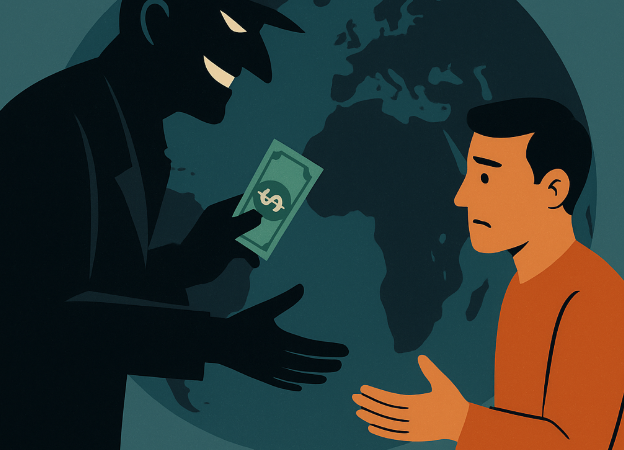
Across the globe, certain individuals and groups operate outside formal banking systems by offering unauthorized, high-interest loans. These operators, commonly known as loan sharks, exploit financially vulnerable people, often using threats, coercion, and physical intimidation to recover debts. While their methods may vary depending on the cultural or legal landscape, the core pattern remains the same: exploitative lending underpinned by fear and control.

Nature and Operation of Loan Sharks
Loan sharks typically target individuals with limited access to legitimate financial services. They may charge outrageously high interest rates, far exceeding what is legally permitted. Because they operate outside legal systems, they are unable to pursue defaulters through courts, and instead resort to threats, harassment, or violence. This distinguishes them from aggressive but legal lenders such as payday loan companies, which may be exploitative but still function within regulatory frameworks.
Real-Life Story
A small business owner facing urgent cash flow problems accepted a quick loan from an informal lender after being denied bank financing. The money arrived fast, but repayments came with extremely high, unclear interest charges and hidden penalties. When payments became difficult, the lender began making threats and showing up at the business premises. The pressure forced the owner to redirect operating funds toward the debt, worsening financial struggles. Eventually, the owner sought help from a licensed financial advisor and refinanced through a regulated lender, learning the risks of unverified borrowing.
Blurred Lines Between Legal and Illegal Lending
There is often a fine line between legal predatory lending and outright illegal loan sharking. In some jurisdictions, payday loans or similar services straddle the edge of legality, especially when the interest rates and penalties are extreme. What is legally acceptable in one country—or even one state—may be considered criminal in another, making the issue as much a matter of geography as ethics.
Loan Sharks Around the World
Japan’s “To-San” and “To-Go” Practices
In Japan, many informal lenders operate with minimal oversight. Unlicensed operators often charge effective annual rates that spiral into the millions of percent. Borrowers who are rejected by banks or consumer finance firms may turn to these lenders out of desperation, despite national laws that cap legal interest at 20%.
Malaysia and Singapore’s “Ah Longs”
In Southeast Asia, the term “Ah Long” refers to loan sharks who aggressively pursue repayment, often using public shame tactics like defacing property or placing intimidating messages on doors. These lenders frequently advertise by illegally posting flyers on public infrastructure. Their victims tend to be habitual gamblers or individuals in persistent financial crisis.
Kazakhstan’s Regulatory Response
Kazakhstan has implemented policies to reduce the prevalence of illegal lending. Since 2018, authorities have tightened the cap on total repayable interest and created centralized monitoring systems. These initiatives aim to protect borrowers from manipulation and help integrate micro-lenders into a more accountable financial framework.
Israel and Criminal Syndicates
In Israel, loan sharking is frequently associated with organized crime. Gangs often provide credit to people with no other borrowing options, leveraging the fear of violence rather than contractual enforcement to ensure repayment.
Ireland’s Enforcement Gap
Despite regulations, Ireland has faced criticism for its inadequate protection of vulnerable borrowers. Reports surfaced that many moneylenders issued illegal loans without consequence, exposing a significant gap in consumer financial protections.
New Zealand’s Legal Crackdown
During the COVID-19 pandemic, New Zealand’s government advanced consumer protection legislation that banned excessive interest and fees. The result was a dramatic drop in high-cost lending, illustrating how regulatory frameworks can curb predatory financial behavior when enforced effectively.
Vietnam’s Shadow Lending Networks
Vietnam’s unregulated lending market thrives in urban and industrial zones, targeting low-income earners. Many of these operations are controlled by networks outside the country and function through pawn shops or digital platforms. Borrowers often become trapped in a cycle of ever-increasing debt and intimidation.
The United Kingdom’s Dual Crisis
Though payday loans are legal in the UK, many critics argue they amount to legalized exploitation. Simultaneously, illicit loan sharks continue to operate in low-income neighborhoods. Law enforcement treats this form of illegal lending as a serious crime, often tied to wider criminal enterprises.
Loan Sharking in Historical Context
Early American Practices
In late 19th-century America, small loans were largely unavailable from banks. Unscrupulous lenders filled the gap, targeting salaried workers and disguising illegal loans under official-looking documents. These contracts were unenforceable but useful for blackmail, public shaming, or employer pressure. The goal was to prey on borrowers’ ignorance and social vulnerability, not legal recourse.
Salary Lending and Employer Pressure
Because borrowers often worked for large firms, loan sharks could threaten to contact employers—many of whom had policies against hiring debt-ridden workers. This threat was usually enough to ensure repayment. The risk of job loss outweighed the burden of the debt for most borrowers.
Legislative Reform
In response to these practices, the Uniform Small Loan Law was created in 1917. It introduced licensing, capped interest rates, and banned abusive contractual terms. This legislation legitimized small loans while protecting consumers, and encouraged traditional banks to serve lower-income customers.
Rise of Violent Loan Sharks
The Mob’s Entrance
By the 1930s, organized crime syndicates like the Mafia and Irish Mob entered the lending market, using violence rather than legality or shame to collect payments. These groups provided credit to people considered too risky for legal lenders—gamblers, criminals, and small business owners in distress.
Informal but Ruthless
These operations often involved no paperwork, creating a flexible but dangerous system. Though physical harm was rare—since an injured borrower couldn’t repay—threats were common. More often, the consequence of non-payment was being permanently cut off from future loans, which was itself a powerful deterrent.
Gambling and Fencing Operations
Illegal gambling rings frequently partnered with loan sharks, allowing them to extend credit to bettors and rely on violence if debts weren’t paid. In some cases, these networks also served as fences, dealing in stolen goods to supplement their income and enforce control.
Mob-Controlled Loan Markets
20th-Century Expansion
In the post-Prohibition era, criminal groups diversified into lending as alcohol sales became legal again. From New York to Chicago, the reach of mob moneylenders expanded, although documentation suggests that this practice was concentrated in select cities for many years.
Evolving Clientele
Over time, gang-controlled lending operations shifted from wage earners to business owners and professional gamblers. Businesses provided physical assets for collateral and made for less labor-intensive operations. This evolution mirrored the decline of small-scale salary loans.
Exaggerated Reputation?
Despite media portrayals, some researchers argue that mob loan sharks used violence less frequently than assumed. In many cases, borrowers and lenders maintained transactional—even cooperative—relationships. Violence, while feared, was not always the primary enforcement tool.
Unlicensed but Not Always Criminal
Community-Based Lending Networks
Many small-scale lenders operated independently of organized crime, often in tight-knit immigrant communities. These lenders offered credit to people overlooked by mainstream finance—such as undocumented workers, day laborers, or others without formal financial histories.
Quietly Operating in the Shadows
While these lenders charged steep interest rates, they rarely used violence. Instead, they relied on peer pressure, asset seizure, or exclusion from future loans. These networks still exist in some low-income neighborhoods and have persisted even alongside the rise of corporate payday lending.
Legal Alternatives and Their Limits
Rise of Payday Loan Companies
As payday lenders began operating legally under state licenses, many of the traditional loan shark markets were absorbed into the formal economy. These companies, however, often charge high fees that mimic usurious rates in disguise. They profit from short repayment windows and repeat borrowing cycles.
Exploiting Loopholes
Some payday lenders claim to charge for services, not interest, allowing them to bypass laws regulating lending costs. This grey area enables them to function legally while extracting enormous sums from financially vulnerable individuals.
Conclusion: A Global Challenge
Loan sharking remains a persistent issue worldwide, driven by economic inequality, gaps in financial literacy, and limited access to legitimate credit. While some governments have made progress in curbing illegal lending, others continue to struggle against entrenched networks and social acceptance of informal debt.
Solutions must combine regulatory enforcement with education, affordable credit access, and robust financial support systems. Until then, loan sharks—whether violent or seemingly benign—will continue to fill the void left by inaccessible or inadequate formal finance.
Commonly Asked Questions about Loan Sharks
How Do Loan Sharks Operate?
They typically target people unable to access legal credit, charge extreme interest rates, and enforce repayment through fear or coercion.
Are Loan Sharks Always Illegal?
Yes, loan sharks operate outside the law. However, some legal lenders with predatory practices are often criticized as being “legal loan sharks.”
What Are the Risks of Borrowing from Loan Sharks?
Borrowers may face financial ruin, harassment, property damage, social embarrassment, or even physical harm for unpaid debts.
How Can You Identify a Loan Shark?
Warning signs include no paperwork, refusal to disclose interest rates, high-pressure tactics, and threats for non-payment.
Which Countries Are Most Affected by Loan Sharking?
Loan sharking is a global issue, prevalent in countries like Japan, Malaysia, Vietnam, Israel, and the United States.
How Can Businesses Protect Themselves?
By securing financing through regulated lenders, improving financial literacy, and reporting suspicious lenders to authorities.