

Accounting sits at the center of every organization’s financial decision-making process. Whether a small startup tracks daily expenses or a multinational corporation prepares consolidated financial statements, accounting determines how financial information is collected, interpreted, and communicated. Because financial data directly influences investors, governments, employees, and customers, the reliability of that information is crucial. Ethical conduct therefore becomes a guiding force that ensures accounting remains credible, responsible, and trustworthy.
Without ethical behavior, financial reports could easily be manipulated to hide losses, exaggerate profits, or mislead stakeholders. The accounting profession depends heavily on public confidence, and maintaining that confidence requires accountants to follow professional standards that emphasize honesty, fairness, and accountability. Ethical accounting does not merely protect organizations from mistakes; it also supports sustainable business growth and strengthens confidence in financial systems.
Understanding Ethical Foundations in Accounting
Ethics in accounting refers to a structured set of moral values and professional guidelines that govern how accountants handle financial information and conduct their duties. These standards exist to prevent misuse of financial data and to promote responsible reporting. Accounting organizations worldwide establish codes of conduct that outline acceptable professional behavior and decision-making standards.
These ethical frameworks emphasize several core principles, including honesty, impartial judgment, confidentiality, professional competence, and compliance with regulations. Such principles ensure accountants present financial data accurately while safeguarding sensitive information and avoiding conflicts of interest. Ethical conduct acts as a moral compass that helps professionals navigate complex financial decisions and challenging workplace pressures.
For example, imagine a financial analyst in Lagos working for a retail chain. If the company experiences declining revenue, management may feel tempted to delay reporting certain expenses to improve financial performance temporarily. Ethical guidelines would require the accountant to resist such pressure and report accurate figures, even if those numbers reflect poorly on short-term performance. This commitment preserves credibility and protects the company’s long-term reputation.

Ensuring Accuracy and Reliability in Financial Reporting
One of the primary purposes of ethical accounting is to guarantee the reliability of financial statements. Organizations rely on these reports to make operational decisions, evaluate profitability, and plan future strategies. Investors, lenders, and regulators also depend on accurate financial records to assess organizational performance and risk levels.
When accountants follow ethical standards, they ensure financial reports reflect the true financial condition of an organization. Consider a construction company in Nairobi preparing annual financial statements. If the accounting team inflates project income or hides cost overruns, stakeholders could make decisions based on misleading information. Ethical accounting ensures that financial reports present an honest view of business performance, helping stakeholders make informed decisions.
Reliable reporting also supports economic stability. Financial markets operate effectively only when participants trust the information presented. When unethical accounting practices occur, they can disrupt markets, cause investor losses, and damage economic confidence. Ethical behavior therefore plays a vital role in maintaining financial transparency across industries.
Building Trust Among Stakeholders
Trust is a valuable currency in business relationships, and ethical accounting helps maintain that trust. Investors rely on financial reports to decide whether to invest in a company. Employees depend on accurate payroll and financial planning to ensure job security. Governments require truthful reporting to collect taxes and monitor compliance with regulations.
Consider a technology startup in Kigali seeking funding from venture capital investors. If the startup presents transparent financial data supported by ethical accounting practices, investors are more likely to trust the company’s projections and growth potential. Conversely, if investors suspect manipulated financial information, they may withdraw support, limiting the company’s expansion opportunities.
Ethical accounting also enhances organizational reputation. Businesses known for transparency and accountability attract loyal customers and long-term investors. A strong ethical reputation can differentiate companies in competitive markets and contribute to sustained growth.
Preventing Fraud and Financial Misconduct
Financial fraud remains one of the most damaging consequences of unethical accounting. Fraudulent activities such as falsifying revenue, hiding liabilities, or manipulating financial statements can lead to significant financial losses and legal consequences. Ethical standards help prevent such misconduct by establishing clear expectations for professional behavior.
Take the example of a manufacturing company in Abidjan where internal auditors discover discrepancies in inventory records. Ethical accountants would investigate the discrepancies thoroughly and report any irregularities, even if those findings expose internal weaknesses. By addressing potential fraud early, the organization can correct errors, improve internal controls, and prevent further financial damage.
Fraud prevention also protects employees and customers. When organizations experience financial scandals, they often face layoffs, reduced investor confidence, and legal penalties. Ethical accounting practices reduce these risks by encouraging transparency and accountability at every level of financial reporting.
Safeguarding Confidential Financial Information
Accountants frequently handle highly sensitive information, including client financial records, salary data, investment strategies, and tax details. Protecting this information is a fundamental ethical responsibility. Confidentiality ensures that private financial data is not shared without proper authorization or legal obligation.
Imagine a financial consultant in Accra who manages payroll records for several corporate clients. Sharing employee salary information with unauthorized parties could damage trust and expose the company to legal action. Ethical guidelines require accountants to maintain strict confidentiality, using secure systems and professional judgment to protect client information.
Confidentiality also strengthens client relationships. When businesses trust accountants to protect sensitive financial data, they are more likely to maintain long-term professional partnerships. This trust supports collaboration and improves the overall effectiveness of financial management.
Supporting Professional Competence and Continuous Development
Ethical accounting extends beyond honesty and confidentiality; it also involves maintaining professional competence. Accountants must stay updated with evolving financial regulations, accounting standards, and technological advancements. Continuous learning ensures professionals provide accurate financial guidance and avoid errors caused by outdated knowledge.
For instance, a financial controller working in a renewable energy company in Dakar may need to understand new sustainability reporting standards. By investing in professional development and staying informed about regulatory changes, the accountant can provide accurate financial reporting and strategic advice that supports business expansion.
Professional competence also demonstrates accountability. Organizations depend on accountants to interpret complex financial data and provide reliable insights. Ethical standards encourage accountants to seek training, improve technical skills, and maintain professional integrity in their work.
Navigating Ethical Dilemmas in the Workplace
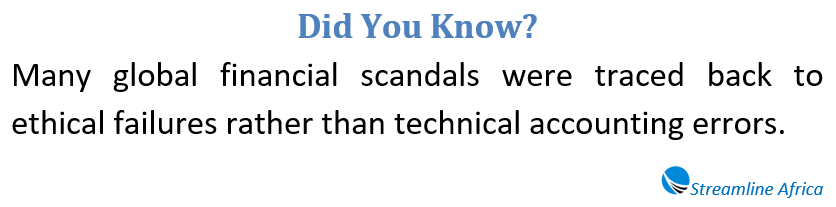
Accountants often face situations where ethical decisions are not straightforward. Workplace pressure, performance targets, and management expectations can create conflicts between professional responsibility and organizational goals. Ethical frameworks help accountants evaluate such dilemmas and make responsible decisions.
Consider a financial manager in Johannesburg who discovers that company executives want to delay reporting operational losses to maintain investor confidence. While complying with management might seem beneficial in the short term, ethical accounting requires transparency and accurate reporting. By following professional guidelines, the accountant protects stakeholders from misleading information and preserves professional credibility.
Organizations can support ethical decision-making by creating transparent corporate cultures. Encouraging open communication, providing ethics training, and protecting whistleblowers help employees report unethical behavior without fear of retaliation. These measures strengthen organizational accountability and reinforce ethical standards across departments.
Promoting Legal Compliance and Corporate Responsibility
Ethical accounting also ensures organizations comply with financial laws, tax regulations, and industry standards. Regulatory bodies establish financial reporting rules to protect investors and maintain fair business practices. When accountants follow ethical principles, they help organizations meet these regulatory requirements and avoid legal penalties.
For example, a pharmaceutical company in Cairo must comply with strict financial reporting laws related to research funding and product development costs. Ethical accountants ensure financial statements meet regulatory standards, reducing the risk of fines, lawsuits, or reputational damage. Legal compliance also demonstrates corporate responsibility, strengthening public confidence in business operations.
Furthermore, ethical accounting supports corporate governance. By promoting transparency, accountability, and accurate reporting, accountants help management make responsible financial decisions that benefit stakeholders and society as a whole.
Strengthening the Long-Term Sustainability of Organizations
Ethical accounting plays a crucial role in promoting sustainable business growth. Organizations that prioritize transparency and integrity often experience stronger investor confidence, improved financial stability, and increased employee satisfaction. Ethical practices encourage responsible resource management and strategic planning, supporting long-term organizational success.
Consider a family-owned agribusiness in Kumasi that implements transparent financial reporting and ethical budgeting practices. By maintaining honest financial records and building trust with suppliers, employees, and investors, the company creates a stable foundation for expansion into regional markets. Ethical accounting enables organizations to build lasting relationships that support sustainable development.
Additionally, ethical practices contribute to corporate social responsibility initiatives. Businesses that prioritize ethical financial reporting often invest in community development, environmental sustainability, and fair labor practices. These initiatives strengthen brand reputation and enhance organizational resilience in competitive markets.
The Future of Ethics in the Accounting Profession
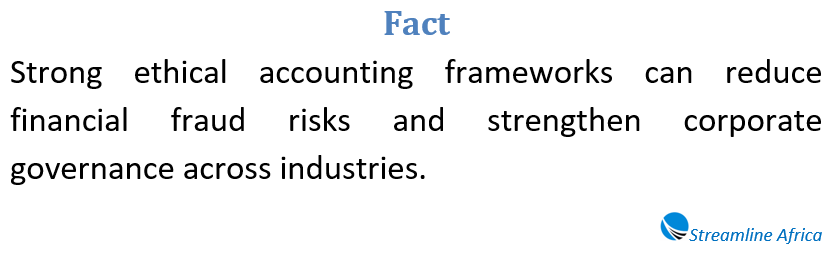
As technology transforms financial management through automation, artificial intelligence, and digital reporting systems, ethical accounting becomes even more important. While technology improves efficiency, it also introduces new challenges such as data security risks and automated financial manipulation. Accountants must apply ethical principles to ensure technology supports transparency rather than undermining accountability.
Future accountants will need to balance technical expertise with ethical judgment. Organizations increasingly seek professionals who can interpret financial data responsibly while maintaining integrity and professional independence. Ethical education, professional training, and regulatory oversight will continue to shape the evolution of accounting practices worldwide.
Conclusion
Ethical conduct forms the backbone of responsible accounting. By ensuring accurate financial reporting, preventing fraud, protecting confidential information, and supporting professional competence, ethical accounting strengthens trust between organizations and stakeholders. It also promotes legal compliance, corporate responsibility, and sustainable business growth.
In an increasingly complex financial environment, ethical accounting remains essential for preserving credibility and transparency. Organizations that prioritize ethical standards not only protect themselves from financial risks but also build lasting reputations that attract investors, customers, and talented professionals. As the accounting profession continues to evolve, maintaining ethical principles will remain a fundamental requirement for achieving long-term success and financial stability.