
Sales leaders in Ghana often point to economic swings, fluctuating exchange rates or demand shifts as the reason revenue targets slip. But uncertain conditions alone aren’t what cause missed numbers. The real issue is usually deeper: an undisciplined pipeline that doesn’t reflect actual buyer behaviour on the ground. The teams that consistently meet their forecasts—whether they’re selling in Accra, Kumasi or Takoradi—treat their pipeline like a disciplined, measurable system. When the pipeline is accurate and transparent, leaders make bolder decisions with far more confidence.
Across client conversations and field visits in Ghana, I’ve seen a clear trend. Sales cycles are taking longer than they used to, procurement departments are becoming more meticulous and CRM data is often incomplete. In these moments, Ghanaian businesses cannot rely on instinct or last-minute pushes. To navigate effectively, leaders need a pipeline grounded in reality and aligned with how buyers in the Ghanaian market actually behave.
Why Pipeline Discipline Matters More in Ghana’s Business Climate
Pipeline integrity isn’t just about data hygiene. In Ghana’s competitive environment—where customers compare suppliers quickly and budget approvals can stall unexpectedly—leaders need accurate visibility. Without it, even the best strategy becomes guesswork.
Years ago, I worked with a Ghanaian technology distributor struggling to grow its enterprise segment. At first glance, their pipeline looked impressive. But the conversion rate told a different story. Sellers had been encouraged to fill the CRM with leads and “prospects,” even when conversations had stalled or no real buying interest existed.
To fix the issue, we conducted a full pipeline audit. Over several days, opportunity-by-opportunity, we assessed what was real and what was hopeful thinking. Close to 40% of the pipeline disappeared. These weren’t opportunities; they were assumptions. But instead of causing panic, the clean-up brought clarity. Within two quarters, the region moved from lagging behind to outperforming all other segments.
The lesson applies everywhere in Ghana: bad data creates blind spots. When leaders know exactly what’s in the pipeline, sellers focus on real opportunities, and results follow faster.

Rigor Improves Planning, Accountability and Responsiveness
In Ghana’s unpredictable business environment—where public sector timelines can stretch and private companies tighten budgets without warning—teams need structure, not stress. Pipeline rigor strengthens planning, reinforces accountability and boosts agility. Research consistently shows that top-performing sales leaders excel at helping sellers structure and manage pipelines, and this translates directly into more accurate forecasts.
Pipeline rigor doesn’t slow teams down. It removes confusion and helps sellers spend time on opportunities that actually matter rather than chasing leads that will never close.
Build a Pipeline Structure You Can Defend With Confidence
For every opportunity in your CRM—whether it’s a bank in Accra, a factory in Tema or a school in Cape Coast—there should be three clear data points: a realistic revenue estimate, an honest close date and an evidence-based probability of closing. If these aren’t available, that opportunity shouldn’t be influencing your forecast.
Part of creating a defensible pipeline is eliminating deals that aren’t real. Many opportunities appear active but lack genuine buyer commitment, clear next steps or any movement from the customer. Ghanaian companies that regularly stress-test their pipeline catch these issues early and avoid inflated forecasts.
Artificial intelligence can now support this process. AI can flag Ghana-specific buying patterns—like long quiet periods after proposal submissions or inconsistent quote updates—helping managers challenge assumptions before quarter-end. AI can’t make decisions for you, but it equips leaders with better visibility.
How to Run Effective One-on-One Pipeline Reviews
Pipeline reviews work best when they are private, consistent and thorough. In Ghana, where relationship-driven selling is the norm, sellers may hesitate to admit when a deal is stalling. One-on-one reviews help eliminate the pressure to “look good” in front of the team and instead focus on reality.
These sessions should last 30 to 60 minutes, held every two weeks or monthly. Start with high-value, late-stage deals. After that, randomly inspect other opportunities to keep the entire pipeline honest. Each priority deal should be reviewed using four steps: confirm the stage using buyer actions, validate the financial value, verify the close date and assign probability based on evidence—not optimism.
AI-generated summaries can speed preparation, offering probability adjustments based on historical slip patterns and suggesting next steps. This supports a coaching environment rather than a confrontational one.
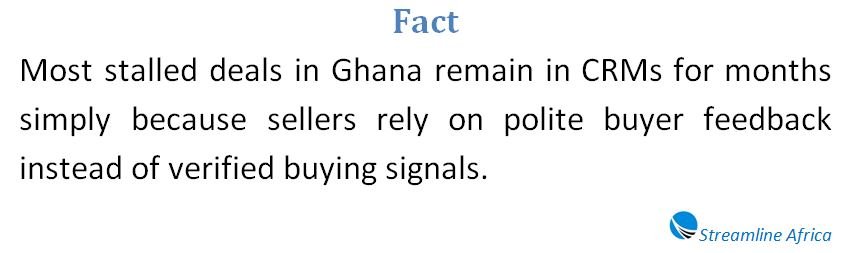
The benchmark for moving deals forward is buyer verification. Ask: Has the buyer confirmed their needs? Is there a clear buying process? Is the decision-maker identified? Has urgency been demonstrated? In Ghana’s relationship-focused selling culture, verbal interest doesn’t equal intent. Only verified actions move deals.
Forecast What Actually Happens in Ghana, Not What You Hope Will Happen
A realistic forecast accepts two truths: some deals will slip, and unexpected quick wins will appear. Ghana’s business landscape—where approvals can delay and sudden opportunities arise—makes this even more relevant. Instead of pretending every committed deal will close on time, use historical patterns. Subtract typical slippages and add average unexpected wins.
Large deals—especially government contracts or huge supply agreements—should be tracked separately. They can boost performance but shouldn’t be included in your core forecast because a single delay can distort your numbers.
Maintain a separate stalled-deal list. Many Ghanaian sellers keep hanging onto “maybe” deals because the relationship feels warm. But if there’s no movement, it shouldn’t contaminate your active pipeline. Keep re-engagement efforts going, but don’t use these deals to forecast.
Update the CRM during each review session. Waiting to “do it later” often means it never gets done.
Coaching Away Distortions That Commonly Happen in Ghana
Two patterns frequently distort Ghanaian sales forecasts: sandbagging and over-positivity. Some sellers understate progress to manage expectations. Others confuse polite buyer interest—common in Ghanaian business culture—with real purchasing intent.
You combat this through coaching grounded in data. Use history to guide probability, not gut feelings. Make buyer verification mandatory before stage advancement.
Top-performing sales managers in Ghana pair pipeline inspections with separate coaching sessions focused on deal strategy. This separation keeps one-on-one reviews efficient and prevents them from becoming lengthy discussions about tactics.
Putting the System to Work in a Typical Ghanaian Organization
Begin by establishing recurring biweekly pipeline reviews using the structured four-step inspection. Maintain a list of stalled deals and another for oversized opportunities so they don’t distort your main forecast. Document typical slip rates and quick-win patterns by segment, especially since different industries in Ghana behave differently. Update the CRM during each meeting so data stays trustworthy.
When Ghanaian sales teams manage their pipeline like a disciplined system instead of a hopeful collection of leads, accuracy improves, confidence grows and results follow naturally—even in unpredictable markets.
FAQs
Why Is Pipeline Discipline So Important In Ghana?
Because unpredictable markets, shifting buyer priorities and extended approval processes make accurate forecasting difficult without a clean, honest pipeline.
How Do Inaccurate Pipelines Hurt Sales Teams?
They create false confidence, waste seller time on deals that won’t close and mislead leaders into planning based on numbers that aren’t real.

What Makes A Pipeline “Real”?
A real pipeline includes only opportunities with verified buyer actions—clear needs, engaged decision-makers and defined timelines—not guesses or hope.
How Often Should Sales Leaders Run One-On-One Reviews?
Every two weeks or monthly. Consistent private reviews keep data current, expose risks early and help sellers stay accountable.
How Can AI Improve Pipeline Accuracy?
AI can spotlight red flags such as stalled communication, repeated date changes or missing buyer details, helping leaders challenge assumptions faster.
What Causes Forecast Distortion?
Sandbagging, over-optimism and relying on verbal interest—common in relationship-driven markets—often lead sellers to misjudge deal viability.
How Should Big Deals Be Handled?
Track large or government-sized opportunities separately. They can boost results but shouldn’t be the foundation of your core forecast.
What’s The First Step To Fixing A Broken Pipeline?
Start structured biweekly pipeline inspections, verify opportunities based on buyer behavior, and update the CRM in real time during reviews.