
Starting a construction business in Ghana presents both strong opportunities and real operational challenges. With rapid urban expansion in cities like Accra, Kumasi, and Takoradi, demand for housing, commercial spaces, and infrastructure continues to rise. However, succeeding in this environment requires more than technical skills—it demands structure, financial discipline, and a deep understanding of the local market.
Below is a fully reworked guide tailored to the Ghanaian context, outlining nine essential steps to building a construction company that earns trust, delivers quality, and grows sustainably.
Define Your Area of Specialization
Construction in Ghana spans many services, including blockwork, plastering, roofing, tiling, electrical installations, and full-scale building projects. Trying to handle everything at once often weakens quality and delays growth.
Consider the case of Kwame Owusu, a contractor based in Kasoa. Initially, he offered general building services but struggled to stand out. After narrowing his focus to finishing works—especially tiling and interior detailing—he became known for precision and consistency. Within two years, he was securing contracts from real estate developers.
Choosing a niche allows you to:
- Build expertise faster
- Deliver consistent results
- Position your business clearly in the market
You can expand later, but starting with a clear focus strengthens your foundation.
Develop a Practical Business Plan
Many small construction businesses in Ghana operate informally, but those that succeed long-term typically have a defined plan. Your business plan should outline your services, pricing model, target customers, and expected costs.
For example, a contractor in Kumasi targeting middle-income homeowners structured his pricing around phased payments tied to project milestones. This approach helped maintain steady cash flow and reduced disputes with clients.
A strong business plan helps you:
- Set realistic revenue goals
- Understand your competition
- Identify growth opportunities
It doesn’t need to be overly complex, but it must be clear and actionable.
Understand Costs and Secure Funding
Construction in Ghana can be capital-intensive, especially with fluctuating prices of cement, steel, and fuel. Many contractors underestimate how quickly costs can rise.
Take the example of a startup builder in Tema who began a residential project without factoring in price increases for materials. Midway through the project, costs surged, forcing delays and renegotiations with the client.
To avoid such issues, you must:
- Calculate startup costs (tools, transport, permits)
- Estimate ongoing expenses (labor, materials, fuel)
- Plan for unexpected price increases
Funding options may include:
- Personal savings
- Bank loans
- Support from family or business partners
Careful cash flow management is essential. Even profitable projects can fail if funds are not available at the right time.
Register Your Business and Obtain Licenses
Operating legally in Ghana is critical for credibility and long-term growth. Register your business with the Registrar General’s Department to formalize your operations.
Depending on your services, you may also need permits from local authorities such as your municipal or district assembly. For larger projects, approvals from planning departments are often required.
For example, a contractor in East Legon faced delays after starting a project without proper permits. The site was temporarily halted, leading to financial losses and reputational damage.
Ensure you:
- Register your business officially
- Obtain necessary permits before starting projects
- Comply with local building regulations
Doing things properly from the beginning saves time and protects your business.
Get the Right Insurance Coverage
Construction sites in Ghana involve risks, from equipment damage to worker injuries. Without insurance, a single incident can severely impact your finances.
Essential coverage includes:
- General liability insurance
- Workers’ compensation (especially if you employ laborers)
- Vehicle insurance for transporting materials
For instance, a contractor in Takoradi avoided major losses when a partially completed structure was damaged during heavy rains because he had adequate coverage.
Insurance is not just protection—it signals professionalism to clients.
Build and Train a Reliable Team
Labour is a major challenge in Ghana’s construction sector. Skilled workers such as masons, carpenters, and electricians are in high demand, and consistency can be difficult to maintain.
A contractor in Accra improved project delivery by forming a core team of trusted workers instead of relying entirely on casual labor. He also introduced basic training sessions to improve quality and safety.
Focus on:
- Hiring dependable workers
- Providing clear instructions and supervision
- Encouraging skill development
A reliable team improves efficiency, reduces rework, and strengthens your reputation.
Set Up Systems for Organization
Many construction businesses struggle due to poor record-keeping and lack of structure. Without proper systems, it becomes difficult to track expenses, manage timelines, and ensure timely payments.
For example, a builder in Spintex lost money on multiple projects because he didn’t track material costs accurately. After introducing simple bookkeeping and invoicing systems, he gained better financial control.
You should implement:
- Basic accounting and expense tracking
- Clear project schedules
- Written agreements with clients
- Structured payment plans
Organization ensures that your business remains profitable and scalable.
Promote Your Business Effectively
Word-of-mouth referrals are powerful in Ghana, but relying solely on them can limit growth. A deliberate marketing approach helps you reach new clients.
A construction firm in Accra began sharing photos of completed projects on social media and quickly gained attention from property developers and homeowners.
Effective marketing strategies include:
- Creating a simple but professional online presence
- Sharing before-and-after project photos
- Networking with real estate agents and developers
- Using signage at project sites
Clear branding and consistent messaging build trust and visibility.
Focus on Customer Satisfaction
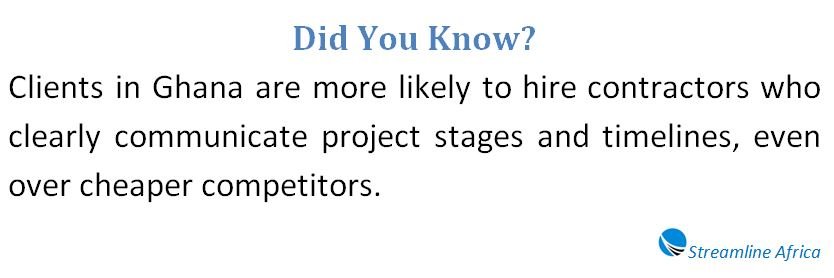
In Ghana, reputation travels fast. One satisfied client can bring multiple referrals, while one poor experience can damage your credibility.
A contractor in Tema made it a habit to update clients regularly and explain each stage of the building process. This transparency reduced misunderstandings and built long-term trust.
To strengthen client relationships:
- Communicate clearly and regularly
- Deliver work on time when possible
- Address concerns promptly
Construction can be stressful for clients. Your ability to guide them through the process sets you apart.
Essential Tools for a Modern Construction Business
Even in Ghana, technology is becoming increasingly important in construction.
Estimating tools help you calculate accurate costs, especially when material prices fluctuate. This reduces the risk of underpricing projects.
Mobile payment platforms such as MTN MoMo allow you to receive payments quickly and securely, improving cash flow.
Digital record-keeping tools help track expenses, invoices, and project timelines, making your operations more efficient.
On larger or more advanced sites, safety tools like smart helmets and digital monitoring systems can improve worker safety and reduce accidents.
Virtual visualization tools are also emerging, allowing clients to see how a project will look before construction begins, which can improve decision-making and reduce costly changes.
Final Perspective
Building a successful construction business in Ghana requires more than technical ability. It demands planning, discipline, and a strong understanding of the local environment.
From choosing a specialization to managing finances and building a skilled team, each step plays a critical role in your success. Contractors who combine craftsmanship with structured business practices are better positioned to grow, compete, and thrive.
Over time, consistency in quality, communication, and professionalism will set your business apart and establish a reputation that drives long-term success.
Commonly Asked Questions
What is the first step to starting a construction business in Ghana?
The most important starting point is deciding exactly what service you want to offer. Instead of trying to do everything, focus on one area—like roofing, tiling, or full building projects—so you can build expertise and stand out in your local market.
Why is a business plan necessary for a contractor?
A business plan helps you stay organized and avoid costly mistakes. It gives you clarity on your pricing, target customers, and expected expenses, which is crucial in an industry where costs can easily get out of control.
How much money do you need to start?
There’s no fixed amount, but you need enough to cover tools, transport, labour, and materials. In Ghana, fluctuating prices—especially for cement and fuel—mean you must always budget extra to avoid running into financial trouble mid-project.
Do I need to register my construction business?
Yes, registering your business with the Registrar General’s Department is essential. It builds trust with clients, allows you to take on bigger contracts, and ensures you operate legally.
What kind of insurance should a contractor have?
At a minimum, you should have general liability insurance and coverage for your workers. Construction work comes with risks, and insurance protects you from unexpected losses that could damage your business.
How do I find and manage skilled workers?
Finding reliable workers can be tough, so it’s important to build a small, dependable team over time. Training them and maintaining good relationships will improve your work quality and make project delivery smoother.
How can I get more clients consistently?
Beyond word-of-mouth, you should actively promote your work. Share project photos, network with property developers, and make it easy for clients to pay through platforms like MTN MoMo. Visibility and convenience help attract and retain customers.