
As a team of investment advisory professionals, we continuously assess emerging sectors across Ghana with strong growth potential and scalable returns. One industry that consistently stands out is palm oil. Driven by rising domestic consumption, industrial demand, and supply deficits, the sector presents a compelling case for both early-stage and expansion capital.
In evaluating real-world business trajectories, we examined the evolution of a mid-sized palm oil enterprise operating near Twifo Praso, a commercial hub not far from Accra. This case offers valuable insights into operational strategy, capital structuring, and long-term value creation within Ghana’s agribusiness ecosystem.
Market Gap and Entry Strategy
From an advisory standpoint, the most critical factor in any investment is identifying an underserved market segment. At the time of entry in 2016, the palm oil landscape in Ghana was characterized by intense competition among processors but a relatively weak and fragmented supply base.
The enterprise we assessed initially positioned itself as a sourcing intermediary, aggregating fresh palm fruit from smallholder farmers and selling to existing mills. This approach demonstrated a clear understanding of supply-demand imbalance. Rather than competing in a saturated processing market, the company focused on building upstream relationships.
However, our analysis suggests that a dual-entry strategy—simultaneously investing in supply aggregation and processing—would have accelerated capital returns and strengthened competitive positioning earlier in the business lifecycle.
Transition to Value Addition
A significant inflection point occurred when the company expanded into processing operations. The acquisition of a small-scale mill transformed the business from a low-margin trading entity into a value-added producer.
From an investment perspective, this shift is critical. Processing introduces margin expansion, revenue diversification, and greater control over product quality. Even at modest production levels, the ability to convert raw fruit into finished oil significantly enhances profitability.
We observed that during peak seasons, the facility operated continuously to meet demand, indicating strong market absorption capacity. This reinforces the attractiveness of scaling processing infrastructure as a primary investment lever.
Demand Dynamics and Revenue Stability
Palm oil is embedded in a wide range of consumer and industrial products, making demand relatively inelastic. Our sector analysis shows that a substantial portion of food products and a growing share of cosmetic goods rely on palm derivatives.
This diversified demand base provides a natural hedge against sector-specific downturns. For investors, this translates into more predictable revenue streams compared to single-market commodities.
Additionally, the production process generates multiple co-products, including fiber and kernel derivatives. These outputs, often overlooked, represent supplementary revenue channels that improve overall asset utilization and reduce waste.
Supply Chain Structuring and Risk Mitigation
One of the most strategic moves by the company was the formalization of its supply chain. Initially reliant on informal relationships, the business faced challenges such as inconsistent supply and side-selling by farmers.
To address this, the company introduced structured outgrower schemes. Farmers received inputs, technical guidance, and contractual agreements that ensured produce was sold back to the company.
From our advisory lens, this model significantly reduces supply risk while improving yield quality. It also aligns incentives across the value chain, fostering long-term partnerships rather than transactional interactions.
The introduction of organized farming support systems is a key indicator of maturity and scalability in agribusiness ventures.
Capital Constraints and Funding Strategy
Access to finance remains one of the most persistent barriers for emerging enterprises in Ghana. Despite participating in accelerator programs and mentorship initiatives, the company faced difficulty securing traditional bank financing.
In response, management adopted a hybrid capital strategy—bringing in equity partners while reinvesting operational profits. While this approach ensured steady growth, it also limited the pace of expansion.
From an investor’s perspective, this highlights a broader market inefficiency. There is a clear opportunity for structured financing solutions tailored to agribusinesses, particularly those transitioning from trading to processing.
The Case for Technology Upgrades
Our technical assessment underscores the importance of modern processing equipment in maximizing returns. Traditional mills, while cost-effective initially, often yield lower extraction rates compared to advanced systems.
Upgrading to motorized or semi-industrial processing units can significantly improve efficiency. Higher extraction rates directly translate into increased output from the same volume of raw materials, thereby enhancing profitability without proportionally increasing input costs.
We estimate that a well-structured investment in improved processing technology could multiply revenue several times over, especially when combined with an already established supply network.
Industry-Wide Opportunity and Import Substitution
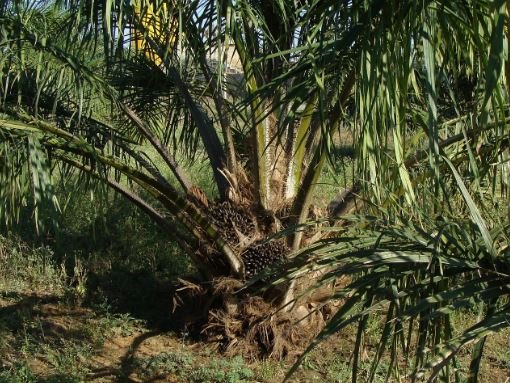
At a macro level, Ghana’s palm oil sector presents a compelling investment narrative. Domestic production consistently falls short of national demand, leading to substantial imports from international markets.
This supply gap creates a strong case for import substitution. Local producers who can achieve scale and maintain quality standards are well-positioned to capture market share currently held by foreign suppliers.
However, the dominance of small-scale, traditional processing units remains a limiting factor. Scaling operations and improving processing standards are essential for meeting industrial-grade requirements and unlocking export potential.
Operational Considerations for Investors
Investing in a palm oil processing venture requires careful attention to several operational variables. Machinery selection is paramount, as it determines both efficiency and product quality.
Financial planning must account for initial capital expenditure, working capital needs, and a realistic timeline to profitability. While demand is strong, operational inefficiencies can delay returns if not properly managed.
Labor availability in Ghana is generally favorable, with a young workforce capable of supporting large-scale operations. However, training and supervision are essential to maintain consistency and productivity.
Environmental considerations are increasingly important. Sustainable practices, including waste recycling and responsible land use, are not only regulatory requirements but also key factors in securing long-term investment.
Processing Complexity and Execution Risk
Palm oil extraction involves multiple stages, each requiring precise execution. Delays or inefficiencies at any stage can compromise product quality and reduce yield.
From an investment standpoint, this introduces execution risk. However, it also creates an opportunity for differentiation. Businesses that implement efficient, well-managed processes can achieve superior margins and product consistency.
Operational excellence, therefore, becomes a critical driver of value creation in this sector.
Future Growth Through Vertical Integration
The next logical step for the company—and for similar ventures—is vertical integration into refining. Moving beyond crude oil production into refined products significantly increases value capture.
Refined palm oil and palm kernel derivatives serve a broader range of industries, including food manufacturing, cosmetics, and pharmaceuticals. This diversification reduces dependency on raw commodity pricing and opens higher-margin markets.
For investors, this represents a pathway to exponential growth rather than incremental gains.
Conclusion: A High-Potential Investment Landscape
From our comprehensive evaluation, the palm oil sector in Ghana offers a rare combination of strong demand fundamentals, supply constraints, and scalable business models.
The case we examined demonstrates that while early-stage decisions may limit initial growth, strategic pivots—particularly into processing and supply chain integration—can unlock significant value.
For investors, the opportunity lies in identifying businesses at this transition point and providing the capital and expertise needed to scale operations efficiently. With the right structure, technology, and management, palm oil ventures in Ghana have the potential to deliver substantial and sustained returns.
In our professional assessment, this sector remains undercapitalized relative to its potential, making it an attractive target for forward-looking investment strategies.
Frequently Asked Questions and Answers
What makes the palm oil business attractive in Ghana?
The industry benefits from strong and consistent demand across food, cosmetics, and manufacturing, while local supply still falls short, creating room for growth.
Why did the business initially focus on sourcing instead of processing?
At the time, processing was highly competitive, so focusing on sourcing helped build supplier relationships and secure raw materials first.

What was the major turning point for the business?
Expanding into processing transformed it from a low-margin trader into a value-adding producer with better profit potential.
How does demand influence the success of the business?
Demand is steady and diverse, which ensures continuous sales and reduces the risk of relying on a single market segment.
Why is building relationships with farmers so important?
A strong farmer network ensures consistent supply, better quality produce, and long-term sustainability of operations.
What challenges do entrepreneurs face in this sector?
Access to finance is a major hurdle, especially for growing businesses without long credit histories or large assets.
How did the company overcome funding limitations?
By bringing in partners and reinvesting profits, the business was able to grow gradually without relying entirely on loans.
Why is upgrading processing equipment crucial?
Modern equipment increases oil extraction efficiency, improves quality, and significantly boosts revenue potential.
Read More: Ghana Business Opportunities: 10 Powerful Reasons Investors Are Choosing Ghana in 2026
What role do co-products play in profitability?
Co-products like fiber and kernels create additional income streams and reduce waste, maximizing overall returns.
How does Ghana’s market create investment opportunities?
Since local production cannot meet demand, investors can benefit from import substitution and expanding local capacity.
What risks should investors consider?
Operational inefficiencies, supply chain disruptions, and outdated processing methods can affect productivity and returns.
What is the long-term growth strategy for such businesses?
Moving into refining and producing higher-value products opens new markets and increases profitability significantly.